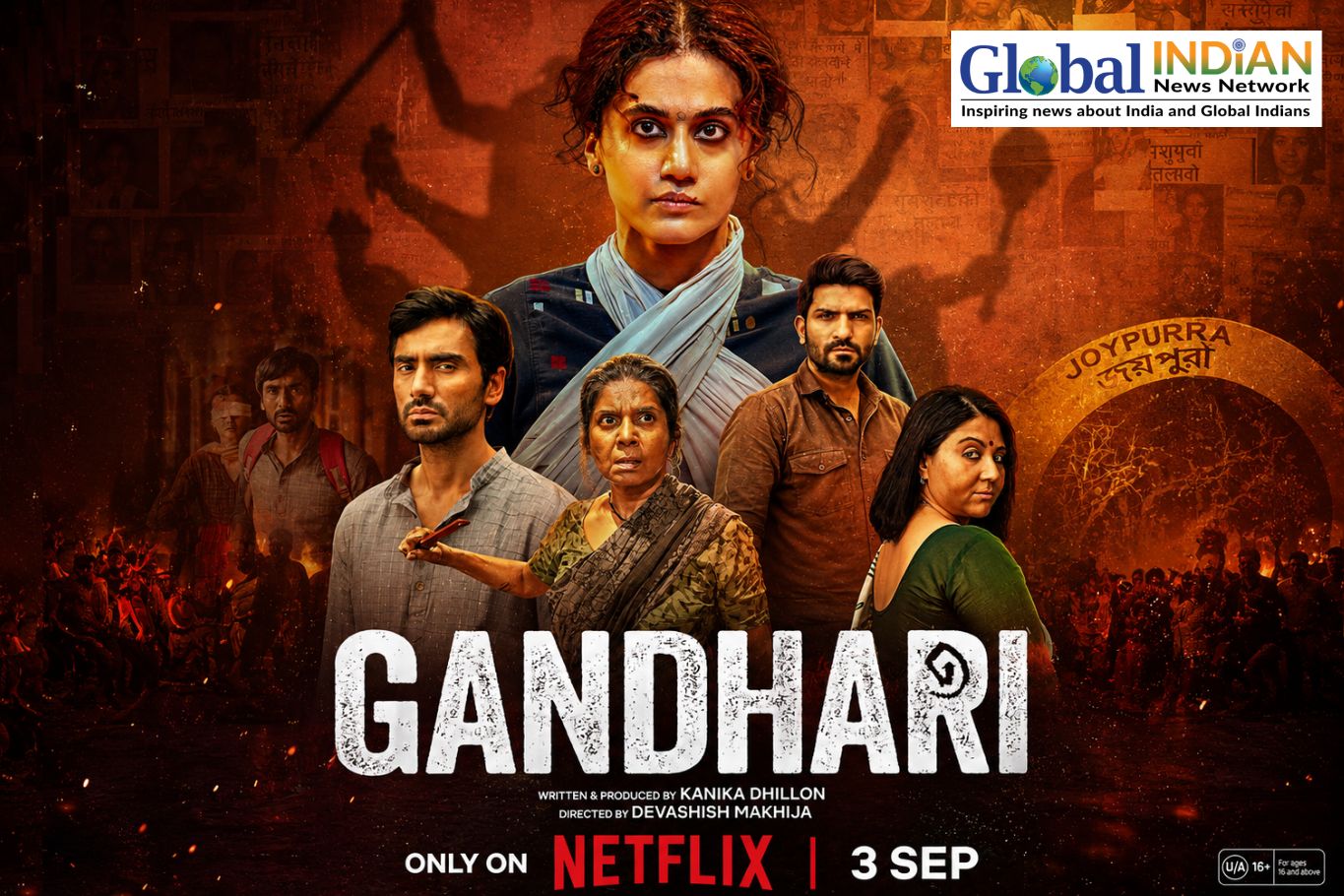
Taapsee Pannu takes center stage in Gandhari, an ambitious thriller that combines child abduction, human trafficking, revenge and mythology. While the Netflix film has several ingredients needed for an engaging suspense drama, its crowded screenplay and uneven storytelling prevent it from becoming as emotionally powerful as its premise suggests.
Directed by Devashish Makhija and written and produced by Kanika Dhillon, Gandhari follows Bani, played by Pannu, whose five-year-old daughter, Mishty, is abducted from the fictional West Bengal town of Joypurra. As Bani and her husband Gokul, portrayed by Ishwak Singh, search desperately for their child, they become connected to a much larger trafficking operation.
The story takes another dramatic turn when an attack leaves Bani temporarily blind. Despite her physical vulnerability, she continues her search and embarks on a dangerous mission to rescue her daughter. The film also draws inspiration from the Mahabharata through its title, connecting Bani’s temporary blindness with the story of Gandhari.
However, the mythology does not always blend naturally with the thriller’s central storyline. Instead of strengthening the narrative, the film’s multiple themes occasionally compete for attention.
Gandhari attempts to balance a serious social thriller with a larger-than-life revenge drama. At times, its disturbing subject matter feels grounded and effective, while other moments lean heavily toward familiar action and confrontation sequences. This creates an inconsistent tone, leaving the movie caught somewhere between an experimental streaming thriller and a conventional commercial action film.
Joypurra is among the film’s more interesting ideas. Its mysterious atmosphere, underground passages and hidden identities create a visually distinctive setting. Yet the world-building never fully develops into an essential part of the story.
Pannu remains one of the movie’s strongest assets. She brings physical commitment and determination to the demanding role, particularly during the action scenes. Swastika Mukherjee also delivers a memorable performance, bringing an unsettling sense of mystery to the story. Mita Vashisht and Chhaya Kadam make an impact despite limited screen time.
Ishwak Singh and Jatin Sarna, however, are not given enough material to fully develop their characters, while Prashant Narayanan’s villain does not become as intimidating as the role requires.
Ultimately, Gandhari has an intriguing foundation and some effective twists, but it tries to handle too many ideas at once. The film’s greatest missed opportunity is its limited emotional connection to a mother’s desperate search for her kidnapped child.
For viewers who enjoy female-led action thrillers, Gandhari may still be worth watching. Those expecting a tightly constructed and deeply emotional mystery, however, may find its many twists and dramatic elements overwhelming.