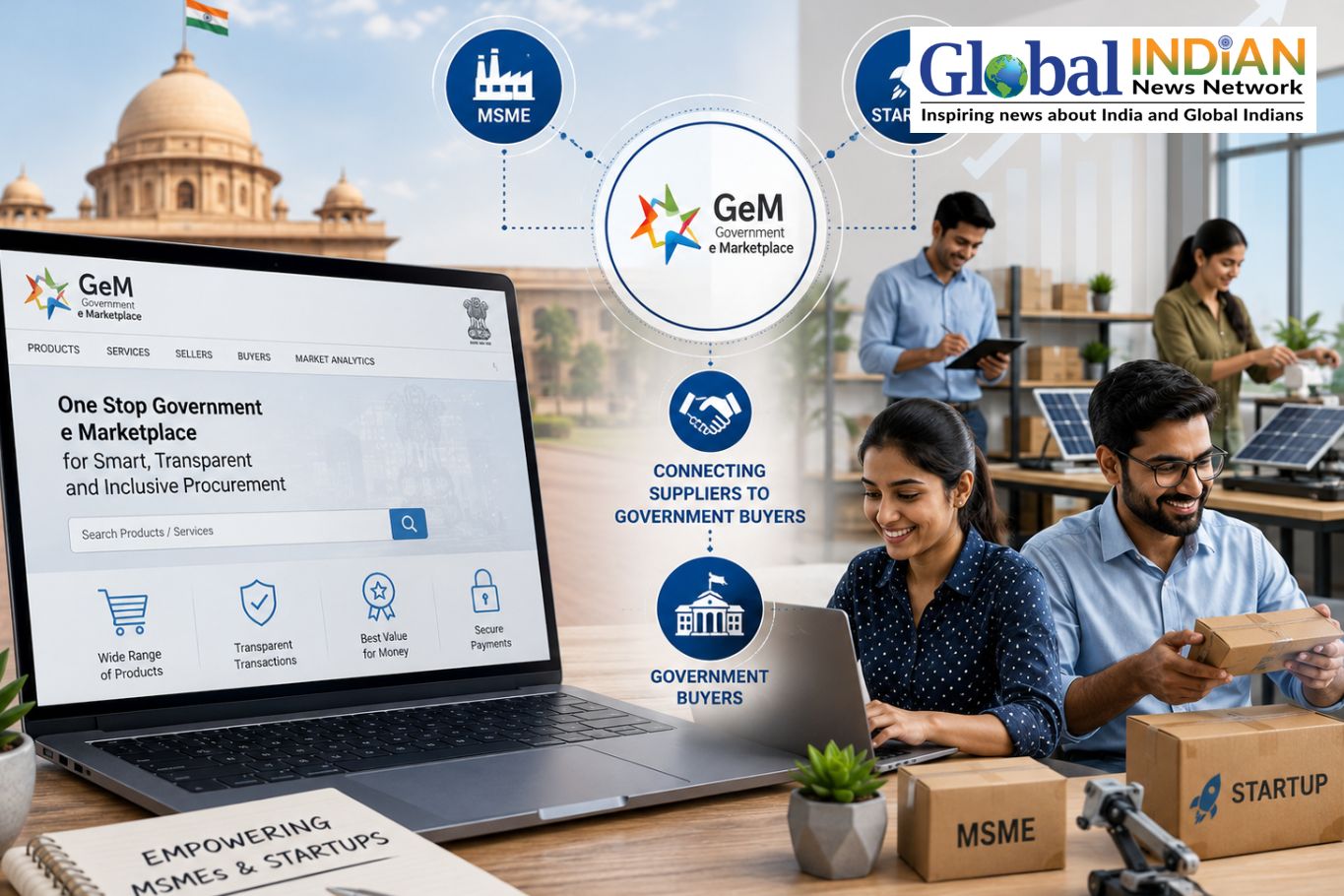
 India’s Government e-Marketplace is expanding opportunities for smaller businesses and emerging entrepreneurs to participate in public procurement. The platform has significantly increased the presence of Micro, Small and Medium Enterprises, startups, women-led businesses and Self-Help Groups, giving these groups greater access to government buyers nationwide.
As of July 30, 2026, GeM had registered approximately 1.18 million MSMEs, 37,758 startups, 217,000 women entrepreneurs and 3,784 Self-Help Groups. The growing participation reflects the platform’s role in connecting smaller suppliers with public-sector purchasing opportunities through a digital marketplace.
MSME procurement through GeM reached approximately $26.84 billion during fiscal year 2025-26, rising substantially from around $7.92 billion in fiscal year 2021-22. Overall order value on the platform stood at about $56.92 billion during FY2025-26, with MSMEs accounting for 47.2% of procurement.
The expansion is intended to make government purchasing more accessible to businesses that may traditionally have faced challenges entering large procurement markets. By providing a centralized digital platform, GeM enables eligible businesses to compete for government contracts across different regions and sectors.
At the same time, GeM is strengthening safeguards against irregularities and anti-competitive behavior. The platform uses artificial intelligence and machine learning tools to analyze purchasing and bidding patterns and identify transactions that may require further investigation.
The monitoring systems examine indicators such as unusual pricing, potential buyer-seller coordination, order splitting and repeated bidding behavior. Digital information, including Internet Protocol addresses, bid amounts and submission times, is also analyzed to detect possible procurement cartels or other suspicious activity.
Cases identified through these systems are forwarded to the relevant buyer organizations for review and appropriate action. During FY2025-26, GeM recorded 181,035 incidents and suspended 55,772 sellers. Reported violations included inaccurate product classification, excessive pricing, delivery problems and failure to honor contractual commitments.
The platform has also introduced an Incident Management framework to address confirmed anti-competitive conduct. Sellers found responsible for cartelization or similar violations can face suspension for as long as 365 days.
These measures are designed to balance wider participation with stronger procurement safeguards. By combining digital access with automated monitoring, GeM is seeking to create a marketplace where smaller businesses can compete while government buyers have greater confidence in the integrity of transactions.
The continued expansion of MSMEs, startups, women entrepreneurs and SHGs on the platform highlights the growing role of digital public procurement in supporting India’s broader entrepreneurial ecosystem.