A collaborative research initiative between the United States and India has received more than $0.53 million in funding to develop advanced technologies that could transform soybean breeding and precision agriculture. Backed by the US National Science Foundation (NSF) and India’s Ministry of Electronics and Information Technology (MeitY), the project highlights the growing scientific partnership between the two countries.
The funding was announced by Congressman Steve Cohen of Tennessee, who confirmed that Dr. Xiaolei Huang, a computer science professor at the University of Memphis, will lead the US side of the initiative. The three-year research program, titled SoyWatch, is scheduled to begin on October 1 and continue through September 2029.
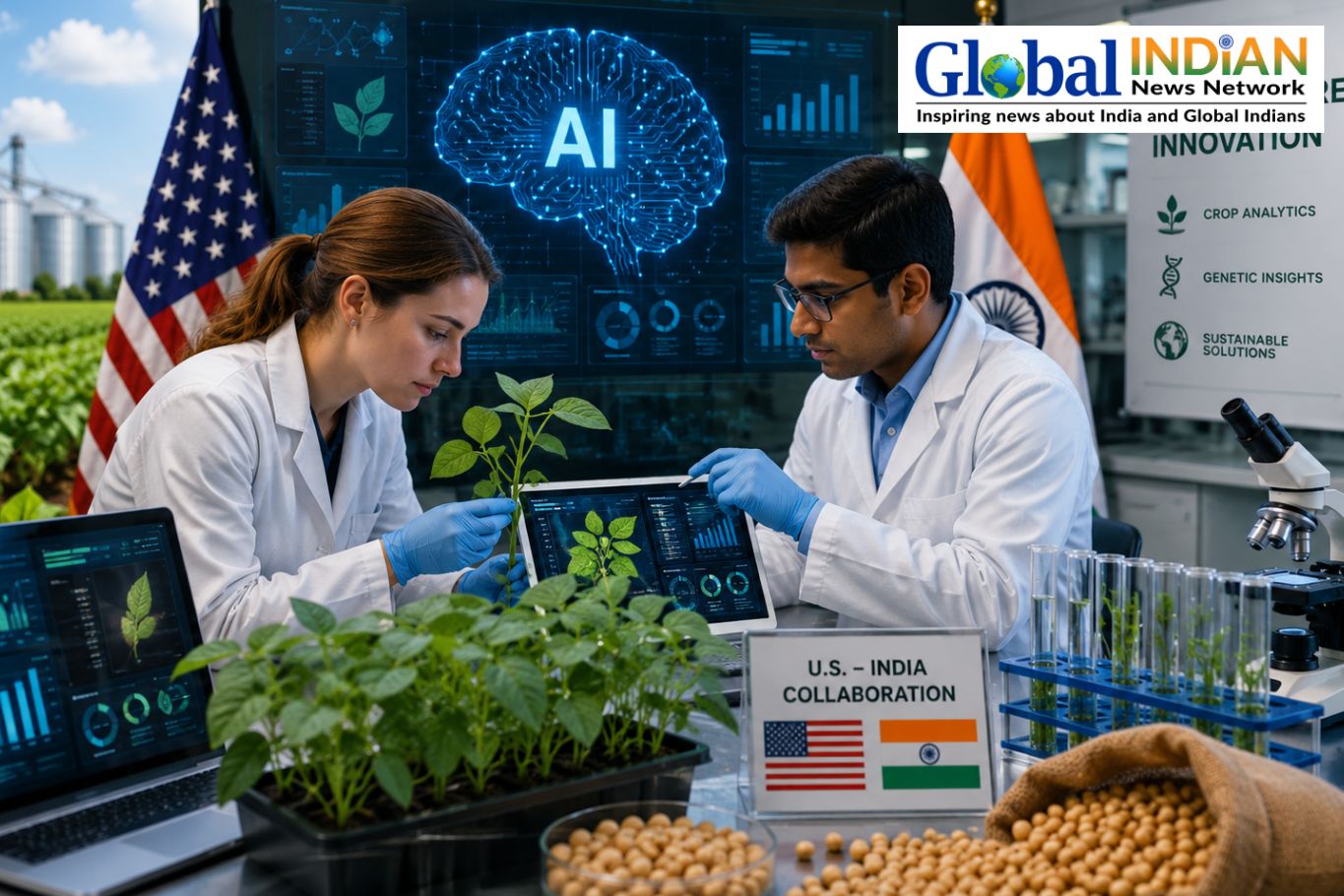
The project seeks to create an intelligent farming platform that combines artificial intelligence, smart sensing technologies, next-generation wireless communication, and drone-based monitoring. Researchers aim to collect and analyze real-time information on crop development, soil quality, and environmental conditions, helping plant breeders make faster and more informed decisions.
By integrating multiple digital technologies into a unified system, the team hopes to improve soybean breeding while addressing several challenges faced by farmers. The research will focus on minimizing the effects of crop diseases, pest infestations, and increasingly unpredictable weather patterns that continue to impact agricultural productivity in both countries.
The initiative is built around three primary research objectives. The first involves designing advanced sensor systems capable of monitoring soil moisture, nutrient levels, and surrounding environmental conditions. The second focuses on creating energy-efficient wireless communication networks supported by drones and passive sensing technologies to monitor large agricultural fields more effectively. The final objective centers on developing AI-powered large language models that combine sensor readings, aerial imagery, and environmental data to improve crop analysis, pest detection, and yield forecasting.
According to the NSF, these technologies will eventually be merged into a single smart platform capable of delivering data-driven recommendations for both researchers and farmers. The integrated system is expected to improve breeding efficiency while supporting more sustainable farming practices.
The research brings together experts from the University of Memphis, the University of Missouri, Kennesaw State University, the Indian Institute of Technology Delhi, Sher-e-Kashmir University of Agricultural Sciences and Technology of Kashmir, and the Indian Council of Agricultural Research’s National Soybean Research Institute.
Beyond advancing agricultural innovation, the project is expected to deepen scientific cooperation between the United States and India while creating valuable opportunities for students and researchers in agriculture, engineering, wireless communications, and artificial intelligence.