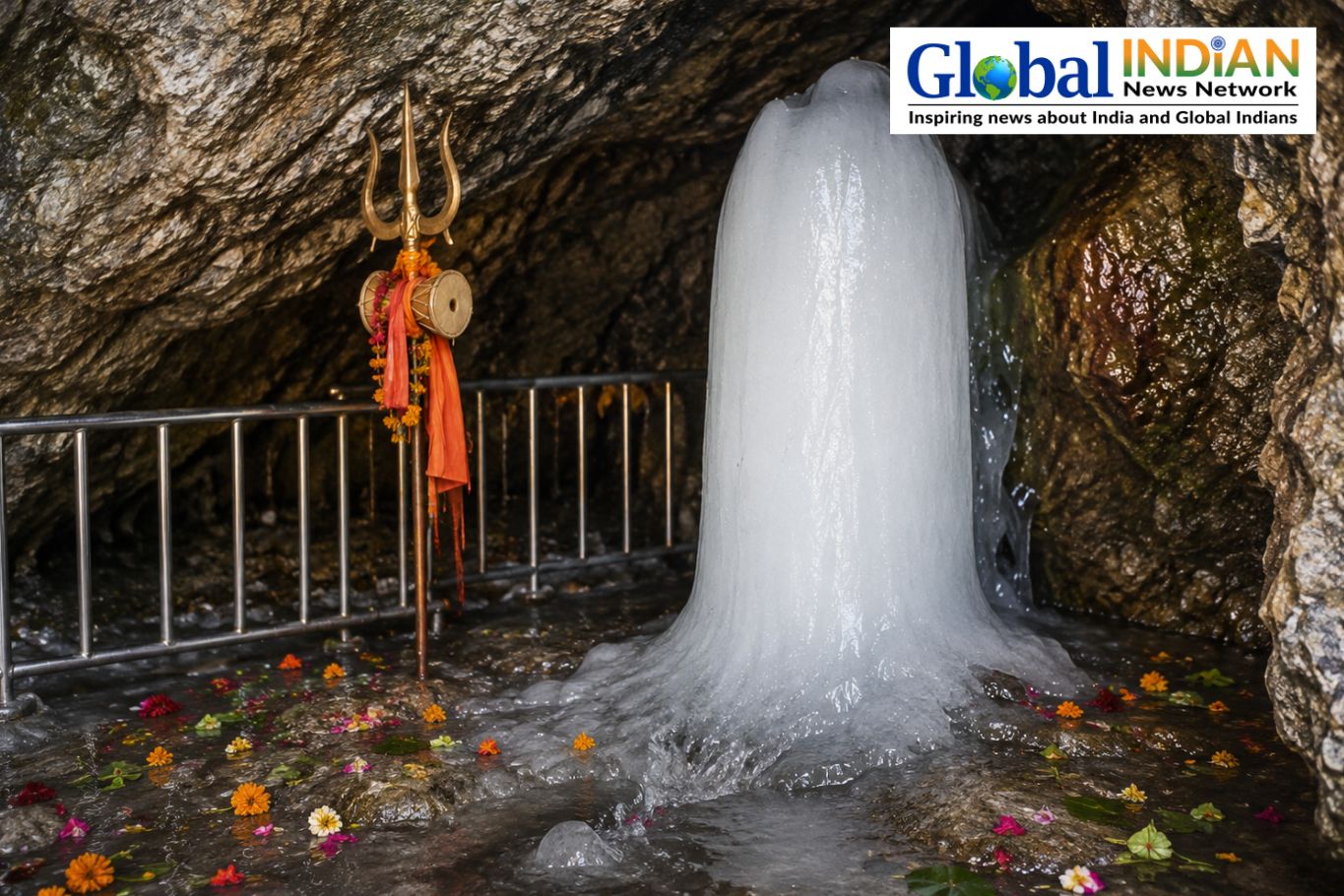
 The rapid melting of the naturally formed Amarnath Ice Lingam has raised growing concerns among scientists, environmental experts, and devotees, with researchers pointing to rising temperatures and changing weather patterns in the Himalayas as key contributing factors.
Located at an altitude of approximately 12,756 feet in Jammu and Kashmir, the Amarnath Cave is home to the revered ice stalagmite, considered sacred by millions of Hindu devotees. Reports indicate that the naturally formed Ice Lingam has melted significantly within days of the annual pilgrimage, drawing attention to the changing environmental conditions in the region.
Experts say the unusually warm summer, combined with shifting rainfall patterns and prolonged heatwaves, has accelerated the melting process. They note that the Himalayan mountain range is warming faster than the global average due to a phenomenon known as elevation-dependent warming, making the region particularly vulnerable to climate change.
Environmental researchers emphasize that while no single event can be attributed solely to climate change, the rapid melting is consistent with long-term warming trends observed across the Himalayan ecosystem. Rising temperatures are affecting glaciers, snow cover, and natural ice formations, posing broader challenges for the region’s ecological balance and water resources.
Scientists also stress the importance of continued environmental monitoring and sustainable management of fragile mountain ecosystems. They believe that protecting the Himalayas requires coordinated efforts in climate research, conservation, and responsible tourism to preserve the region’s unique natural and cultural heritage.
The Amarnath Yatra continues to hold immense religious significance for millions of devotees every year. The recent developments have renewed discussions on balancing pilgrimage activities with environmental conservation to safeguard one of India’s most revered spiritual sites for future generations.