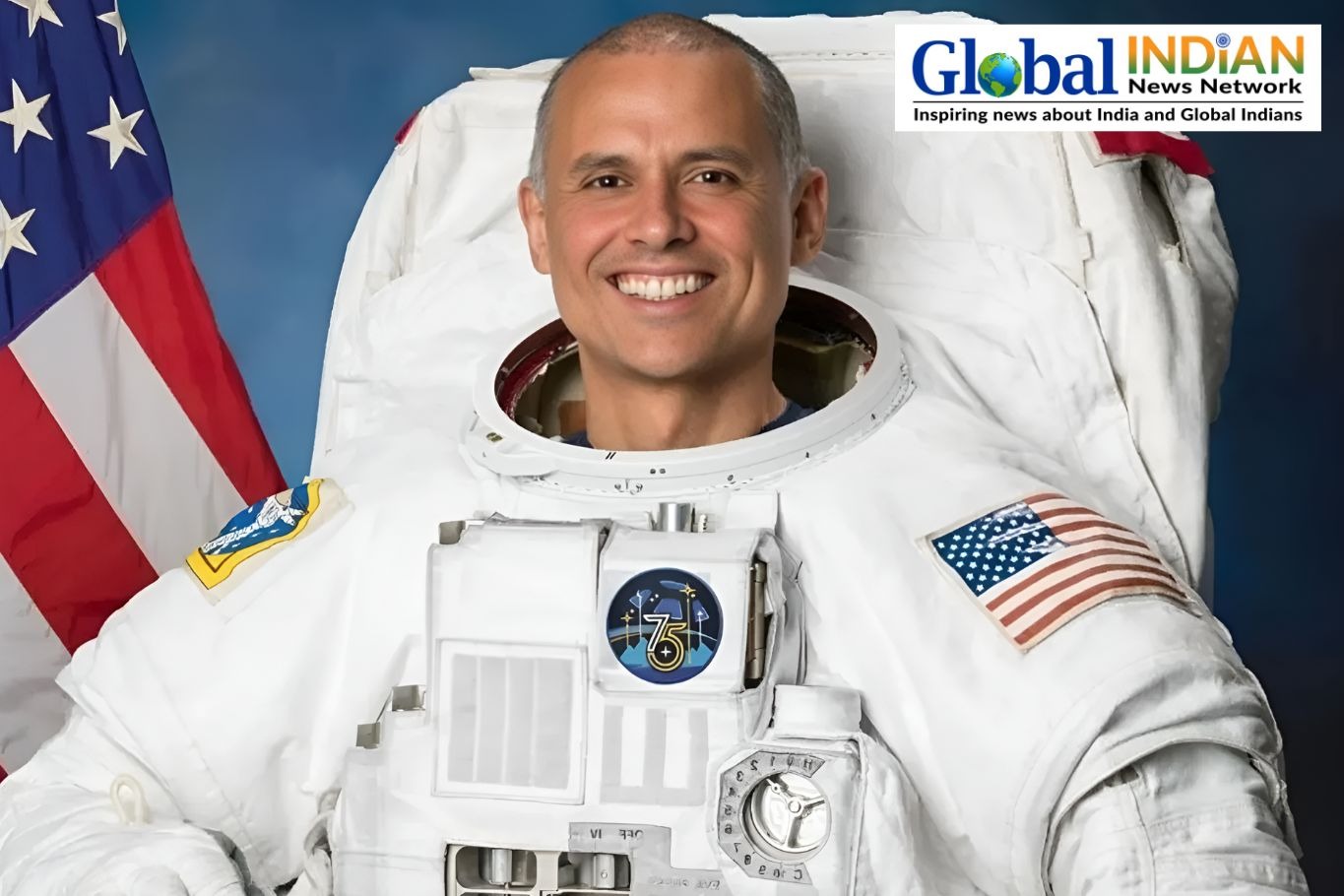
NASA astronaut and physician Anil Menon has offered a glimpse into his early days aboard the International Space Station (ISS), highlighting a medical research project that could reshape healthcare both in space and on Earth. The experiment focuses on producing sterile intravenous (IV) saline solution directly aboard the space station, an innovation designed to support future deep-space missions while also improving emergency medical care in remote environments.
In a social media update shared on July 17, Menon described working inside the station’s Life Sciences Glovebox alongside fellow NASA astronaut Jessica Meir. Meir is leading the IVGEN Mini experiment, which is testing a method to convert the ISS’s drinking water into medical-grade IV saline.
Menon explained that while the concept sounds straightforward, the science behind it is highly complex. The system filters the station’s recycled drinking water to meet pharmaceutical standards before combining it with carefully measured sodium chloride to produce sterile saline suitable for medical treatment.
The project addresses a significant challenge for long-duration human spaceflight. Traditional IV fluid bags typically remain usable for only about 16 months, making them impractical for future missions to Mars that could last several years. In addition, carrying enough emergency IV supplies would require valuable storage space, as a single astronaut experiencing a serious medical condition could need well over 100 liters of fluid during treatment.
As a physician, Menon emphasized the broader impact of the research beyond space exploration. He noted that if astronauts can safely generate IV fluids hundreds of miles above Earth, the same technology could eventually help hospitals operating in disaster zones, military field units, or isolated communities where medical supply chains are limited or disrupted.
The IVGEN Mini project reflects NASA’s ongoing commitment to developing technologies that protect astronaut health while creating practical innovations with everyday applications on Earth.
Earlier in his mission, Menon shared a heartfelt video message from orbit, expressing gratitude to his family, friends, and former colleagues at SpaceX. He also wished his daughter, Grace, a happy birthday and credited his previous team with teaching him how to tackle seemingly impossible challenges.
Menon further acknowledged members of the US Space Force and praised NASA’s long-term vision for human exploration of the Moon and Mars. Currently serving on NASA’s latest long-duration ISS mission, he continues to support scientific investigations and technology demonstrations that aim to advance future space travel while delivering meaningful benefits for people on Earth.