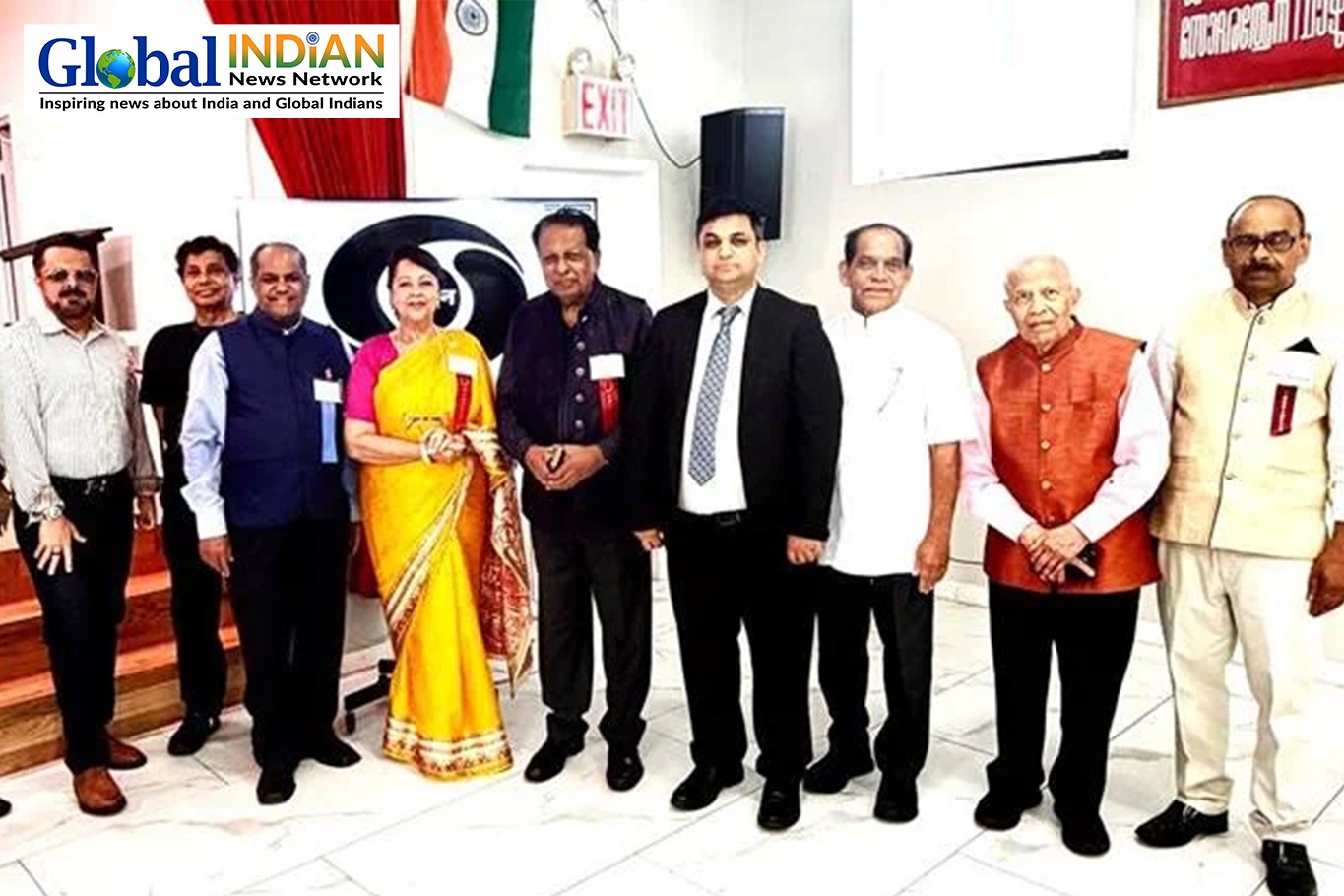
 The Indian Diaspora Center at the Dr. Thomas Abraham Library organized its 2026 Annual Symposium on June 28 at the Kerala Center in Elmont, New York. The event was presented in collaboration with the Manhattan chapter of the Global Organization of People of Indian Origin (GOPIO) and the Indian American Kerala Cultural and Civic Center. This year’s theme, “Indian Television – Yesterday, Today and Tomorrow,” explored the remarkable transformation of Indian broadcasting while bringing together renowned television professionals, journalists, and members of the Indian American community.
The discussion featured former Doordarshan news anchors Sheila Chaman and Ramu Damodaran, former Indian Ambassador T.P. Sreenivasan, and digital media specialist Sree Sreenivasan. Together, they reflected on the history of Indian television, examined its current challenges, and shared perspectives on how technological advancements are reshaping the future of news and entertainment broadcasting. The program also included an interactive audience session that encouraged conversations on journalism, media ethics, and digital innovation.
Welcoming attendees, Kerala Center President Alex Esthappan expressed pride in hosting both the Dr. Thomas Abraham Library and the Indian Diaspora Center. Dr. Thomas Abraham explained that one of the Center’s primary goals is preserving the achievements, history, and cultural legacy of Indians living across the globe, ensuring future generations remain connected to their heritage.
Because the symposium coincided with the birth anniversary of former Prime Minister P. V. Narasimha Rao, Ramu Damodaran opened the event with a tribute to the late leader. Having previously worked in Rao’s office before joining the United Nations, Damodaran praised the former prime minister for introducing economic reforms while also encouraging greater openness in India’s television industry. He noted that expanding television choices helped create a more diverse media landscape and reflected Rao’s belief in nurturing talent and innovation.
Sheila Chaman introduced her recently released book, Doordarshan Diaries: The Golden Era of Television, which documents the early years of Indian broadcasting through firsthand accounts from former colleagues. She recalled that news presenters frequently wrote or revised their own scripts and relied entirely on memory while presenting because teleprompters were unavailable, making preparation and discipline essential parts of the profession.
Former Ambassador T.P. Sreenivasan spoke about his transition from diplomacy to television, highlighting the impressive rise of regional news channels. Although many started with limited resources, he said they gradually evolved into respected media outlets that demonstrated how quality journalism could succeed beyond large national networks.
During the concluding discussion, panelists voiced concerns about sensationalism becoming increasingly common in television news, arguing that loud debates and dramatic headlines often overshadow balanced reporting. They contrasted this trend with the calmer, more measured journalism that characterized the early Doordarshan era. The event concluded with commemorative presentations featuring rare U.S. Postal Service First Day Covers honoring the founding of GOPIO in 1989, followed by a vote of thanks delivered by Kerala Center Vice President Daisy Stephen.