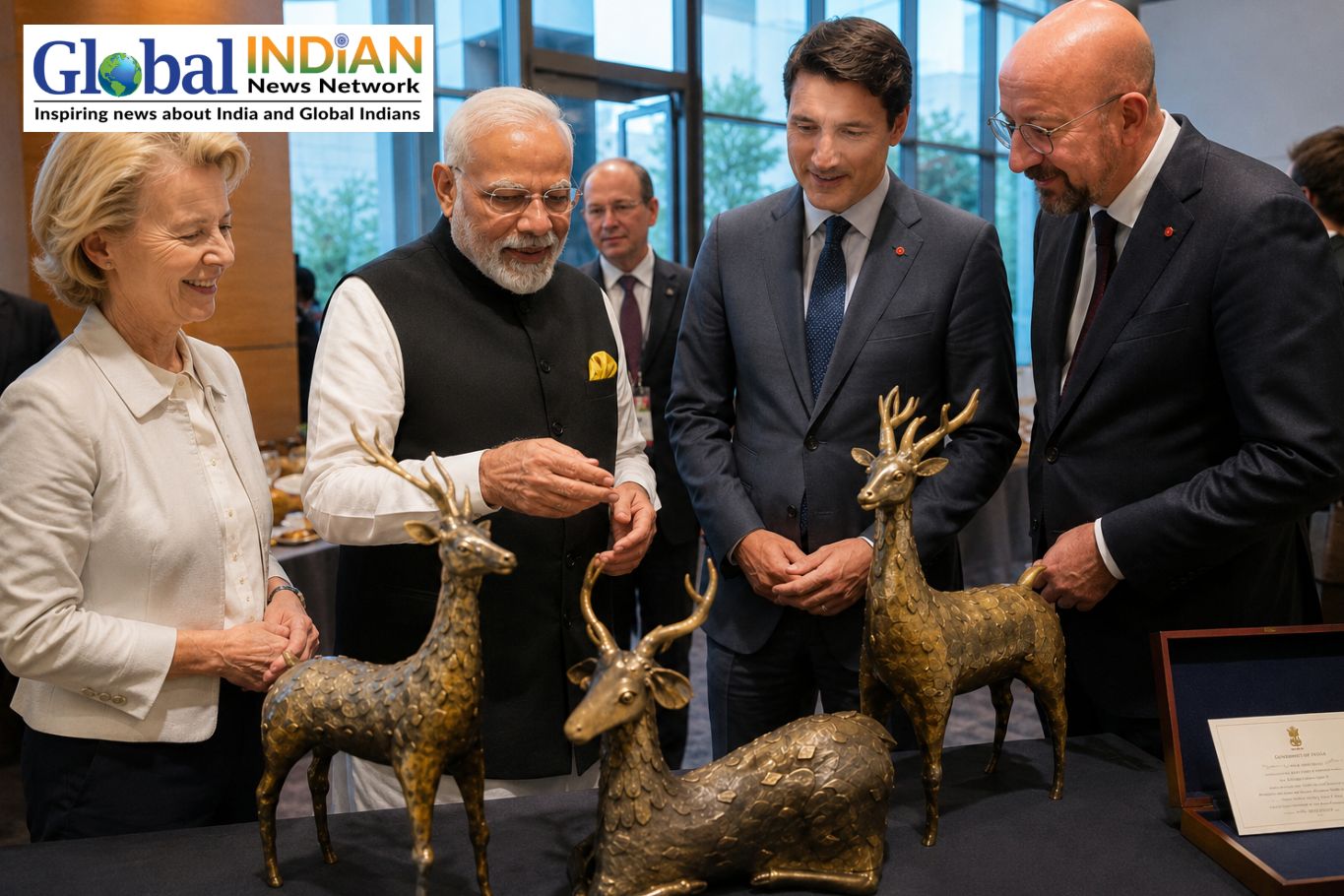
 Prime Minister Narendra Modi used the recently concluded G7 Summit in France as a platform to showcase India’s deep cultural heritage and its growing role in global wellness and traditional medicine systems. In a series of diplomatic gestures, he presented world leaders with a carefully curated selection of India’s geographically protected products, ancient texts, and handcrafted items that reflect the country’s diverse traditions.
Among the most prominent gifts was Nagauri Ashwagandha, a premium variety of the medicinal herb cultivated in Rajasthan’s Nagaur region. Known for its high withanolide content due to the area’s arid climate and sandy soil conditions, the herb carries a Geographical Indication certification. In Ayurveda, Ashwagandha is regarded as a rejuvenating plant that supports vitality, mental clarity, immunity, and overall well-being. The gift also symbolized India’s effort to promote evidence-based integration of traditional medicine into modern global health systems while supporting rural livelihoods.
Another key offering was Ramban honey from the Chenab Valley of Jammu and Kashmir, produced in a biodiversity-rich Himalayan environment. The honey is valued for its natural enzymes, antioxidants, and bioactive compounds and reflects centuries-old beekeeping traditions practiced in harmony with nature. Alongside this, Modi also presented Banarasi silk stoles from Varanasi, crafted using intricate handwoven techniques and adorned with traditional zari work, representing one of India’s most prestigious textile heritages.
During his diplomatic engagements, the Prime Minister also gifted Slovak leaders a range of culturally significant items, including handcrafted Thewa motif cufflinks, Himroo silk accessories, and Dokra metal artworks. Each of these crafts carries GI recognition and reflects India’s regional artisanal diversity, from Rajasthan’s delicate gold-on-glass Thewa technique to Maharashtra’s historic Himroo weaving and the tribal lost-wax metal casting tradition of Dokra artisans.
In addition, Modi presented a Kashmiri silk carpet to Slovakia’s Prime Minister, highlighting the intricate knotting techniques and detailed floral patterns that have made Kashmir’s weaving tradition globally renowned. He also offered Thekua, a traditional sweet from Bihar and Jharkhand, along with ancient Ayurvedic manuscripts such as the Susruta Samhita and Charaka Samhita, which represent India’s foundational contributions to medical science.
India’s participation as a partner country at the 52nd G7 Summit marked its 13th appearance at the forum and underscored its growing engagement with global leaders on issues relevant to both advanced economies and the Global South. Through these symbolic gifts, India emphasized not only its cultural richness but also its enduring contributions to science, medicine, craftsmanship, and sustainable living practices.