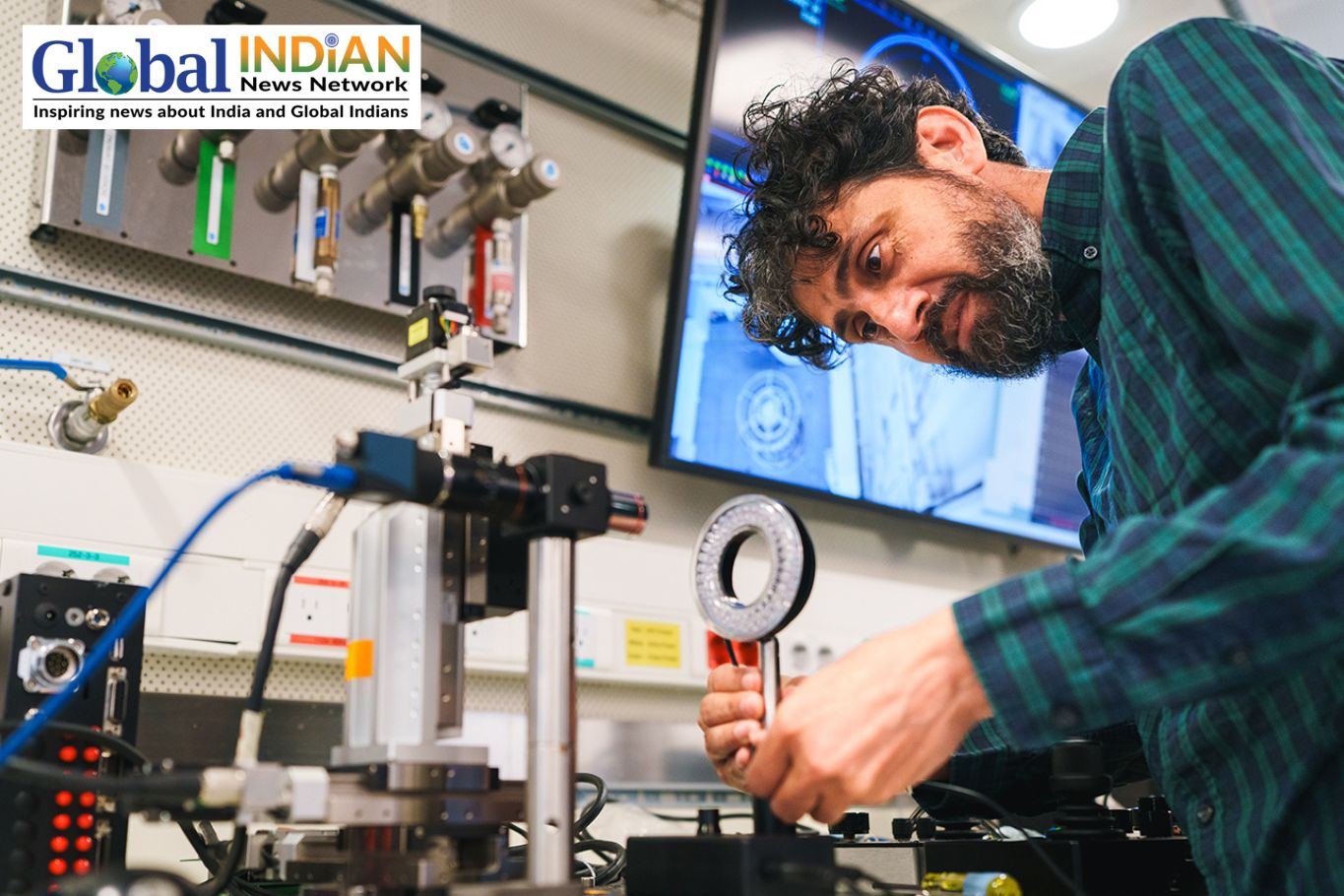
 Indian-American bioengineer Manu Prakash of Stanford University has been honored for his groundbreaking collaborative research on microbial life trapped within sea ice, highlighting the growing impact of Indian-origin scientists in global scientific innovation and international research partnerships.
Prakash, working alongside French scientist Marcel Babin of the Centre national de la recherche scientifique (CNRS), was recognized during a special symposium celebrating 250 years of scientific cooperation between France and the United States. The event also marked the creation of a $25,000 research award by the Richard Lounsbery Foundation to encourage joint scientific work between researchers from both countries.
Their joint research project, titled “Trapped in Ice,” focuses on understanding how microscopic organisms survive and adapt in extreme polar environments. The study combines bioengineering, polar ecology, and micro-scale physics to examine how life persists inside sea ice formations and what mechanisms support survival under freezing conditions.
Babin’s research team specializes in polar ecology and microalgal physiology, conducting controlled laboratory simulations of sea ice formation. Prakash contributes advanced engineering tools, including low-temperature microfluidic systems and high-resolution imaging technologies, allowing scientists to observe cellular behavior at extremely small scales in harsh environments.
Together, the two researchers are building a new interdisciplinary framework that connects microscopic biological processes with larger ecological dynamics in polar regions. Their findings are also expected to improve scientific understanding of past glaciation periods on Earth and may even support future research into the possibility of life in icy environments beyond the planet.
The project also involves contributions from additional international collaborators and is supported by the Human Frontier Science Program, which promotes global scientific cooperation.
The recognition of Manu Prakash underscores the increasing global influence of Indian-American scientists in frontier research areas such as climate science, bioengineering, and space-related biological studies. The award ceremony took place at the Institut de France during a symposium dedicated to the long-standing scientific partnership between France and the United States.