 India and Canada have entered a significantly improved phase of diplomatic engagement, transitioning from what officials described as an “antagonistic” period to a more cooperative and friendly relationship. India’s High Commissioner to Canada, Dinesh K. Patnaik, highlighted that political leaders, security agencies, and business communities from both countries are now working in closer coordination.
Speaking in an interview, Patnaik said relations between the two nations have strengthened rapidly in recent months. He noted that the current phase reflects renewed trust and active dialogue across multiple levels of government and industry, marking a major shift from tensions seen in previous years.
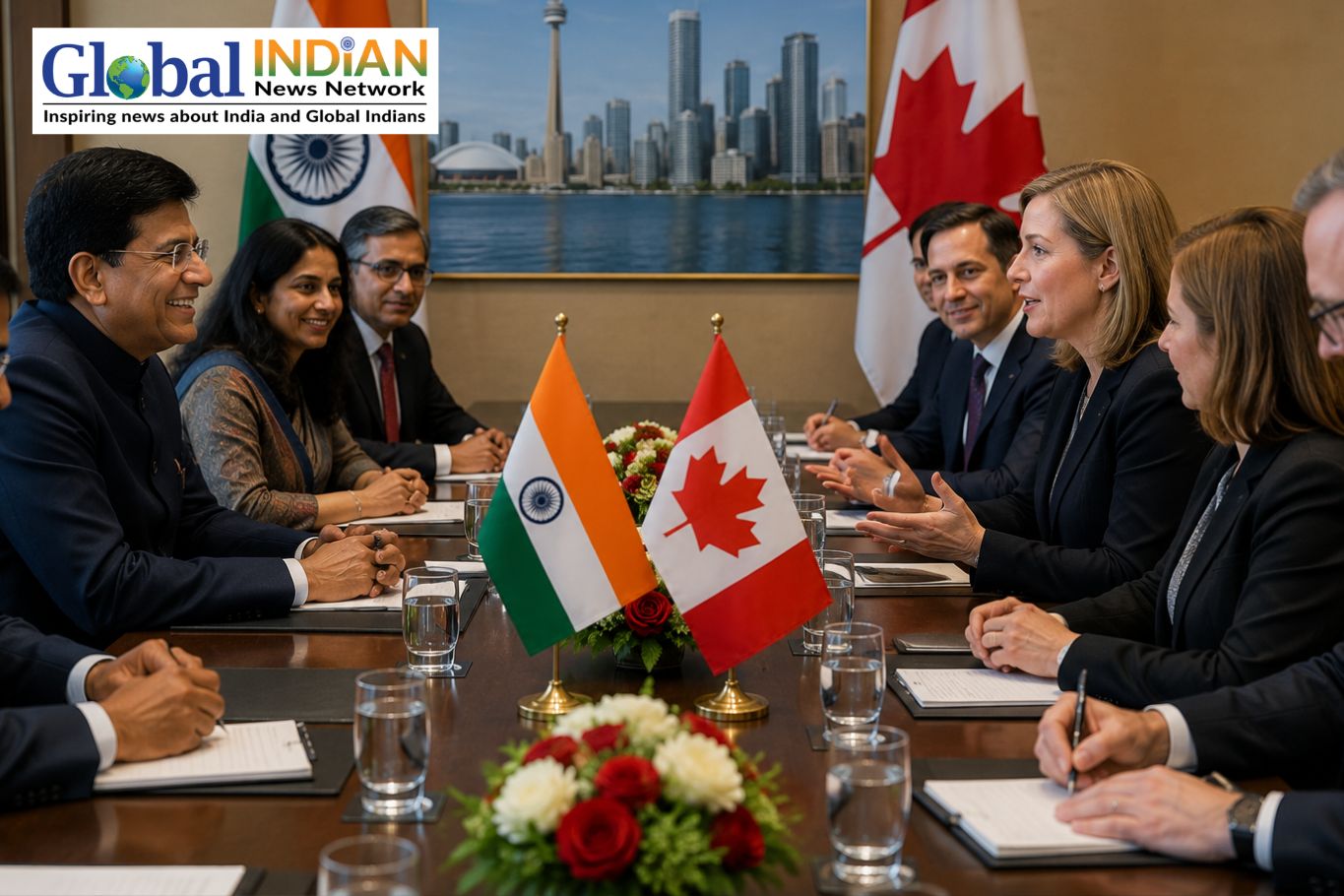
A key moment in this renewed engagement will be the upcoming visit of India’s Commerce and Industry Minister Piyush Goyal, which Patnaik described as the beginning of a new chapter in bilateral relations. The visit is expected to include one of the largest Indian business delegations ever sent to Canada, with more than 100 business leaders participating in meetings with Canadian firms, financial institutions, pension funds, and diaspora groups.
Officials on both sides see the visit as an opportunity to accelerate discussions on the proposed Comprehensive Economic Partnership Agreement (CEPA), which aims to deepen trade and investment flows between the two countries. Current bilateral trade stands at approximately 32 billion Canadian dollars, or about 25 billion US dollars, with both sides targeting a potential increase to around 50 billion US dollars by 2030–31.
Patnaik emphasized that both governments are now focused on restoring normalcy and expanding economic engagement. He said that security cooperation has also resumed, with intelligence agencies, police forces, and national security advisors from both countries maintaining active communication.
According to him, both sides are working to ensure a secure environment for mutual interests, stating that efforts are underway to make “Canada safe for India and India safe for Canada.” He also noted that extremist-linked criminal activities have been increasingly treated as law-and-order issues rather than ideological conflicts.
The envoy identified several key sectors driving future growth, including energy, critical minerals, agriculture, artificial intelligence, quantum technologies, fertilisers, and defence cooperation. These areas are expected to play a major role in shaping the next phase of bilateral economic collaboration.
On immigration, Patnaik acknowledged recent policy changes in Canada that have impacted Indian nationals but said there is no negative sentiment toward India. He added that reforms are aimed at balancing immigration systems to prevent misuse while ensuring legitimate migration continues smoothly.
India-Canada relations had sharply declined in 2023 following allegations by then Canadian Prime Minister Justin Trudeau regarding India’s alleged involvement in the killing of a separatist figure, which India strongly rejected. Since then, both countries have gradually moved toward stabilising ties through renewed diplomatic dialogue and cooperation in trade, energy, and people-to-people connections.