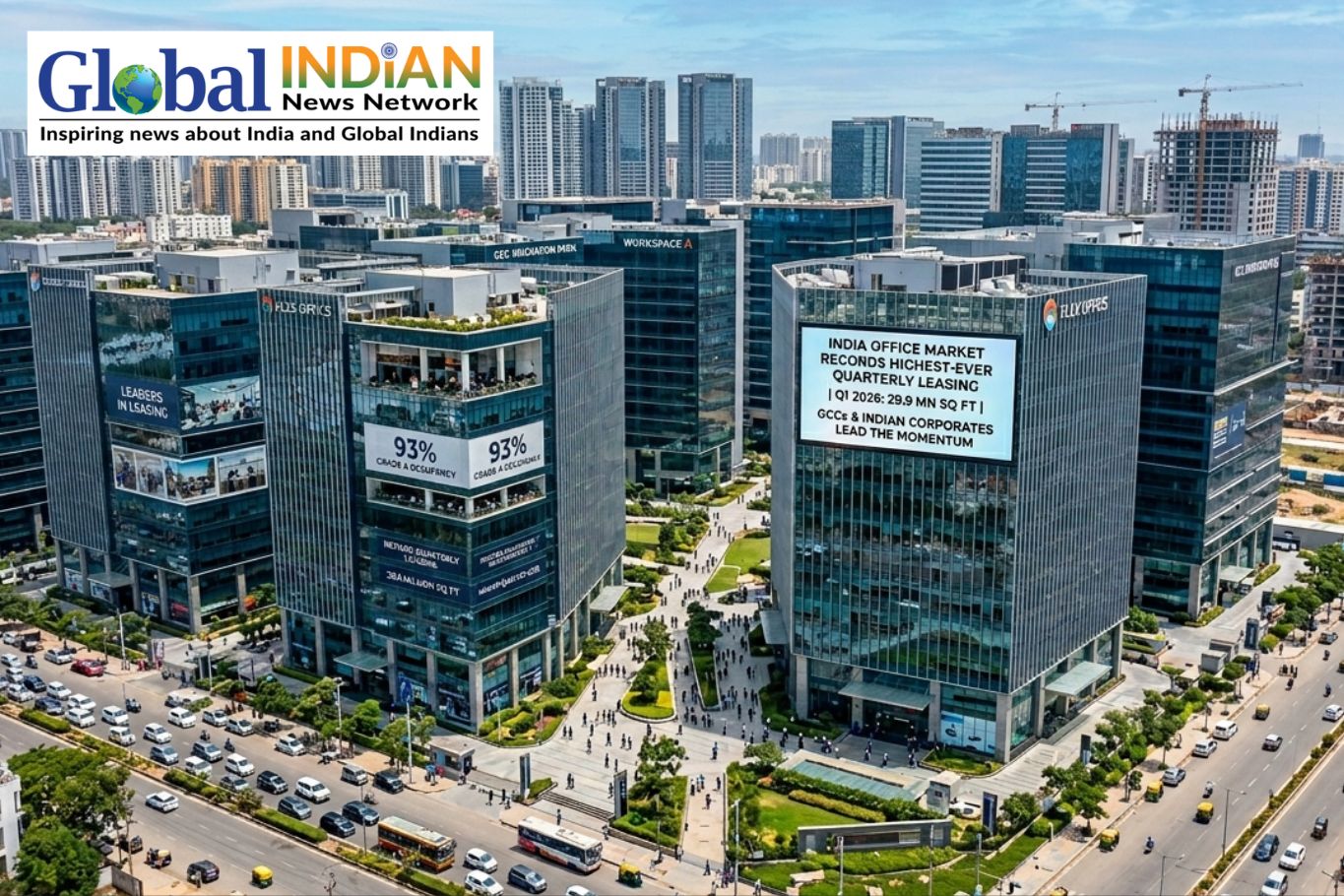
 India’s office real estate sector has recorded its strongest-ever quarterly performance, with leasing activity reaching an all-time high in the March quarter of 2026. The surge comes despite ongoing global geopolitical uncertainties and macroeconomic challenges, underlining the resilience of the country’s commercial property market.
Total leasing across the top eight cities stood at nearly 29.9 million square feet, marking a notable increase over the previous peak recorded a year earlier. The robust performance highlights India’s growing appeal as a preferred destination for global and domestic businesses seeking scalable and cost-effective operational bases.
The momentum has been largely driven by Global Capability Centres (GCCs), Indian corporates, and the continued expansion of flexible workspace operators. A significant share of this demand has been concentrated in high-quality Grade A office spaces, which accounted for the vast majority of transaction volumes during the quarter.
Key metropolitan hubs such as Bengaluru, Hyderabad, Delhi NCR, Mumbai, and Pune have emerged as major centres of leasing activity. These cities continue to attract strong interest due to their established infrastructure, talent availability, and favourable business ecosystems.
The sustained growth of GCCs and large domestic enterprises has played a crucial role in driving demand. Expansion plans supported by ongoing hiring, digital transformation initiatives, and India’s cost-competitive talent pool have further strengthened leasing activity across these regions.
Industry observers note that the strong quarterly performance, achieved amid global volatility, reinforces confidence in India’s office market fundamentals. The positive outlook is expected to support rental stability, encourage new supply development, and enhance India’s position as a leading hub for global capability centres and innovation-driven services.
As companies continue to prioritise efficiency and scalability, India’s commercial real estate market is likely to witness sustained demand, further cementing its role in the global business landscape.