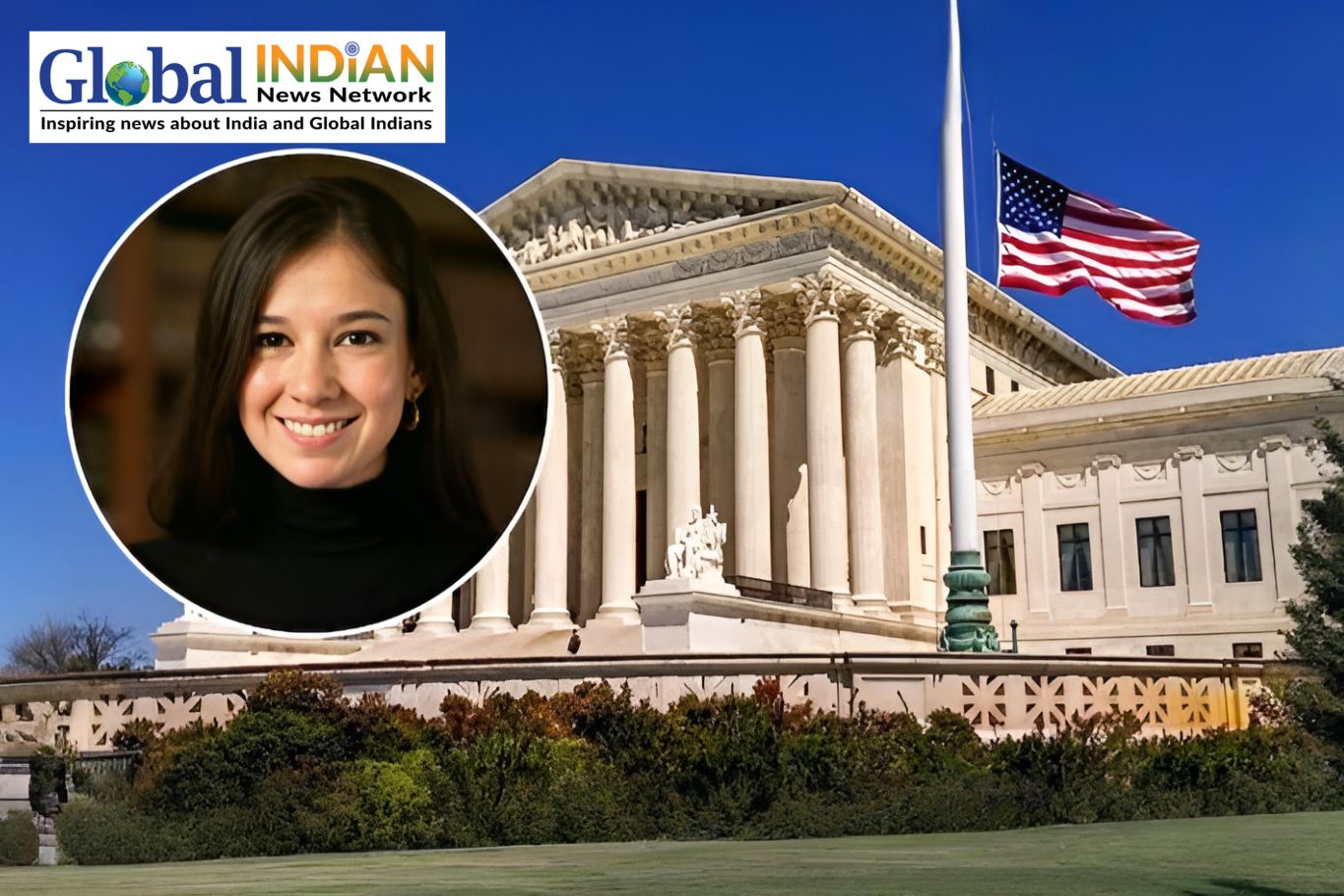
 As the United States Supreme Court hears arguments over President Donald Trump’s attempt to restrict birthright citizenship, Indian-American lawyer Smita Ghosh has emerged as a key figure in defending constitutional rights. Ghosh, Senior Appellate Counsel at the Constitutional Accountability Centre (CAC), is challenging Executive Order 14160, signed on January 20, 2025, which seeks to limit citizenship for children born on US soil to parents who are undocumented or temporarily present.
The order directs federal agencies to deny citizenship to children born after February 19, 2025, if the mother lacks legal status and the father is neither a US citizen nor a lawful permanent resident. Ghosh has been instrumental in the Trump v. Barbara case, using historical legal precedent, including the 1844 Lynch v. Clarke ruling, to argue that the executive order violates the Citizenship Clause of the 14th Amendment. This clause guarantees that all persons born in the United States are citizens, a principle ratified in 1868 to extend citizenship to formerly enslaved people and others born on American soil.
Ghosh is the lead author of the “Brief of Scholars of Constitutional Law and Immigration,” which forms the core of the legal challenge. The brief emphasizes historical and constitutional support for birthright citizenship, arguing against any restrictions based on parental immigration status. Lower courts have already blocked the order, with the US District Court for New Hampshire granting a preliminary injunction last year.
On April 1, 2026, the Supreme Court heard oral arguments in a historic session attended by President Trump himself, a rare occurrence for a sitting president. About 250,000 children are born annually in the US to undocumented parents, making the court’s decision highly significant for future generations.
Ghosh, who holds a JD and a PhD in American Legal History from the University of Pennsylvania, previously taught immigration and separation-of-powers law at Georgetown University and served as a Supreme Court Fellow. Despite her central role in this landmark case, she maintains a low public profile. Her legal arguments, rooted in historical precedent and constitutional law, could ultimately safeguard birthright citizenship for hundreds of thousands of children across the country.