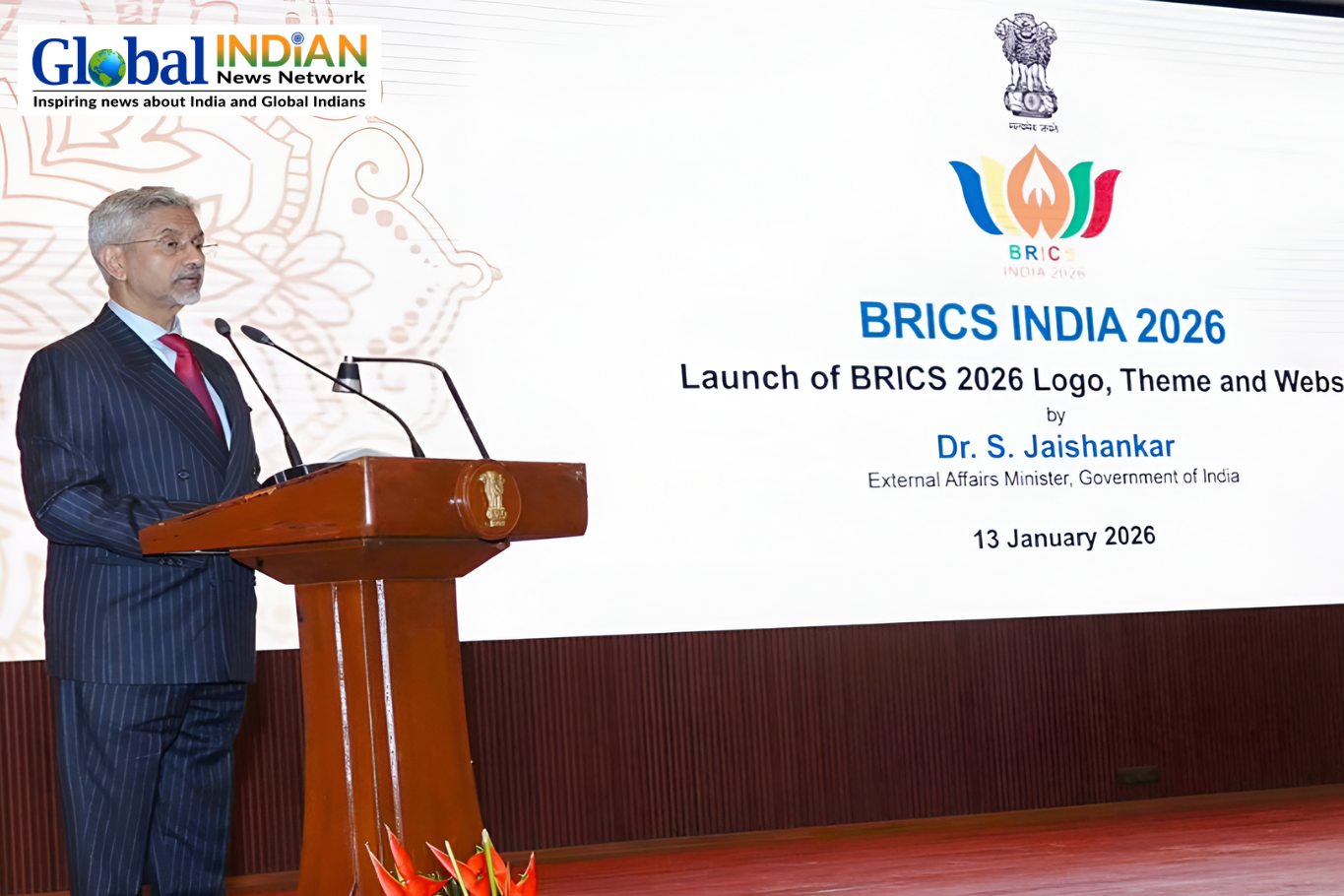
 India has launched the official website, theme and logo for its BRICS Presidency 2026, formally setting the stage for its leadership of the expanded grouping of emerging economies. External Affairs Minister S. Jaishankar unveiled the digital platform and visual identity, outlining India’s commitment to a humanity-first and people-centric approach to global cooperation.
BRICS brings together major emerging markets including Brazil, China, Egypt, Ethiopia, India, Indonesia, Iran, Russia, Saudi Arabia, South Africa and the United Arab Emirates. Over the years, the grouping has evolved into a significant forum for consultation and cooperation on global political, economic and developmental challenges.
The logo for India’s BRICS chairship blends tradition with modernity. The petals incorporate the colours of all BRICS member countries, symbolising unity, diversity and collective strength. At its centre, the “Namaste” gesture reflects India’s ethos of respect, inclusivity and harmonious collaboration. The design also subtly represents the three pillars of BRICS — political and security cooperation, economic and financial partnership, and people-to-people exchanges.
The newly launched website will serve as a central platform for updates on BRICS initiatives, meetings and events during India’s presidency.
India’s chairship theme, “Building for Resilience, Innovation, Cooperation and Sustainability,” reflects the country’s belief that collaborative action among emerging economies can help address shared global challenges in a balanced and inclusive manner. The theme highlights the importance of strengthening capacities, promoting innovation and ensuring sustainable development.
Speaking at the launch, Jaishankar said India is assuming the BRICS chairship at a pivotal moment, as the grouping approaches two decades since its inception. He noted that BRICS has continuously adapted to changing global realities while remaining focused on people-centric development, dialogue and practical cooperation.
India’s leadership of BRICS in 2026 is expected to emphasise collective welfare, inclusive growth and cooperative responses to global challenges, reinforcing the grouping’s role as a key voice of the Global South in international affairs.