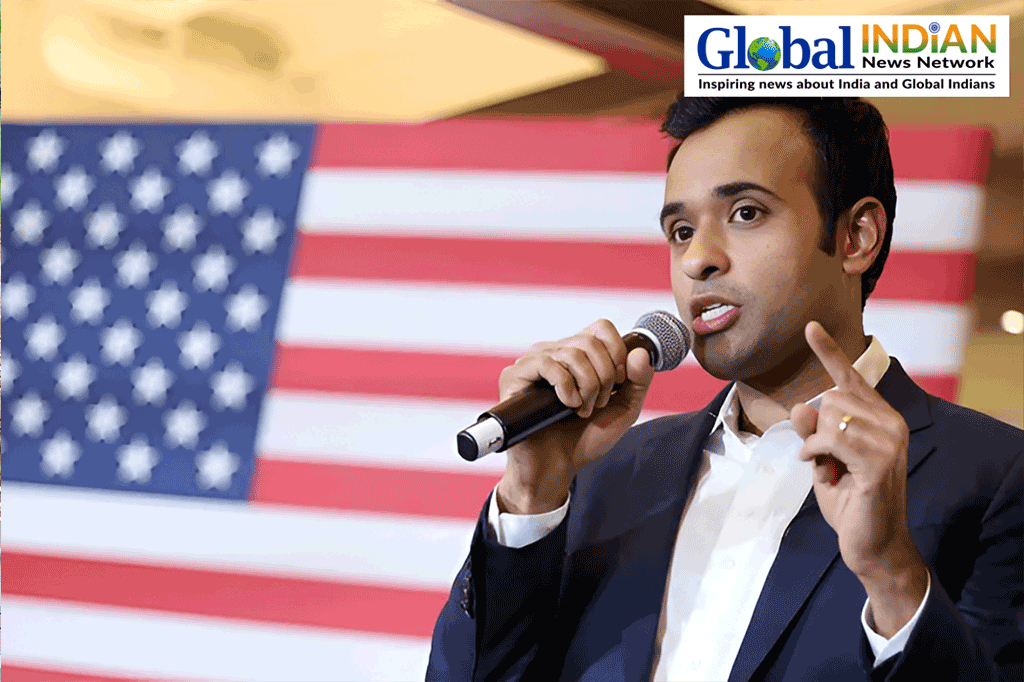
 Indian-origin Republican politician Vivek Ramaswamy has made history by raising $19.57 million during his 2025 campaign for Ohio governor, more than doubling the previous state record of $8.4 million set by Mike DeWine in 2017. His campaign reported that $9.88 million of this total came in the second half of the year, surpassing the $9.7 million raised in the first half, marking the strongest single reporting period for any Ohio gubernatorial candidate. These figures exclude Ramaswamy’s personal contributions.
Jonathan Ewing, Ramaswamy’s campaign manager, described the fundraising achievement as “historic momentum unmatched by any other campaign.” Since launching his campaign in February 2025, Ramaswamy has held 112 events with a fundraising component, attracting contributions from tens of thousands of individual donors. His early campaign haul already exceeds the total fundraising of previous candidates such as John Kasich, Mike DeWine, and Democrat Richard Cordray.
Ramaswamy, who received an endorsement from former President Donald Trump on the first day of his campaign, has also garnered backing from conservative lawmakers, community leaders, law enforcement officials, business leaders, and labor groups that historically supported Democrats. If elected, he would become the third Indian-American governor in the US, following Bobby Jindal and Nikki Haley.
In a Wall Street Journal op-ed published January 5, Ramaswamy announced he would step back from personal use of social media in 2026, describing platforms like Instagram and X as “traps for politicians.” His official accounts will continue posting campaign updates, managed by his team, allowing him to focus on voter engagement, policy development, and family time. He cited Italian Prime Minister Giorgia Meloni’s media avoidance strategy as inspiration, emphasizing that the break will help him dedicate more attention to meaningful political work rather than constant online feedback.
Ramaswamy’s decision reflects a broader critique of social media’s influence on politics, warning that platforms can distort reality and distract leaders from substantive governance. For now, he remains committed to his digital hiatus, while preparing for the 2026 Ohio gubernatorial election.