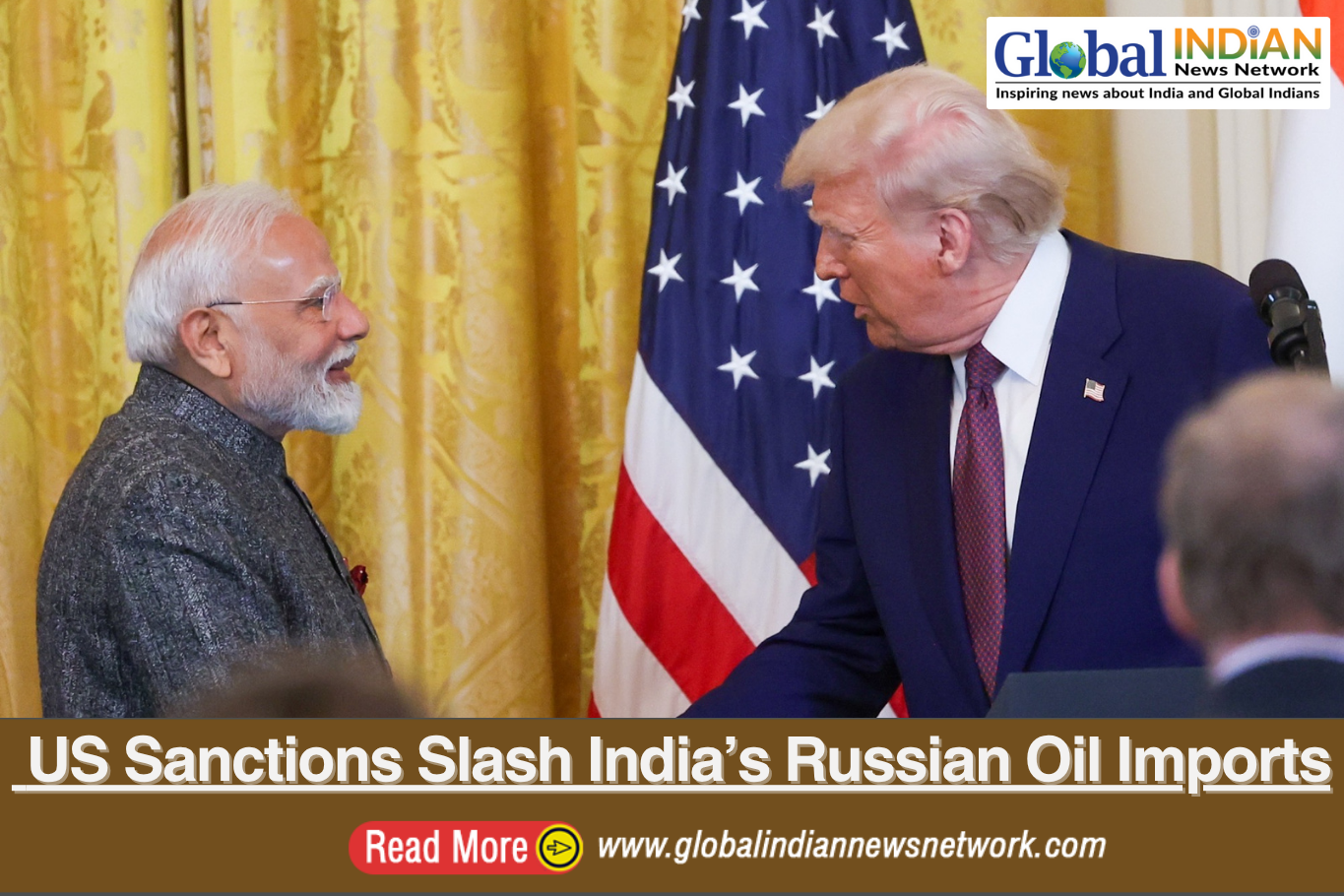
 India’s oil imports from Russia have witnessed a sharp downturn after the United States imposed sanctions on Moscow’s two leading energy companies—Rosneft and Lukoil. According to preliminary tanker data reviewed by The Indian Express, Russian oil flows to India averaged just 1.19 million barrels per day (bpd) in the week ending October 27, down from nearly 1.95 million bpd over the prior two weeks.
These sanctions, announced on October 22, are part of Washington’s broader campaign to limit Moscow’s revenue amid the ongoing conflict in Ukraine. The measures block the operations of Rosneft and Lukoil, along with their subsidiaries, ahead of a November 21 compliance deadline when several temporary General Licenses are due to expire or renew.
Though October’s overall average of 1.62 million bpd still accounted for about 34% of India’s oil imports, analysts note the decline aligns with refiners winding up pre-sanction contracts. Since Russian oil tankers take almost a month to reach Indian ports, the recent fall corresponds with refiners clearing earlier deals before the restrictions take effect.
Rosneft’s exports to India tumbled to 0.81 million bpd in the week to October 27, compared with 1.41 million bpd a week earlier. Meanwhile, Lukoil shipped no crude during the same period, after previously sending around 0.24 million bpd.
Indian refiners, including HPCL-Mittal Energy, have paused Russian crude purchases, while Indian Oil Corporation and Reliance Industries have stated they will comply with international sanctions and government directives. The industry is exercising caution, aware that secondary US sanctions could extend to non-American firms dealing with blacklisted entities.
Analysts predict Russian crude flows to India may hover between 1.6 and 1.8 million bpd until late November before easing further. However, a complete halt remains improbable, as suppliers may continue routing smaller volumes through alternative financial and trading networks.
To offset potential shortfalls, India—currently reliant on imports for about 88% of its crude needs—is expected to boost purchases from West Asia, Africa, Latin America, and North America. Experts suggest refiners will diversify supply chains to maintain stability as the geopolitical pressure around Russian energy intensifies.