 Republican and Democratic lawmakers in the US have joined hands to defend the India–US partnership, uniting through a series of letters and resolutions that push back against recent Trump administration policies seen as targeting Indian interests.
Over the past 10 days, at least six bipartisan communications have been sent to the administration, reaffirming the importance of the relationship and expressing concern over discriminatory rhetoric and restrictive policies.
Last week, a group of House members raised alarm over an event at Rutgers University that they said could “fuel prejudice” against Hindus, at a time when Hindu temples have been targeted by violence.
The letter was co-signed by Democrats Sanford Bishop, Shri Thanedar, and Suhas Subramanyam, along with Republican Rich McCormick.
Two days earlier, another bipartisan group of six Representatives wrote to President Donald Trump and Commerce Secretary Howard Lutnick voicing concern over the H-1B visa proclamation, warning that it would “create challenges for US employers and weaken competitiveness.”
On October 17, four lawmakers urged the President to attend the Quad Leaders’ Summit in India, underscoring the partnership’s strategic value. That same day, the House introduced a bipartisan resolution recognizing the “contributions of the Indian American diaspora” and condemning rising acts of racism.
The resolution called the India–US relationship “one of the most important democratic partnerships in the world.”
The bipartisan tone marked a sharp contrast from October 8, when 19 Democratic House members urged the administration to “reset and repair” ties with India.
Tensions escalated after the Trump administration imposed 50% tariffs on India — including 25% on Russian oil imports — and introduced a $100,000 H-1B visa application fee, affecting Indian professionals who make up over 70% of visa approvals.
Democratic Representative Ami Bera, one of the most vocal advocates for India in Congress, told IANS that Republican lawmakers had been hesitant to challenge Trump directly.“They’re certainly afraid to take on President Trump directly,” Bera said.
He emphasized that bipartisan cooperation is essential to keep the India–US relationship above partisan politics.“Let’s make it about the US–India relationship. It shouldn’t be a Democratic or Republican issue — it should be an American one,” he added.
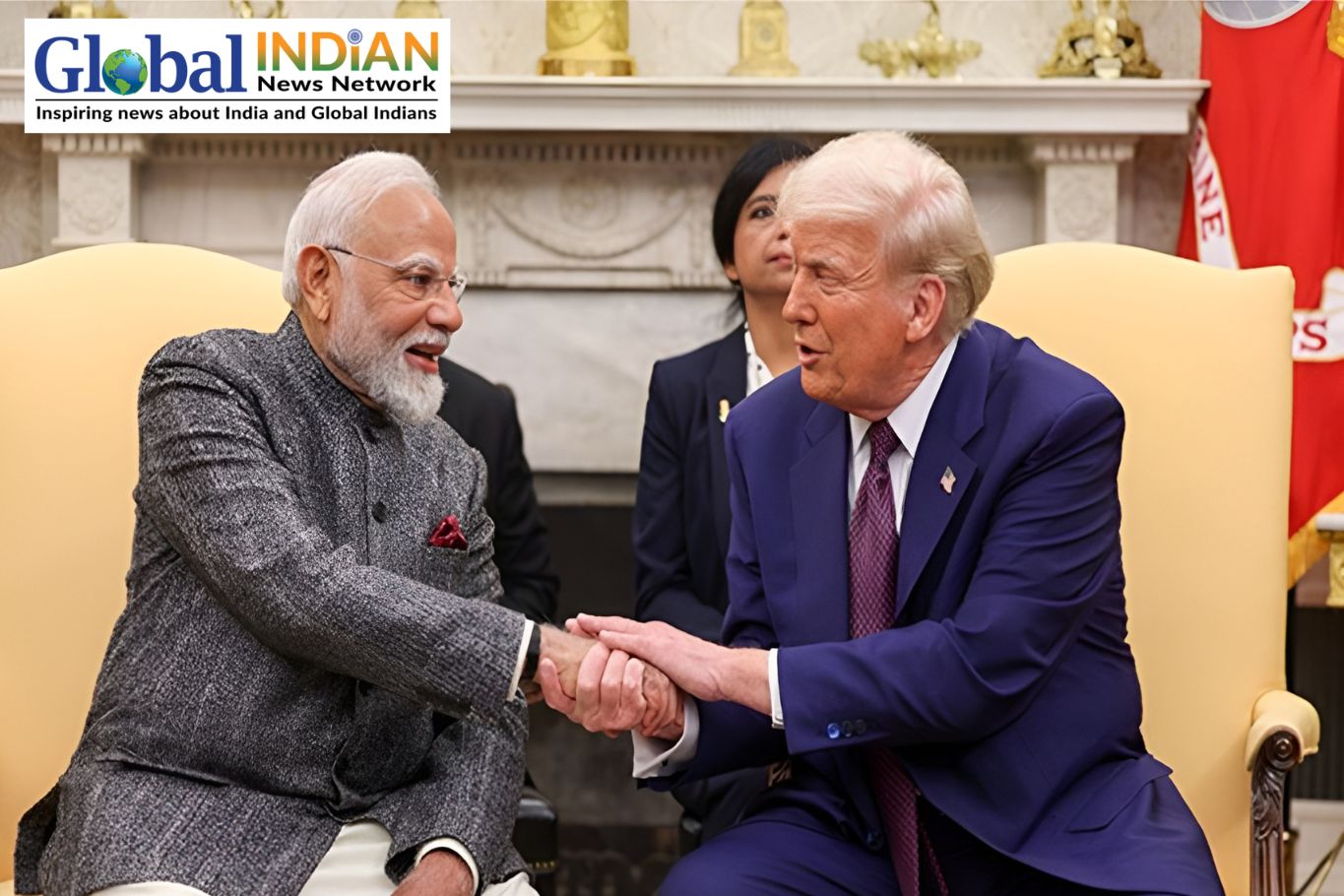
In recent weeks, ties have stabilised as negotiators resumed talks on a trade deal, and President Trump hosted a Diwali celebration at the White House, calling Prime Minister Narendra Modi “a great person” and praising the people of India.