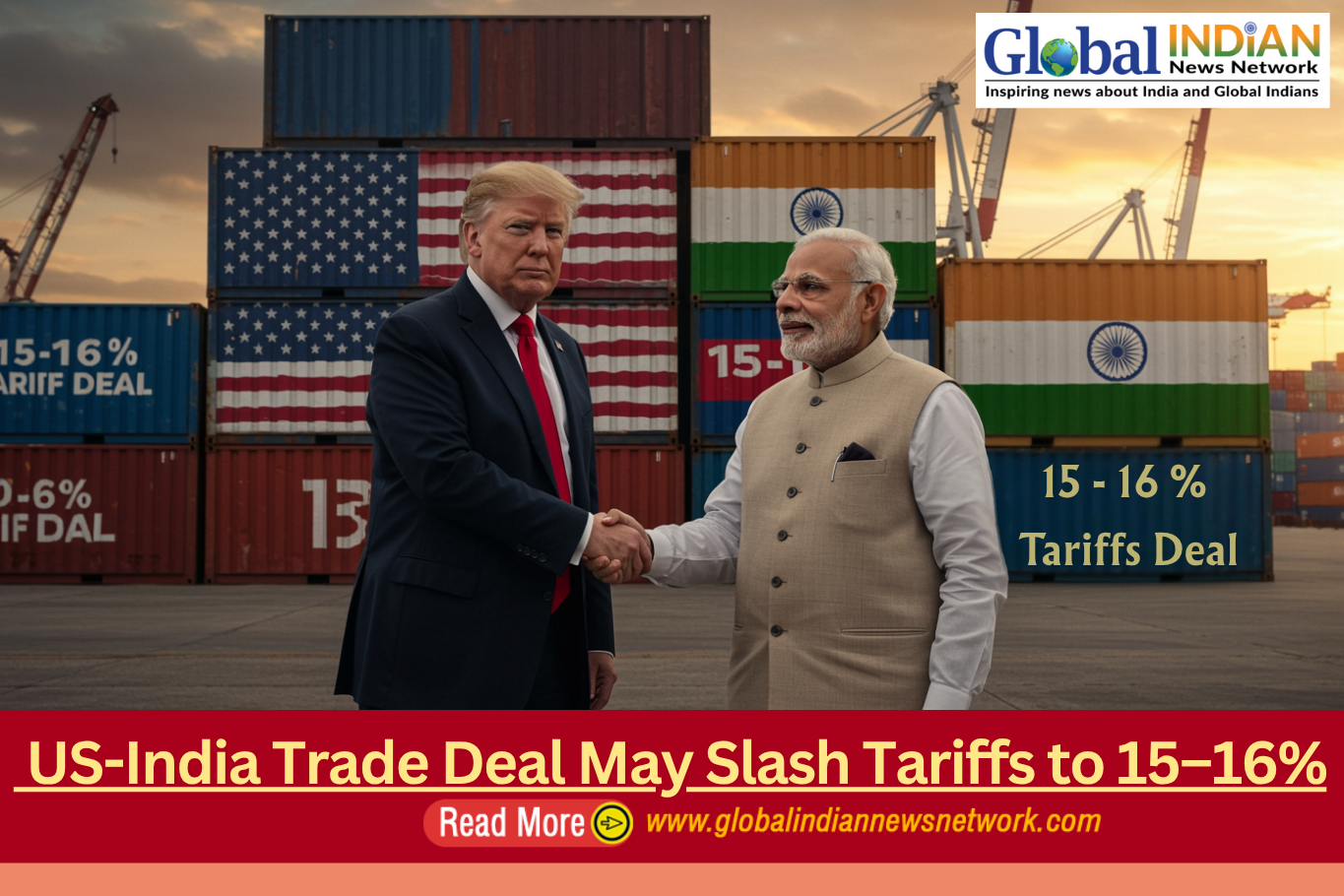
 India and the United States are in the advanced stages of negotiating a trade agreement that could significantly reduce tariffs on Indian exports from the current 50% to approximately 15–16%, according to sources cited by Mint. Chief Economic Advisor V Anantha Nageswaran expressed optimism that the dispute over penal tariffs could be resolved within the next two months, potentially leading to the rollback of the extra levies imposed by the White House.
Nageswaran suggested that the reciprocal 25% tariffs may also decrease to between 10% and 15%, which would be a notable development for bilateral trade. Key topics under discussion include India’s gradual reduction of Russian oil imports, a point of contention in previous negotiations. Currently, India sources roughly 34% of its crude from Russia, while about 10% comes from the US.
The trade discussions also cover energy and agriculture. India may permit increased imports of non-genetically modified (non-GM) American corn and soymeal, although the existing duty on these products would remain at 15%. The current quota for US corn imports stands at 0.5 million tonnes annually. This move comes as US corn exports have declined from $18.57 billion in 2022 to $13.7 billion in 2024, partly due to reduced Chinese purchases.
Additionally, India could allow ethanol imports and gradually reduce Russian crude purchases, while the US may offer concessions on energy trade. State-run Indian oil companies are expected to diversify sourcing towards the US, although the US has yet to match Russia’s discounted prices. Notably, the price gap between Russian and benchmark crude has narrowed from over $23 per barrel in 2023 to just $2–2.50 per barrel by mid-October, resulting in India saving $3.8 billion on oil purchases in FY25.
The potential trade deal might be announced at the upcoming ASEAN Summit, where Presidents Donald Trump and Prime Minister Narendra Modi are expected to participate, though their attendance is yet to be confirmed. The agreement, negotiated by India’s commerce and external affairs ministries along with the national security adviser’s office, could strengthen India-US trade, expand market access, and enhance bilateral economic cooperation.
India’s exports to the US reached $86.51 billion in FY25, making it the country’s largest merchandise market. While the 50% tariffs have not drastically affected this year’s exports, a continuation into next year could reduce Indian shipments to the US by about 30%, impacting the nation’s GDP, as exports contribute roughly one-fourth of it.