India and the United States risk halting more than two decades of strategic progress unless they swiftly address mounting political tensions over tariffs and Washington’s renewed engagement with Pakistan, policy expert Dhruva Jaishankar has warned in a written submission to the US House Foreign Affairs Committee.
Jaishankar, Executive Director of the Observer Research Foundation America, told lawmakers that the partnership—built consistently across administrations in both countries—is now facing “a political standstill” driven by disagreements on trade policy and unease in New Delhi over high-level US outreach to Pakistan’s military leadership.
He noted that the India–US relationship has strengthened significantly since the late 1990s, anchored by economic complementarities, shared concerns over China’s rise, and deepening coordination across the Indo-Pacific. But he cautioned that momentum is slipping at a time when both countries confront a rapidly shifting strategic environment.
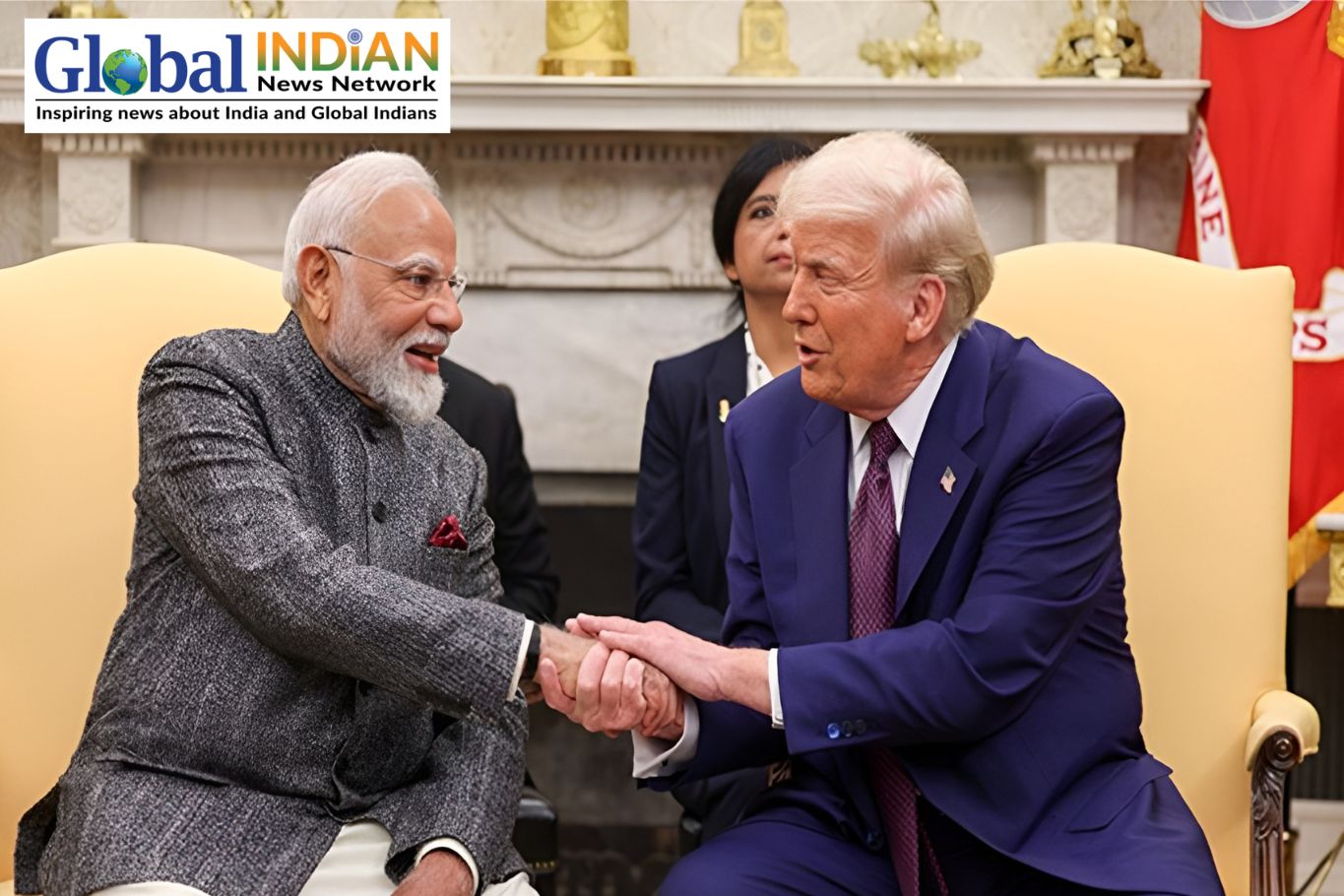
According to his testimony, the partnership has historically drawn strength from “mutually beneficial economic opportunities” and “strategic coordination” on challenges related to China and Middle Eastern stability. He warned that the current political climate threatens progress on the ambitious bilateral agenda outlined by President Trump and Prime Minister Modi in early 2025, as well as cooperation across the Quad and other regional platforms.
Jaishankar’s statement outlined nearly three decades of advances—from the lifting of US sanctions in 1999, to the civil nuclear agreement of 2008, an expanding defence partnership, the revival of the Quad, and major collaboration on space, artificial intelligence, critical minerals and maritime security.
He described China’s intensified military posture as a key driver of India–US alignment, citing intrusions along the disputed border, the 2020 Galwan clashes, large-scale naval expansion, and Beijing’s growing network of dual-use ports across the Indo-Pacific. He also noted that India has increased its maritime presence since 2017 and deepened cooperation with regional partners through initiatives such as the Quad’s Maritime Domain Awareness platform.
However, recent tensions have complicated the strategic equation. The relationship was jolted after India’s retaliatory strikes on Pakistan following a deadly April terror attack, and Washington’s subsequent outreach to Pakistan’s military establishment. Jaishankar warned that Pakistan’s “continued support for terrorism” and its destabilising regional role remain major sources of concern for India.
Trade has emerged as another significant pressure point. Jaishankar said that US tariffs imposed after bilateral trade talks stalled have become “among the highest on any country,” affecting exporters, workers and investments on both sides. If left unresolved, he warned, these duties may increasingly be viewed in India as “an act of political hostility.”
Despite these strains, he noted that cooperation has continued in several areas, including a new 10-year Defense Framework Agreement, major defence sales, expanded joint exercises, human spaceflight cooperation with NASA, the NISAR satellite mission, and India’s $1.3 billion LNG import deal with the United States.
Jaishankar concluded that the partnership retains enormous potential across four key pillars—trade, energy, technology and defence—and highlighted opportunities for collaboration in artificial intelligence, semiconductor supply chains, critical minerals and defence co-production under the US–India TRUST initiative.