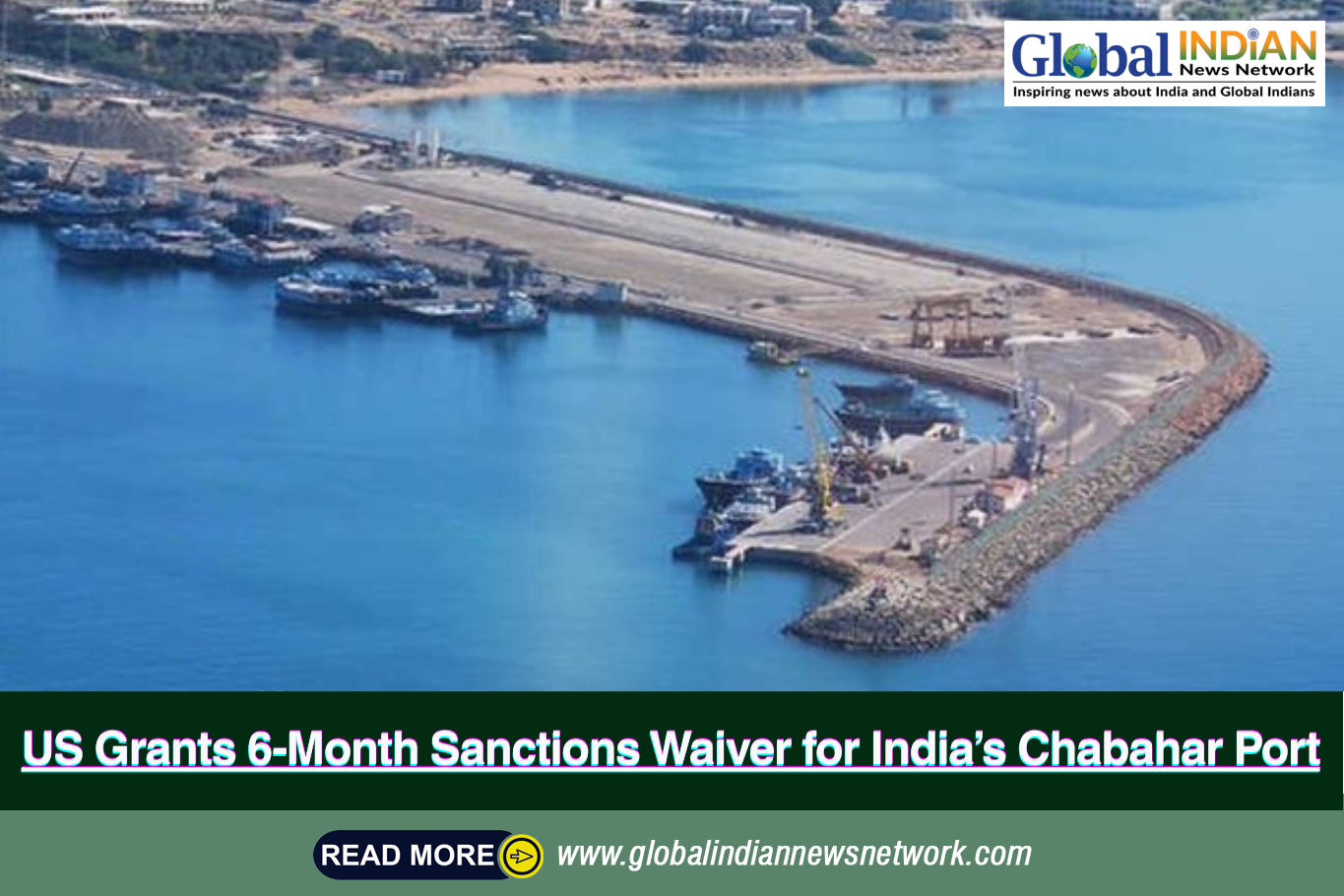
 The United States has approved a six-month exemption for India, allowing it to carry out operations at Iran’s Chabahar Port without facing sanctions. The Ministry of External Affairs confirmed the decision, noting that the waiver will enable India to maintain its strategic presence along the Gulf of Oman while fostering regional connectivity.
India has played a central role in developing the Chabahar Port, situated in Iran’s Sistan-Balochistan province, and currently manages the Shahid Beheshti terminal. The port is a key component of New Delhi’s efforts to establish direct trade routes with Afghanistan and Central Asia, bypassing Pakistan.
Earlier, India had expressed concern over the United States’ move to revoke a 2018 sanctions waiver granted under the Iran Freedom and Counter-Proliferation Act (IFCA). The waiver had allowed India to participate in the port’s development for humanitarian and reconstruction purposes, especially in relation to Afghanistan’s economic growth.
The US State Department had previously cautioned that individuals or entities involved in the Chabahar Port operations could face penalties under IFCA once the waiver was withdrawn. This action was in line with the Trump administration’s “maximum pressure” campaign aimed at isolating Tehran and limiting its financial networks. Thomas Pigott, the State Department’s deputy spokesperson, had stated that the Secretary of State decided to revoke the exception effective September 29, which could have jeopardized India’s activities at the port.
However, the renewed six-month waiver reflects Washington’s recognition of Chabahar’s importance for regional stability and trade. The port not only facilitates India’s access to Afghanistan but also strengthens its strategic foothold in the Middle East. Both India and Iran have been advocating for the inclusion of Chabahar in the International North-South Transport Corridor (INSTC), a multimodal trade network connecting South Asia with Europe through Central Asia and Russia.
The continuation of India’s operations at Chabahar is expected to enhance economic cooperation, regional connectivity, and long-term trade prospects valued in billions of dollars across the transport corridor.