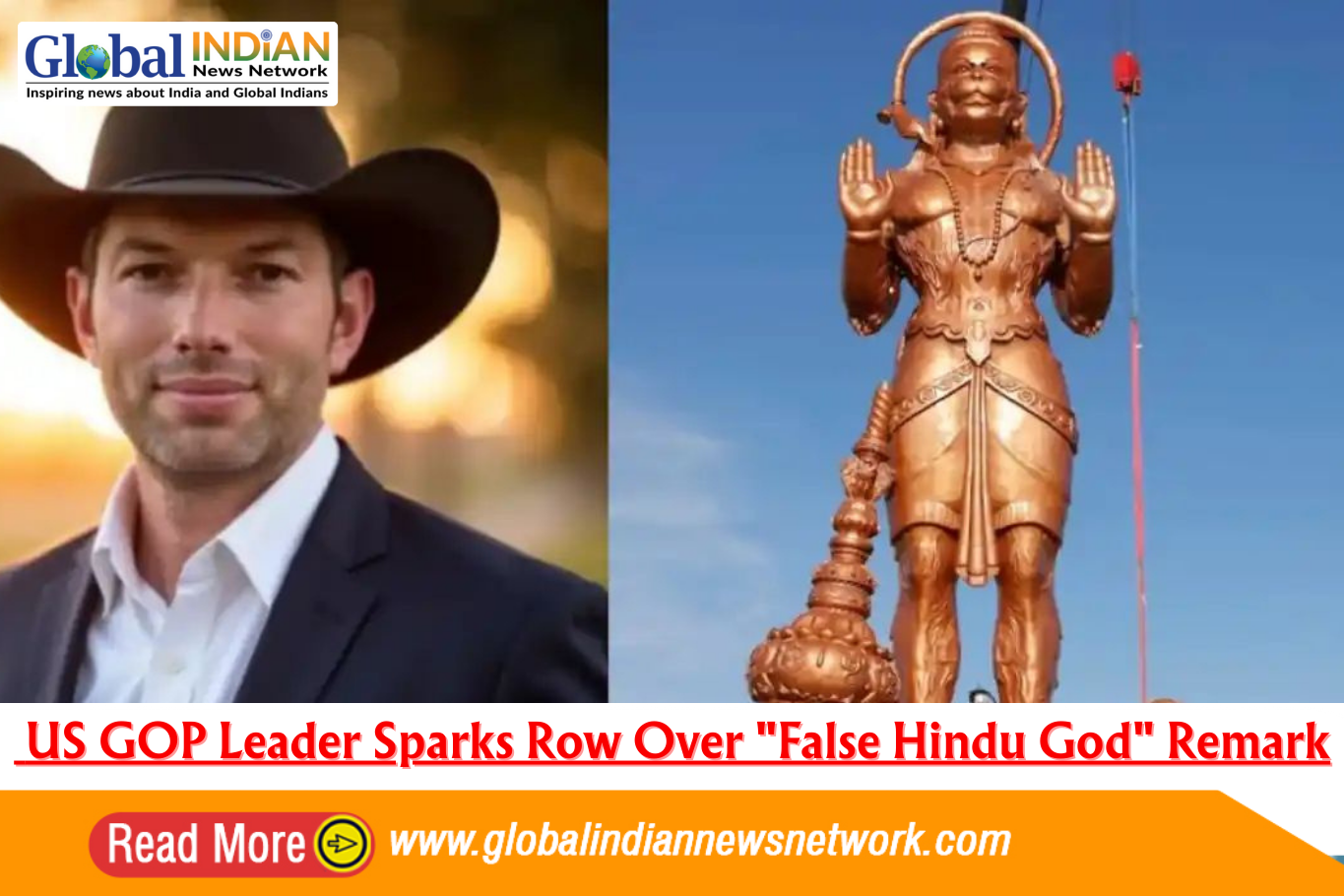
 Texas Republican Senate candidate Alexander Duncan has come under fire for comments criticizing a 90-foot statue of Lord Hanuman, also called the ‘Statue of Union’, located at the Shri Ashtalakshmi Temple in Sugar Land, Texas. Declaring the United States a Christian nation, Duncan questioned the presence of the Hindu monument, referring to it as a “false statue of a false Hindu God” in posts on X.
In another message, Duncan quoted the Bible, citing Exodus 20:3-4: “You must not have any other god but me. You must not make for yourself an idol of any kind or an image of anything in the heavens or on the earth or in the sea,” reinforcing his opposition to the statue’s construction.
The remarks quickly drew widespread criticism. The Hindu American Foundation (HAF) described the statements as “anti-Hindu and inflammatory,” and formally requested the Texas Republican Party to take action against Duncan. HAF highlighted that his comments contravened party guidelines on discrimination and violated the principles of the First Amendment, which protects freedom of religion.
Social media users also challenged Duncan, noting that religious freedom is a constitutional right in the United States. Jordan Crowder, a user on X, reminded him that Hindu texts such as the Vedas predate Christianity by nearly two millennia and have influenced many religious traditions, urging respect and research of ancient faiths.
The ‘Statue of Union’, unveiled in 2024, is one of the tallest Hindu monuments in the United States and the third-tallest statue in the country. The project was envisioned by Sri Chinnajeeyar Swamiji and serves as a significant symbol of Hindu culture and heritage in America, attracting attention both for its architectural prominence and its religious significance.
The controversy underscores ongoing debates around religious expression in public spaces and the balance between free speech and respect for diverse faiths in the United States. Calls for accountability from political leaders and advocacy groups highlight the tension between personal beliefs and constitutional protections in a multicultural society.