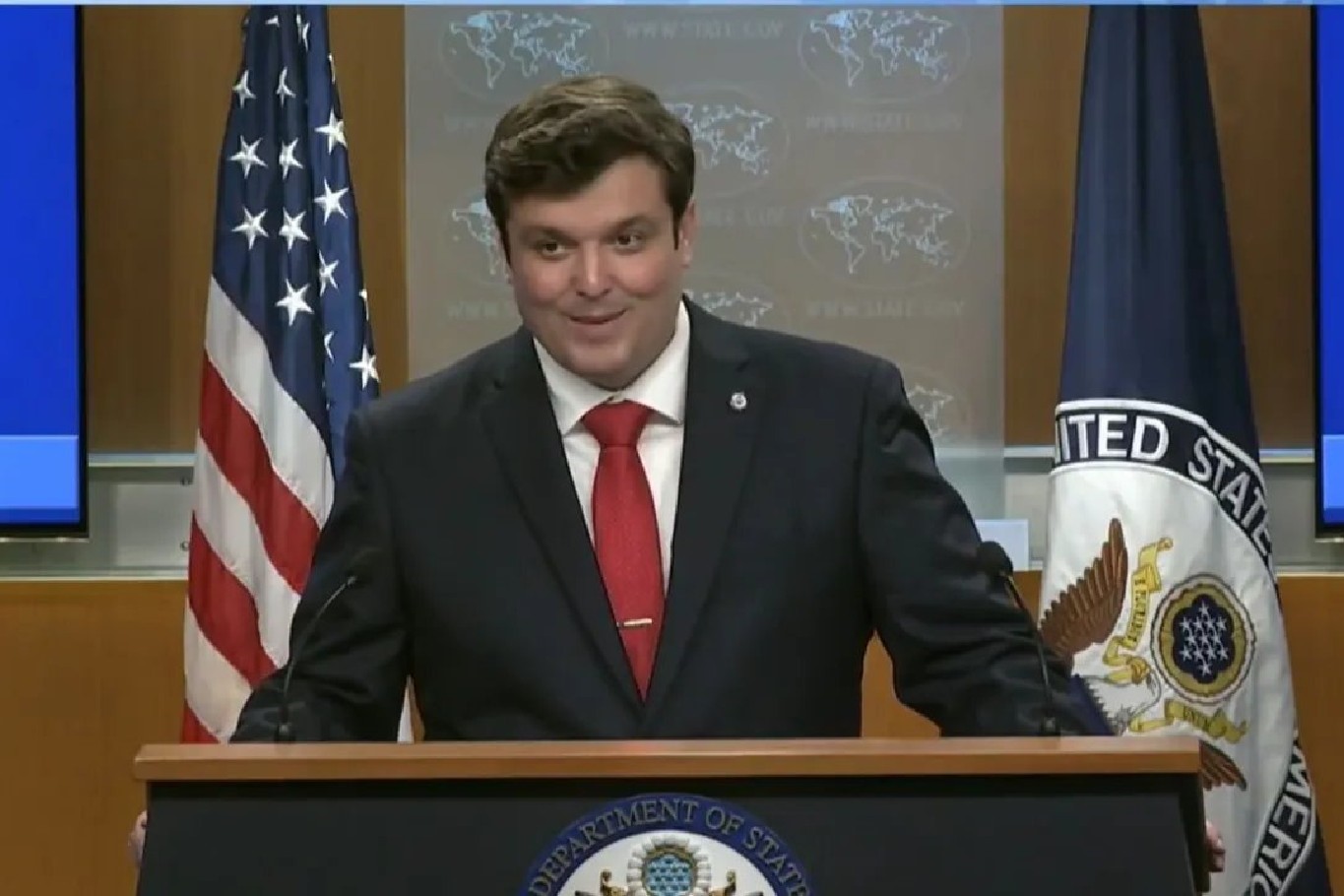
On May 14, the United States called upon India and Pakistan to maintain open lines of communication, underscoring its commitment to promoting peace in South Asia. Speaking at a regular briefing, US State Department spokesperson Tommy Pigott emphasized the need for continuous dialogue between the neighboring nations following their recent ceasefire agreement.
Pigott welcomed the ceasefire and lauded Indian Prime Minister Narendra Modi and Pakistani Prime Minister Shehbaz Sharif for showing what he described as “strength, wisdom, and fortitude” by choosing diplomacy over conflict. He reaffirmed the Trump administration’s twin objectives: maintaining the ceasefire and promoting continued direct dialogue between the Indian and Pakistani governments.
President Donald Trump, currently in Riyadh as part of his West Asia tour, also commented on the situation. He highlighted that his administration leveraged potential trade opportunities to help de-escalate tensions, successfully prompting both nations to agree to a ceasefire.
When asked about Secretary of State Marco Rubio’s recent communications with Pakistan’s Foreign Minister Ishaq Dar and Army Chief Asim Munir regarding anti-terror commitments, Pigott declined to disclose any details. However, he repeated the administration’s core message: applauding the ceasefire and continuing to advocate for direct talks as the best path forward.
Regarding India’s decision to decline American mediation, Pigott refrained from speculation but reiterated the US stance. “We’re not here to interfere,” he said, “but we will continue to support and encourage bilateral communication that fosters stability.”
On the topic of recent reports alleging radiation leaks at Pakistani nuclear facilities, the State Department declined to comment.
The US continues to position itself as a supportive yet non-intrusive partner in the region, championing peace through diplomacy. Its emphasis remains firmly on encouraging India and Pakistan to resolve issues through dialogue and mutual understanding, while publicly acknowledging the role of trade incentives and leadership choices in diffusing recent tensions.