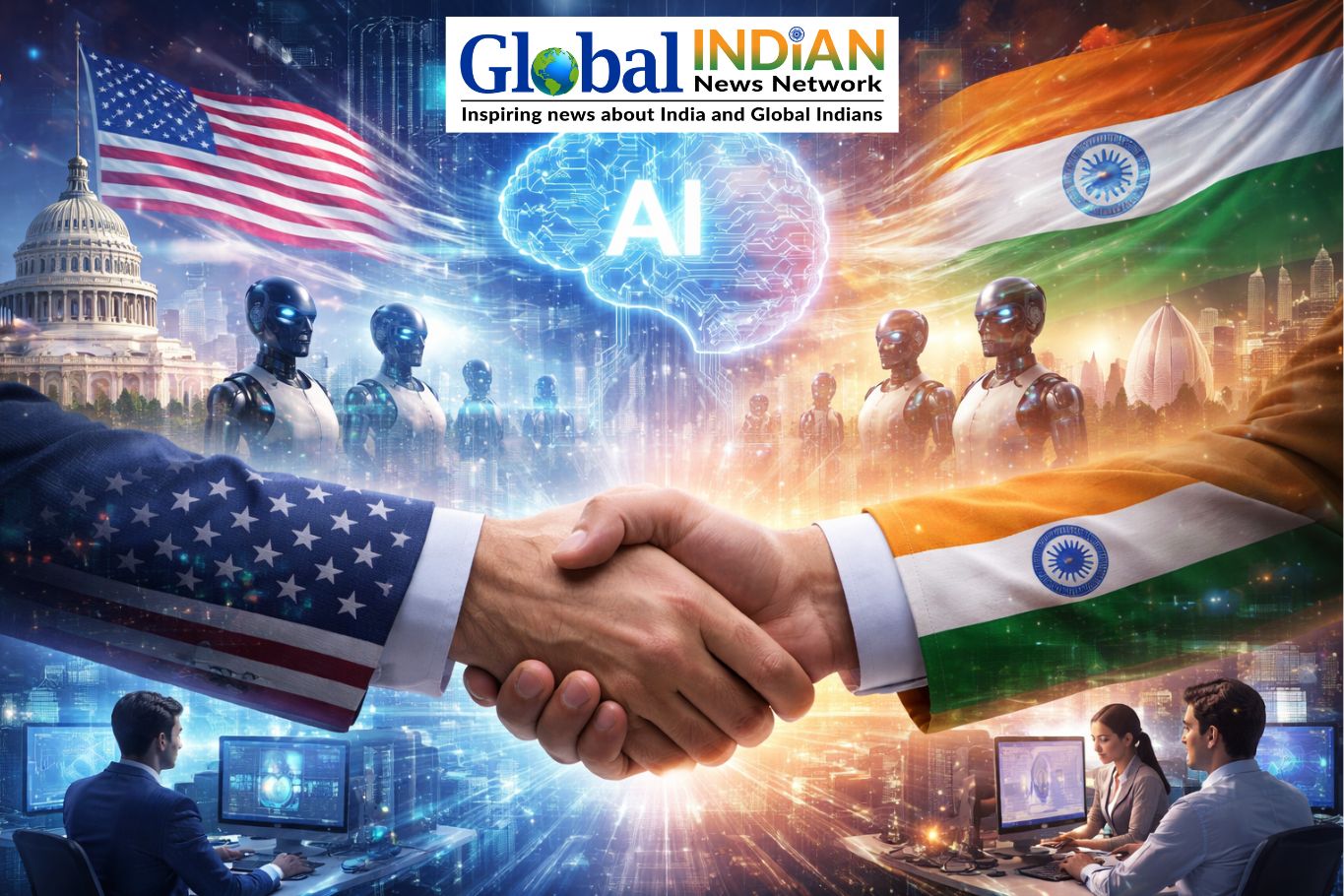
 The US government has introduced a comprehensive national strategy on artificial intelligence, outlining its ambition to dominate the global AI landscape. This policy blueprint is expected to influence international technology ecosystems, particularly Indian professionals and IT companies that play a major role in supporting US-based digital infrastructure.
The six-part framework focuses on accelerating innovation, ensuring citizen safety, and strengthening national security. Officials emphasized the importance of winning the AI race to unlock economic growth and long-term competitiveness. Lawmakers have been urged to formalize the plan into legislation, signaling a strong push toward structured AI governance.
The proposed roadmap highlights several critical areas, including child protection, economic expansion, intellectual property rights, freedom of expression, technological advancement, and workforce readiness. These themes are closely tied to India’s involvement in the US tech sector, where a large number of Indian-origin professionals contribute to AI development and engineering.
A key aspect of the initiative is the creation of an AI-ready workforce. The administration has stressed the need for training programs and skill development, ensuring that workers can benefit from AI-driven opportunities. This holds particular importance for Indian talent, which forms a significant portion of the US technology labor force.
The policy is also expected to benefit Indian IT services firms that support global AI systems through software development and data management. By removing outdated regulations and promoting faster adoption of AI across industries, the framework could drive increased demand for international collaborations.
Infrastructure development is another major focus, especially the expansion of data centers and energy resources. The government has proposed that companies generate their own power instead of passing costs onto consumers. Faster approval processes for such projects could reshape global supply chains connected to India.
Balancing intellectual property rights with innovation is also part of the plan. While creators’ rights must be protected, AI systems should still have access to diverse data for learning. Additionally, the framework underscores the importance of safeguarding free speech and avoiding misuse of AI for censorship.
To ensure consistency, the administration has called for a unified national policy instead of varied state-level regulations. This approach could simplify operations for global companies, including Indian firms working across multiple US regions.
As countries compete to regulate and lead in AI, the US is positioning itself alongside China at the forefront. With India simultaneously expanding its AI capabilities, policy decisions in the US are likely to influence global standards, requiring Indian businesses and professionals to stay agile and responsive.