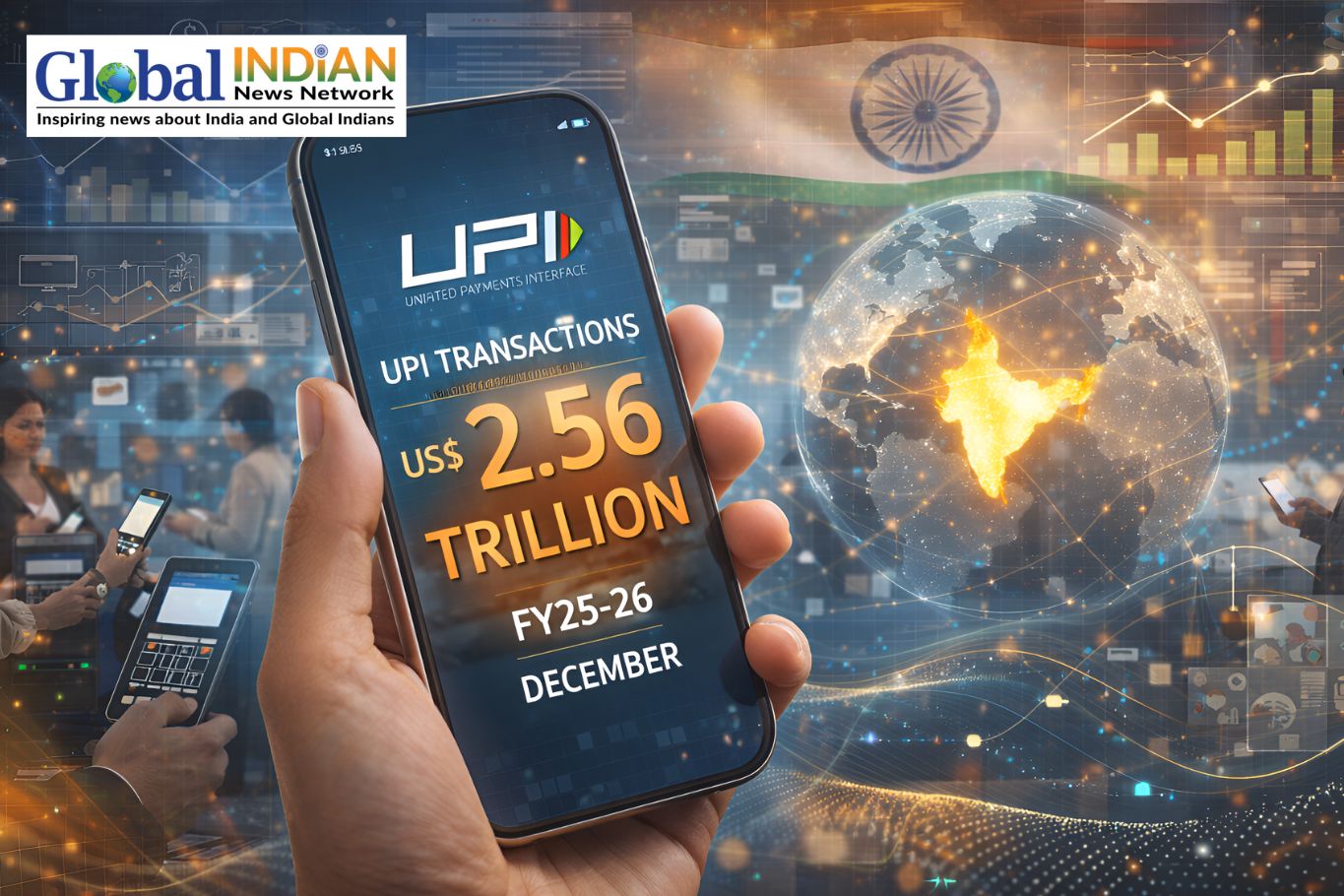
 India’s Unified Payments Interface (UPI) has achieved a record milestone, reaching Rs. 230 lakh crore (US$ 2.56 trillion) in transactions between April 2025 and December 2025, according to a government briefing in the Rajya Sabha. This marks a sharp rise from the previous year’s Rs. 139 lakh crore (US$ 1.54 trillion) in FY24-25, highlighting the accelerating adoption of digital payments across the country.
The surge in UPI usage is attributed to increased digital literacy among consumers, wider acceptance by merchants, and seamless interoperability across multiple payment apps and banking partners. These factors have established UPI as a central component of India’s rapidly evolving digital economy, driving convenience and efficiency in retail transactions.
The platform is also expanding its footprint globally. UPI is now operational in eight countries, supporting cross-border payments in line with local regulatory frameworks. This international adoption underscores India’s growing influence in digital finance and the appeal of its payment infrastructure to the global community.
The International Monetary Fund (IMF) has recognised UPI as the world’s largest real-time retail payment system by the number of transactions, reflecting its unprecedented scale and impact. The system’s ability to handle vast volumes of payments in real time demonstrates its robustness and the increasing confidence of both domestic and international users in India’s digital payment ecosystem.
Minister of State for Finance, Pankaj Chaudhary, highlighted that UPI’s rapid growth is a testament to India’s commitment to technological innovation in financial services. With its combination of domestic dominance and international reach, UPI is set to continue shaping the future of payments, reinforcing India’s position as a global leader in digital finance.
The record-breaking figures and international recognition signal that UPI has moved beyond a national tool to become a global benchmark, driving both financial inclusion and technological leadership in the digital economy.