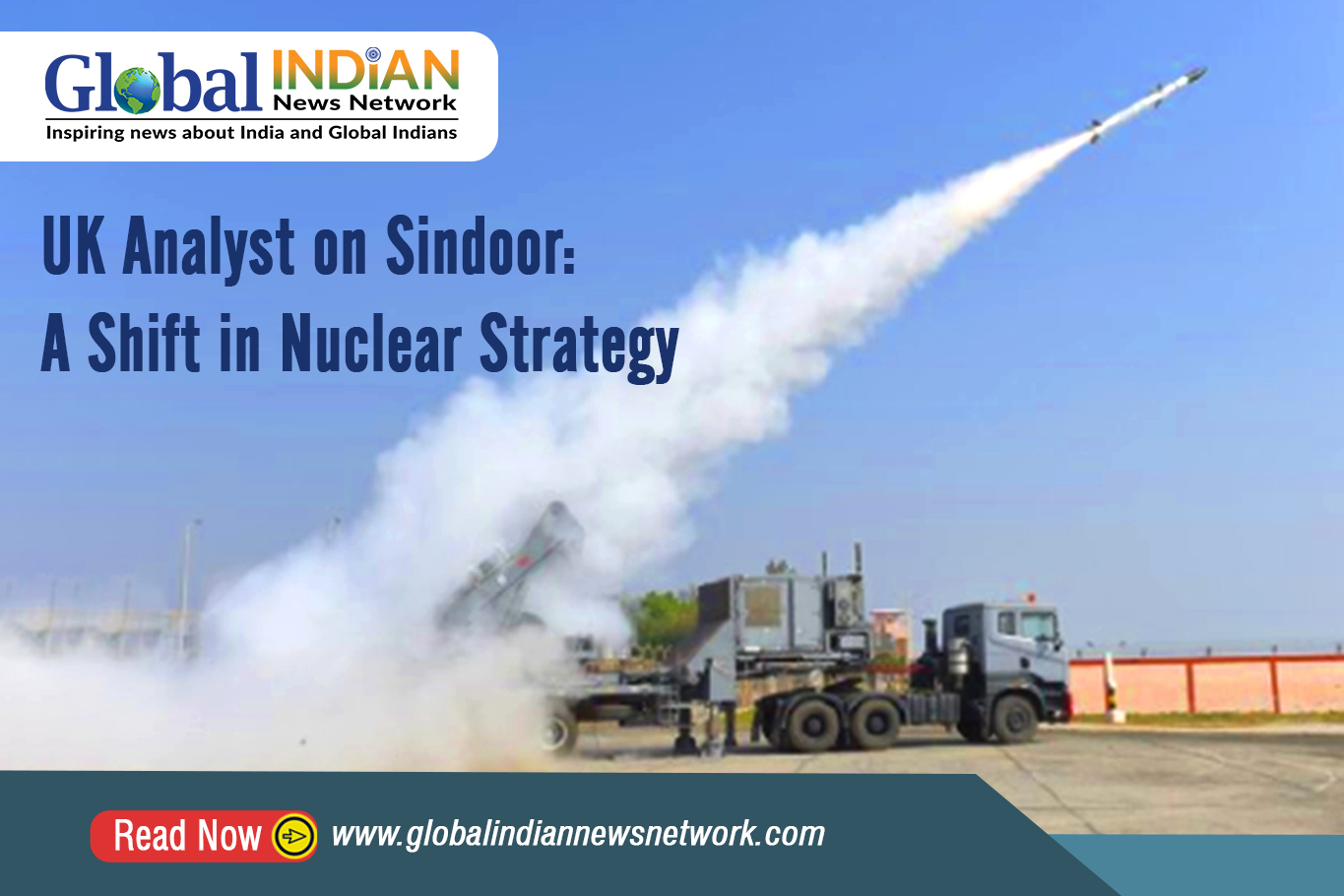
In a striking observation, Dr Walter Ladwig, Senior Lecturer in International Relations at King’s College London, has described Operation Sindoor as a watershed moment in modern military history, noting that it was the first time two nuclear-armed nations engaged in continuous reciprocal strikes.
Speaking to NDTV, Dr Ladwig shared insights from his report titled “Calibrated Force: Operation Sindoor and the Future of Indian Deterrence”, published by the Royal United Services Institute (RUSI). He clarified that India’s precision strike was focused on holding the perpetrators of the April 22 Pahalgam attack accountable, with no intention of triggering a broader conflict with Pakistan.
The Pahalgam incident, which claimed 26 civilian lives, was claimed by The Resistance Front, a proxy of the banned Lashkar-e-Taiba group. In retaliation, India launched a series of coordinated airstrikes on the night of May 6 and 7, targeting nine terror camps in Pakistan and Pakistan-Occupied Kashmir, under Operation Sindoor. What followed were three nights of strikes and counter-strikes, culminating in a ceasefire agreement on May 10 at 5 PM.
Highlighting India’s evolved military approach, Dr Ladwig said the operation showcased decade-long advancements in IAF capabilities, describing it as part of a “new and unprecedented military space” in the nuclear age. “Unlike past conflicts, this scenario of reciprocal airstrikes between nuclear states is entirely novel,” he remarked.
He drew parallels with earlier shifts in Indian policy: from the 2016 Uri surgical strikes to the 2019 Balakot airstrikes, noting that these operations were becoming increasingly transparent and assertive. “The current focus is on striking multiple targets across several rounds,” he noted.
Dr Ladwig emphasised that India’s current doctrine puts the onus on the adversary. Instead of building extensive evidence before responding, he said, India’s policy now signals: “If you enable terrorists and fail to restrain them, you are responsible for the consequences.”
However, he cautioned that India must continue presenting credible cases internationally to maintain global trust. “India enjoyed widespread support after the Pahalgam attack, but it cannot afford to take this diplomatic goodwill for granted,” he noted.
Regarding Pakistan’s retaliatory actions, Dr Ladwig said India’s counterstrikes were necessary to reinforce deterrence credibility. “The follow-up responses demonstrated not just retaliation but also an escalation capability — a message about India’s strategic maturity.”
He added that such operations may lead to a “cat-and-mouse” game, with terror groups adapting by going underground and improving concealment. “Tracking and neutralising such threats will become increasingly complex, placing new demands on intelligence and surveillance,” he warned.
Dr Ladwig concluded by describing Operation Sindoor as a pivotal point that will be studied extensively in future military strategy debates, especially concerning nuclear powers and cross-border terrorism.