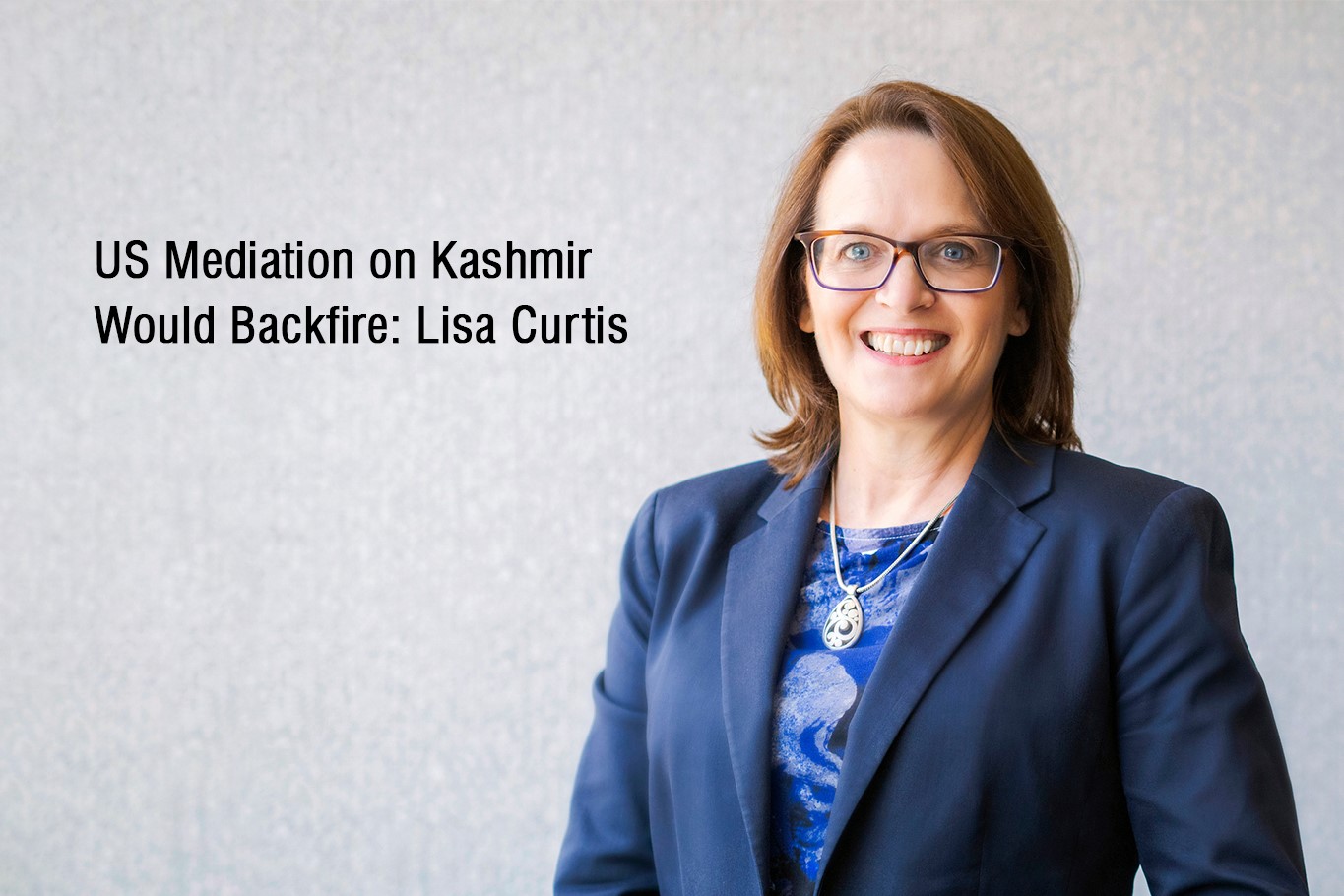
 In the latest episode of Latitude at Frontline, host Nirupama Subramanian explores the geopolitical fallout from Operation Sindoor, a major military confrontation between India and Pakistan following a deadly terror attack in Pahalgam. The episode focuses on US President Donald Trump’s controversial claims that he brokered a ceasefire between the two countries—assertions that have been firmly contradicted by the Indian government. To unpack the implications, Subramanian interviews Lisa Curtis, a former Deputy Assistant to President Trump and senior director for South and Central Asia on the US National Security Council.
Curtis, now a senior fellow at the Center for a New American Security (CNAS), provides critical insight into the reality behind the headlines. She clarifies that while the US may have played a quiet diplomatic role in urging restraint and facilitating de-escalation, it is misleading to say the US “mediated” the ceasefire. The term “mediation” implies third-party involvement in conflict resolution, especially on sensitive issues like Kashmir—something India categorically opposes. India’s long-standing position is that any dispute with Pakistan must be resolved bilaterally, without foreign intervention.
Trump’s use of words like “brokered” and “mediated” not only contradicts India’s policy but has caused considerable diplomatic discomfort. Curtis suggests this might be a matter of imprecise language rather than a deliberate misrepresentation. However, she acknowledges that Trump’s repeated remarks—even after Indian rebuttals—have deepened mistrust in New Delhi and complicated the India-US strategic dynamic.
There is a strong perception in India that Trump’s statements equated India and Pakistan, ignoring the root cause of the conflict: terrorism originating from Pakistani soil. The April 22 terrorist attack, reportedly carried out by an offshoot of the Pakistan-based Lashkar-e-Taiba, was the immediate trigger for India’s military retaliation under Operation Sindoor. Yet, President Trump has conspicuously avoided condemning the terror attack in his public remarks. This omission has frustrated Indian policymakers and observers, who feel it whitewashes Pakistan’s role in sponsoring cross-border terrorism.
Curtis underscores the danger of such neutrality. By failing to clearly name and shame Pakistan’s involvement in terrorism, the US risks emboldening terrorist groups. Worse still, any suggestion of international involvement in Kashmir provides false hope to such groups and their patrons in Pakistan that violence can achieve diplomatic leverage. This dynamic, Curtis warns, is dangerous and could incentivize future attacks.
While trade negotiations between India and the US are progressing independently, Curtis points out that Trump’s remarks may cast a shadow over the strategic and defense partnership. India may become more hesitant to deepen security ties with the US, fearing a lack of alignment on core national interests. This could particularly affect cooperation within the Quad—the strategic alliance between India, the US, Japan, and Australia aimed at maintaining a free and open Indo-Pacific.
Curtis also touches on nuclear signaling, which some Western media claimed played a role in escalating the crisis. She notes that one source of alarm may have been India’s strike on an airbase near Pakistan’s nuclear command headquarters, possibly interpreted as a threat to Pakistan’s second-strike capability. This proximity to Pakistan’s nuclear infrastructure reportedly caused concern in Washington and triggered urgent diplomatic outreach, including a call from US Vice President Vance to Prime Minister Modi.
India, however, has officially denied that any nuclear signaling occurred, and Curtis agrees that the panic was more about the fog of war than verified intelligence. Nevertheless, such scenarios highlight how rapidly tensions can escalate in a region where both nations are nuclear-armed. Even vague statements from Pakistani officials, such as conditional references to nuclear use, raise international alarm.
Internally, the political landscape in Pakistan has also shifted. The promotion of General Asim Munir to Field Marshal reflects growing military dominance over the civilian government. Curtis sees this as a concerning development, noting that Pakistan has never had a truly stable democracy, but the current alignment between the military and civilian leadership under Shehbaz Sharif is particularly stark. With opposition leader Imran Khan sidelined, the balance of power has tilted entirely in favor of the military. This, she fears, bodes ill for both Pakistan’s democratic future and its relations with India.
The perception of “victory” in Pakistan, as evidenced by celebrations and Munir’s promotion, could further entrench the military’s influence. Unlike the Kargil conflict in 1999, where Pakistan was forced into a humiliating retreat, the current scenario has seemingly enhanced the military’s domestic reputation. Curtis warns this may increase the likelihood of future provocations against India and reduce incentives for internal reform, especially in curbing terror groups.
Rao raises the question of whether the lack of overt support from the international community for India’s military response was retaliation for India’s neutral stance on the Russia-Ukraine war. Curtis rejects this theory outright, asserting that global powers are more concerned about nuclear escalation than strategic balancing. She emphasizes that in Washington, the driving concern was preventing a catastrophic war between two nuclear-capable nations—not punishing India for its geopolitical choices.
Curtis reaffirms that US-India ties remain strong, rooted in shared democratic values and a mutual interest in countering China’s growing influence. Despite the current turbulence, she recalls that Trump had a robust record on India during his first term, including support during the Galwan Valley standoff with China, strengthening the Quad, and conducting a successful state visit to India in 2020. She expresses hope that the strategic partnership will recover once Trump stops speaking about Kashmir mediation.
As for future US-Pakistan relations, Curtis highlights growing concerns about the lack of democratic checks in Pakistan and its continued harboring of terrorist networks. Any suggestion that Pakistan may have bought influence with Trump—through alleged crypto business ties with his family—would be deeply troubling, if proven true. She emphasizes that US national security interests demand realism about the threats emanating from Pakistan, particularly from groups like Lashkar-e-Taiba and Jaish-e-Mohammed.
Curtis also casts doubt on expectations that Trump might pressure Pakistan for Imran Khan’s release or return to politics. Given General Munir’s strengthened position and the sidelining of civilian opposition, she sees little hope for political reform in the near term.
Finally, she analyzes Prime Minister Modi’s statements that the ceasefire is merely a “pause” and that India’s forceful response represents a “new normal.” This, she says, signals India’s intent to retaliate forcefully to any future terror attacks, potentially at a higher level of escalation. US observers are concerned that the region remains a tinderbox. The risk of renewed conflict is real, especially if Pakistan fails to curb terrorism.
Curtis concludes by urging the US to reconsider its focus on the India-US bilateral relationship, avoid making statements about Kashmir, and quietly pressure Pakistan to crack down on terrorism. Only through measured diplomacy and strategic clarity, she argues, can peace and regional stability be maintained.