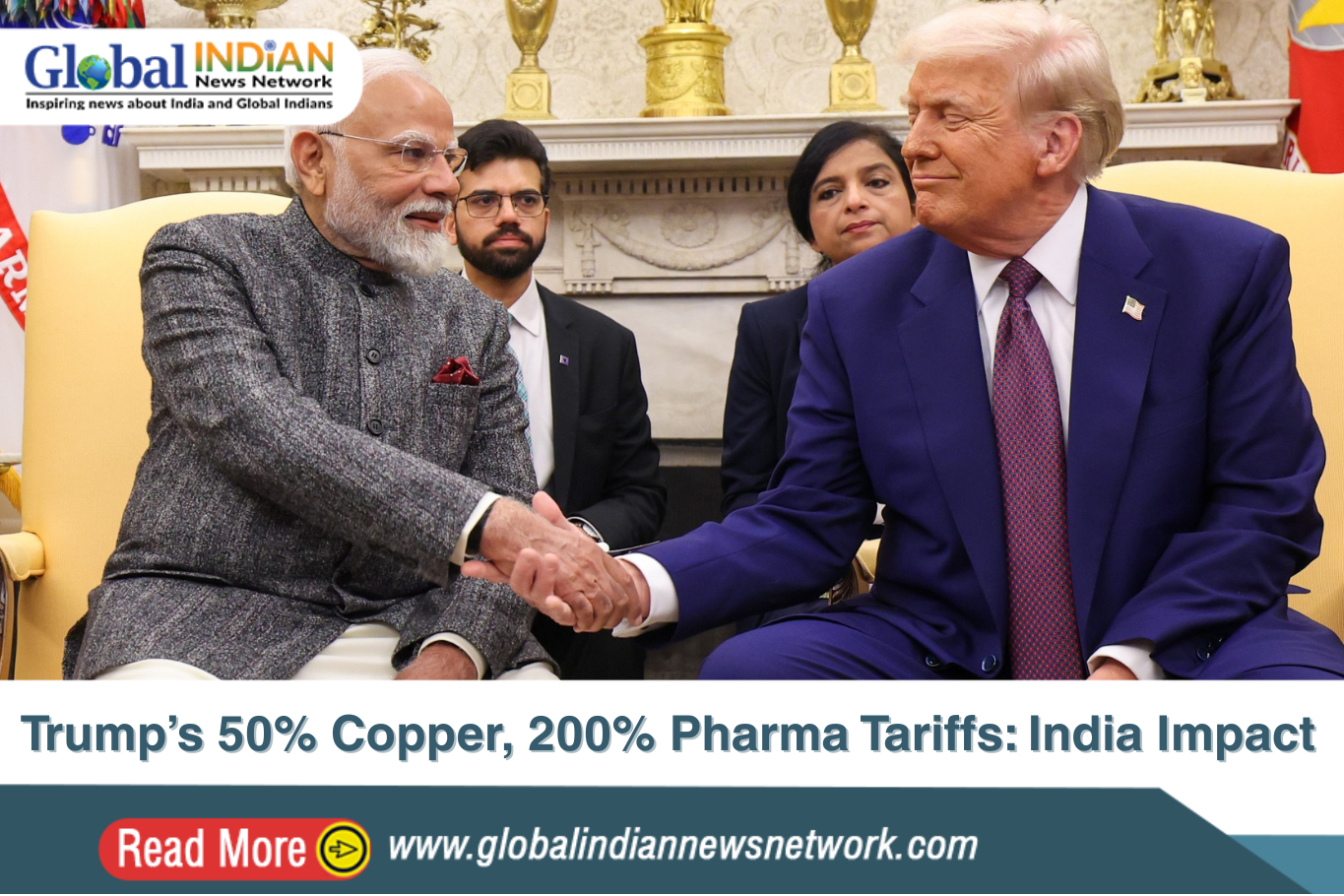
 US President Donald Trump has imposed a steep 50% tariff on copper imports, adding to previously implemented duties on steel and aluminum. He also signaled a potential 200% tariff on pharmaceuticals imported into the US starting next year. Trump confirmed that the August 1 deadline for activating higher tariffs on numerous global economies would remain unchanged.
This development holds critical implications for India. The US is not only India’s top market for pharmaceutical exports but also an important buyer of copper and its related products.
Speaking at a cabinet meeting on Tuesday, Trump said, “We’re doing copper today. It’ll be 50%.” The move expanded his sector-specific trade strategies and caused copper prices to jump. US Commerce Secretary Howard Lutnick later confirmed the new rate would likely be enforced by late July or August 1.
On pharmaceuticals, Trump stated the US would soon make a formal announcement but hinted that manufacturers would have about a year to relocate their operations domestically. “After that, we’ll impose very high tariffs — around 200%,” he warned.
The Trump administration is currently investigating several critical imports, including copper, pharma, lumber, semiconductors, and minerals. Lutnick told CNBC that reviews on pharmaceuticals and semiconductors will conclude by month-end, after which policy decisions will follow.
Trump also threatened a 10% tariff on BRICS countries, calling the group unserious, though he acknowledged its challenge to the US dollar. “They can challenge it, but they’ll have to pay the tariff. I doubt they’ll like that,” he remarked.
India exported $2 billion worth of copper products globally in FY25, of which $360 million (17%) went to the US — its third-largest copper market. Despite the tariff, India’s domestic sectors may absorb reduced demand, as copper is essential in infrastructure and energy.
However, the pharmaceutical sector faces a bigger risk. With exports to the US rising to $9.8 billion in FY25 — accounting for 40% of India’s total pharma exports — a 200% duty could significantly dampen demand, particularly for generics that are vital to the American healthcare system.
India is in talks with the US on a mini-trade deal that could exempt it from the new tariffs. If finalized before August 1, the agreement may shield Indian exporters from the brunt of these trade changes.