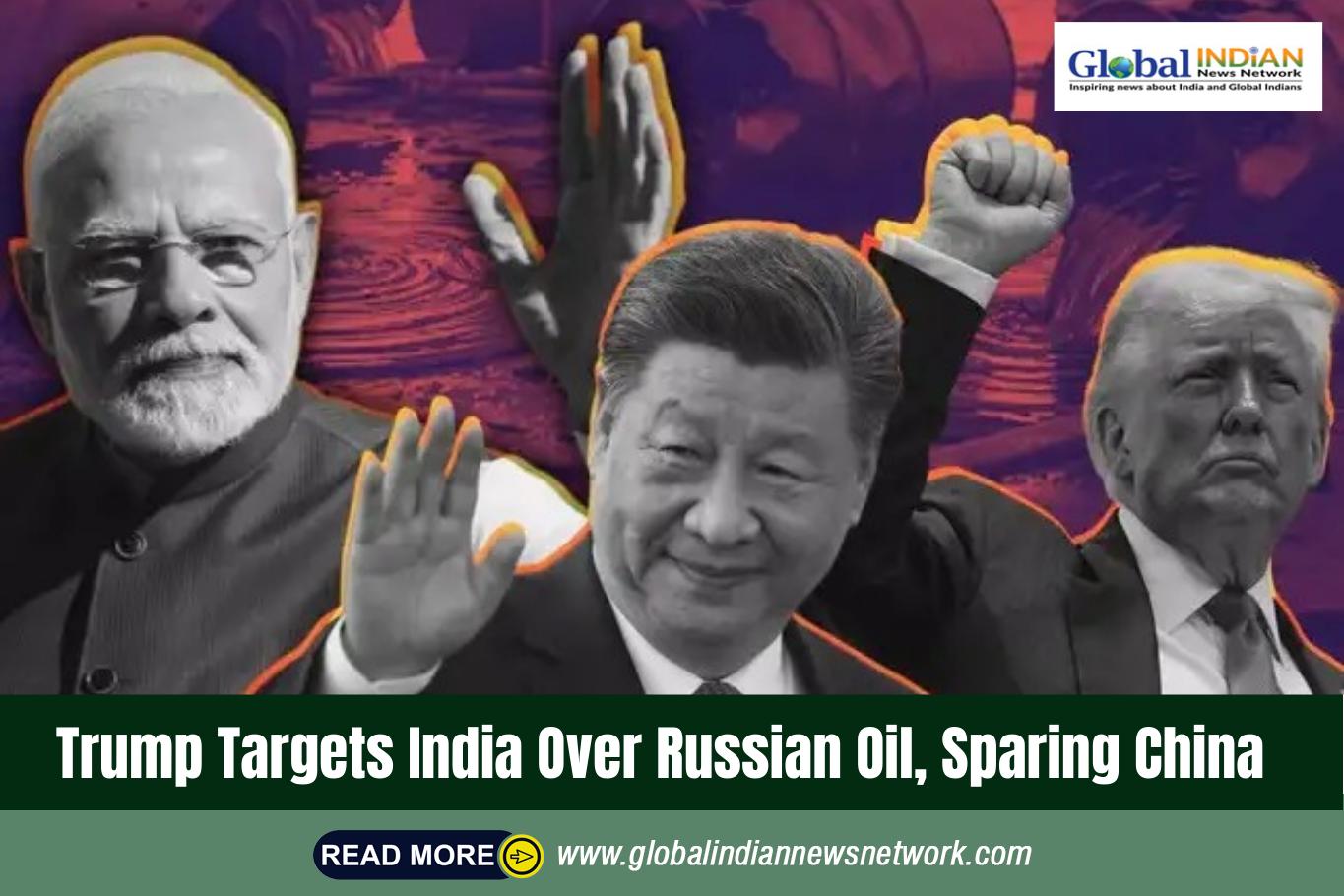
 US President Donald Trump has intensified pressure on India over its continued purchases of Russian crude oil, imposing additional tariffs of 25%, bringing the total to 50% on Indian exports. By contrast, China, Russia’s largest energy customer, has largely avoided similar punitive measures despite importing record volumes of Russian oil. Analysts suggest this selective approach reflects broader US strategic and economic considerations.
China imported 109 million tonnes of Russian oil last year, nearly 20% of its energy needs, while India purchased 88 million tonnes in 2024. Lawmakers in Washington are reportedly preparing the Sanctioning Russia Act of 2025, which would authorize tariffs of up to 500% on countries supporting Russia through oil or gas purchases. Senators await Trump’s approval to move the bill forward.
Trump and his senior officials argue India is “profiteering” from discounted Russian oil, raising $16 billion in excess profits by reselling refined products. US Treasury Secretary Scott Bessent and trade advisers have emphasized that India’s imports surged from less than 1% pre-Ukraine war to over 40%, a phenomenon labeled “Indian arbitrage.” Conversely, China’s purchases are seen as a continuation of pre-war trading patterns, with less arbitrage activity.
Strategic considerations also appear to shape US policy. Secondary sanctions on China could disrupt access to rare earth minerals crucial for US manufacturing, including technology, clean energy, and defense sectors. Additionally, raising tariffs on Chinese goods ahead of the Christmas season could drive up US consumer prices. Recent steps, such as easing semiconductor export restrictions for Nvidia, signal Washington’s effort to balance geopolitical pressure with domestic economic concerns.
The US-China trade relationship remains fragile but managed. The two countries recently extended a tariff pause for 90 days, avoiding a full trade war. Despite slowing growth, rising youth unemployment, and trade deficits, China has strengthened domestic production and diversified trade routes, mitigating the impact of potential sanctions. Economists warn that heightened US tariffs could raise inflation and disrupt global supply chains, underscoring the complexity of US strategies targeting Russian oil while managing key trade partnerships.