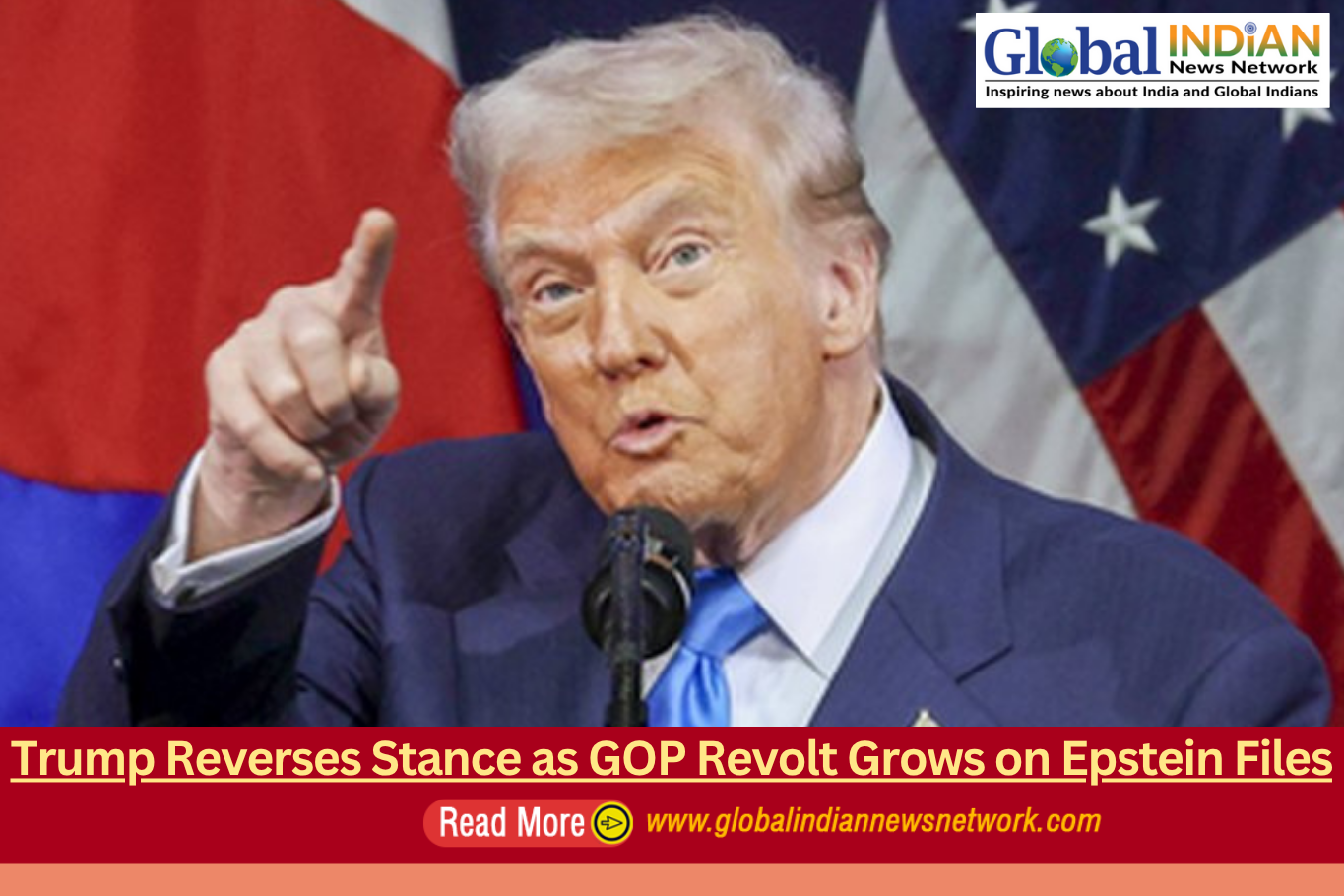
 Facing rising discontent within the Republican Party, US President Donald Trump has abruptly reversed his opposition to releasing files related to convicted billionaire pedophile Jeffrey Epstein. After days of attacking GOP lawmakers who supported the move — even branding one a “traitor” — Trump announced on Sunday that “we have nothing to hide,” urging Republicans in Congress to vote for the release ahead of Tuesday’s scheduled vote.
This dramatic shift marks Trump’s second major retreat in just a week. On Friday, he rolled back tariffs on several food products such as Indian tea, cashews, and mango items after a surge in prices triggered strong public backlash.
Jeffrey Epstein, a financier at the nexus of high society, politics, and illicit sexual exploitation, was convicted in Florida for procuring minors for prostitution. While awaiting a federal trial on sex trafficking charges, he was found dead in a New York jail — officially ruled a suicide. His close associate Ghislane Maxwell, daughter of late British media magnate Robert Maxwell, is currently serving a sentence for her role in the exploitation ring.
Epstein’s network has already ensnared prominent figures, including Britain’s former Prince Andrew, who was stripped of his royal titles following allegations of sexual involvement with underage girls.
Some of Epstein’s emails have already been released by Democrats and other sources, revealing contact with multiple influential individuals. Calls to release all Epstein-related documents initially came from hardline Trump supporters, and were later taken up by Democrats who believe the files could implicate key Republican allies.
A bipartisan bill led by Democratic Congressman Ro Khanna and Republican Thomas Massie has forced a vote on fully opening Epstein’s case files. House Speaker Mike Johnson attempted to delay the measure but eventually conceded after growing support from lawmakers on both sides.
Trump initially denounced the bill and clashed publicly with Marjorie Taylor Greene, once one of his strongest allies, calling her a traitor for pushing the release of the files. He also attempted to divert attention by demanding investigations into Epstein’s links with former President Bill Clinton, ex–Treasury Secretary Larry Summers, and financial giant JPMorgan Chase.
However, as it became clear that many Republican lawmakers were prepared to defy him, Trump shifted course to contain a potential revolt that risked weakening his political influence.
Speaking to NBC earlier on Sunday, Khanna said Trump was losing support from his core base:
“He’s forgotten those forgotten Americans.”
He also added, “It’s not about Donald Trump. I don’t even know how involved Trump was. There are a lot of other people who have to be held accountable.”
Trump’s initial opposition surprised many observers, as he had campaigned in 2024 on the promise of exposing the full Epstein files. Some analysts, including Taylor Moore, suggested a foreign government might be influencing the president’s stance. Others speculated that releasing the documents could implicate powerful individuals.
Trump has maintained that although he knew Epstein socially — much like other members of New York’s elite — he distanced himself after Epstein attempted to recruit staff from his Mar-a-Lago resort. He claims to have banned Epstein from the property. Trump also insists he was unaware of Epstein’s child trafficking activities.
One email released indicates Epstein claimed that Trump knew about his actions, though another message to a journalist states that Trump “never got a massage.”
Virginia Giuffre, an Epstein victim who had earlier implicated Prince Andrew, had publicly stated that Trump was not involved in the abuse.