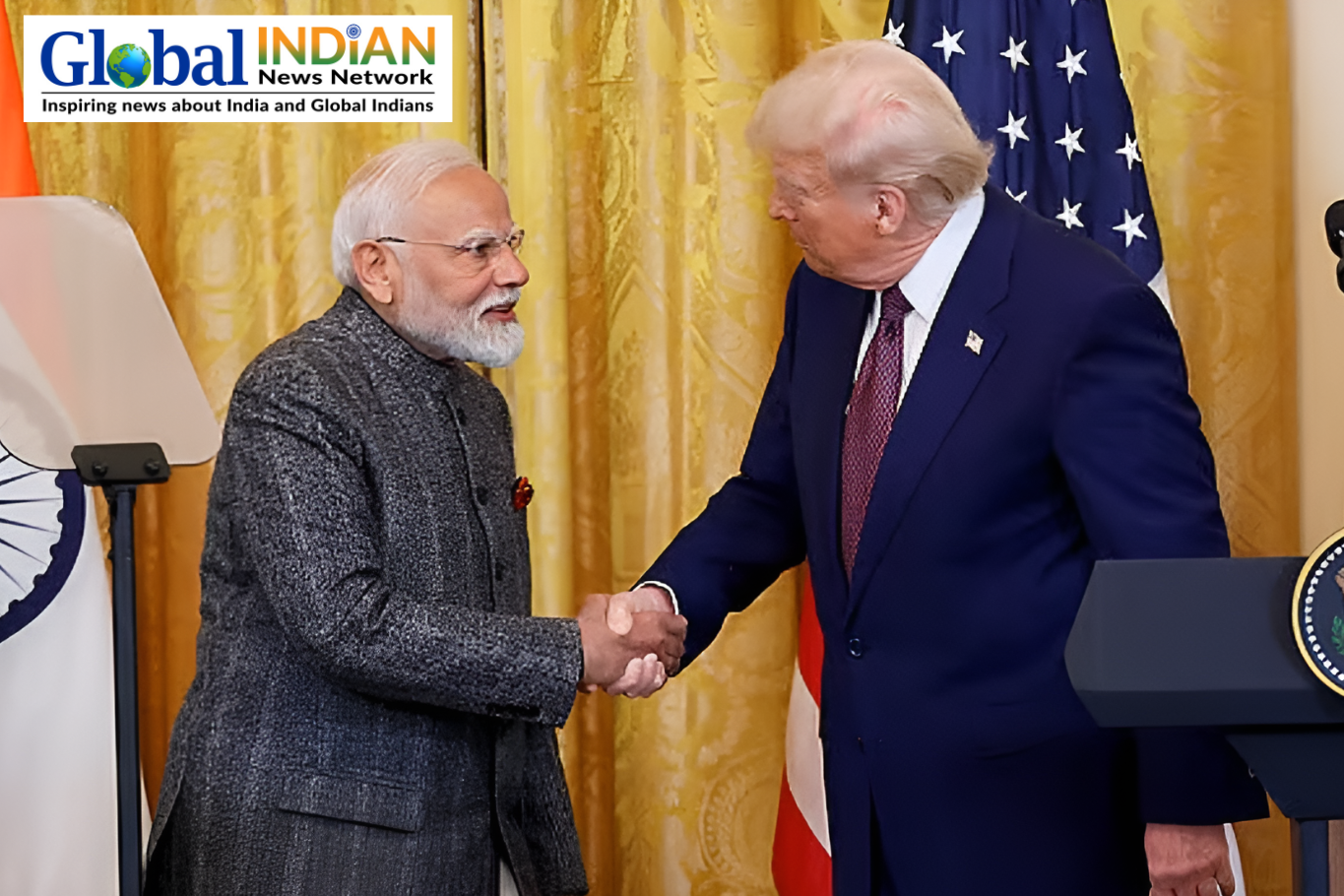
 US President Donald Trump publicly praised Prime Minister Narendra Modi, describing him as a “good man” while claiming that India has reduced its purchases of Russian oil. Speaking to reporters aboard Air Force One while returning to Washington from Florida, Trump said Modi adjusted India’s energy approach after recognizing Washington’s dissatisfaction with continued Russian oil imports.
Trump suggested that India’s decision was influenced by trade considerations and the possibility of higher tariffs. He stated that Modi understood the importance of maintaining a positive relationship with the United States and acted accordingly. Trump emphasized that trade leverage remains a powerful tool and warned that tariffs could be increased rapidly if countries move against US expectations.
Senator Lindsey Graham, who was traveling with Trump at the time, reinforced the President’s claims by arguing that tariff pressure had already led to tangible results. According to Graham, India’s reduction in Russian oil purchases has weakened Moscow’s ability to sustain its military operations in Ukraine. He described tariffs as an effective foreign policy instrument when used decisively.
Graham credited Trump’s decision to impose tariffs on India over Russian crude purchases as the primary reason behind the shift in India’s energy sourcing. He claimed that discussions with Indian officials in recent weeks focused largely on how India was scaling back its reliance on Russian oil. Graham said this demonstrated that economic pressure could influence global behavior without direct military involvement.
The Senator also discussed proposed legislation that would grant the US President broad authority to impose tariffs on countries that continue buying discounted Russian energy. Under the proposed framework, tariff levels would be determined solely by the President, allowing swift responses to policy reversals. Graham noted that the bill has widespread political backing and reflects growing bipartisan support for economic pressure strategies.
Trump reiterated that trade remains firmly under US control and contrasted his approach with that of the previous administration. He criticized past financial assistance to Ukraine, arguing that his administration’s strategy focuses on ensuring the United States receives economic returns rather than providing unchecked support.
The remarks highlight ongoing tensions surrounding global energy markets, trade diplomacy, and efforts to curb Russia’s revenue streams, while also underscoring the evolving dynamics of the India–US strategic relationship.