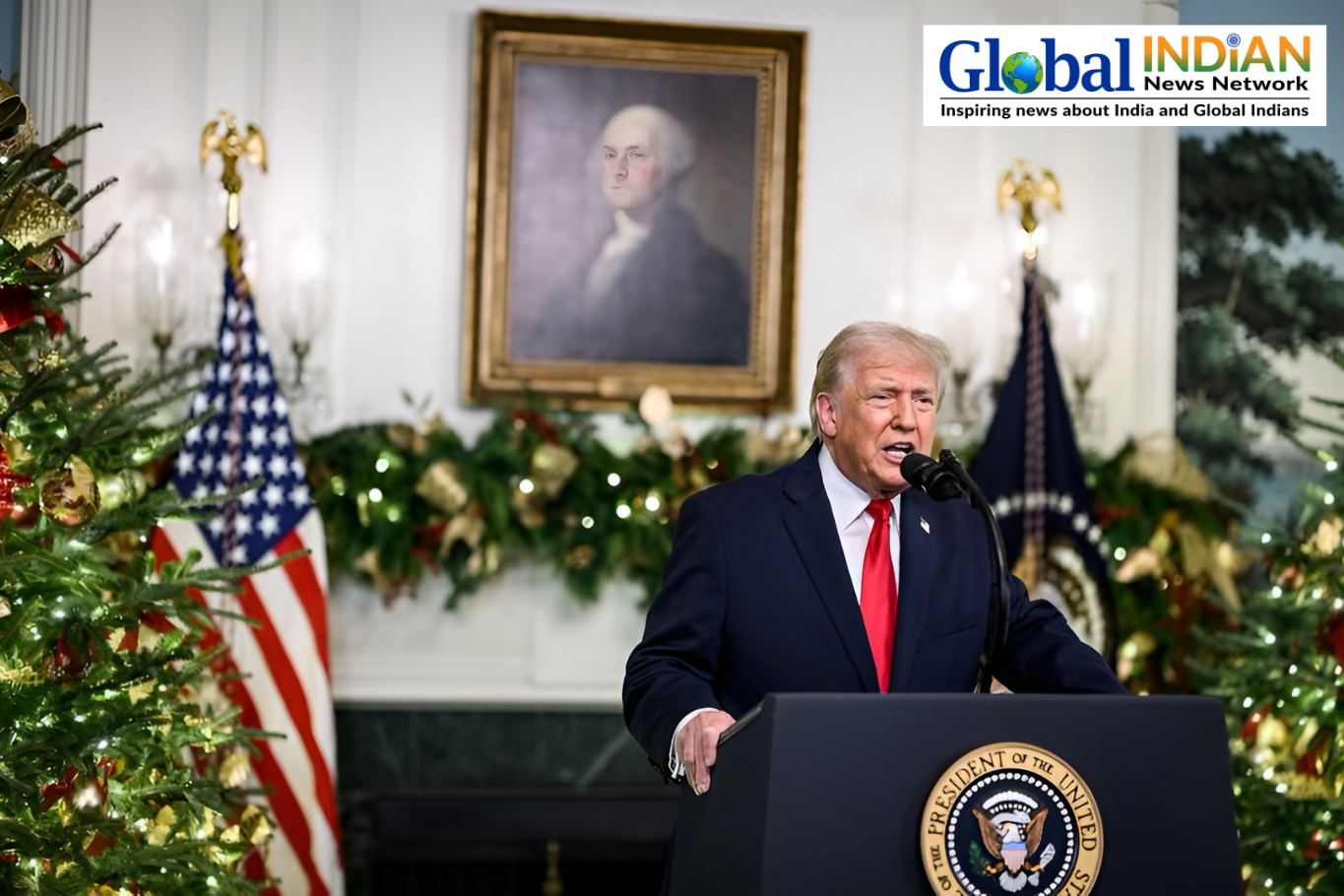
 US President Donald Trump has reaffirmed that import tariffs will remain a cornerstone of America’s economic policy, signaling a long-term commitment that may put additional pressure on global trade partners, including India. In his year-end national address on Wednesday night, Trump described tariffs not merely as temporary negotiation tools but as a fundamental mechanism to stimulate investment, revitalize manufacturing, and safeguard American jobs.
“Much of this progress is due to tariffs,” Trump asserted, calling them his “favorite word,” while highlighting that companies are returning to US soil in record numbers because domestically produced goods are shielded from import duties. He credited these trade measures with unlocking a record-breaking $18 trillion in investment, portraying the inflows as a direct consequence of policies designed to reward domestic production while discouraging imports.
Trump emphasized that manufacturers building operations within the United States would be exempt from tariffs, declaring the end of decades-long trade practices that had favored foreign exporters over domestic industry. The president framed tariffs as both an industrial and fiscal instrument, noting that revenues from import duties have funded tax cuts and programs such as the recently announced “Warrior Dividend” for US military personnel.
For Indian companies, which export pharmaceuticals, steel, aluminum, auto components, chemicals, textiles, and IT hardware, this approach presents a clear choice: either absorb higher trade costs or expand manufacturing and assembly operations within the United States.
Beyond economic considerations, Trump linked reshoring to national security, asserting that domestic factory growth strengthens the nation while emphasizing private-sector job creation as a key pillar of American power.
India, seeking to position itself as a viable alternative for global manufacturing, faces mixed signals from Washington’s inward-focused strategy. While Indian officials have pursued broader access for exports and resisted sweeping tariff reductions, US policies suggest a continued emphasis on domestic production, even as the two nations collaborate on defense, technology, and critical supply chains.
Trump’s remarks make clear that tariffs will remain a central and contentious issue in future trade negotiations, shaping US economic diplomacy and its relationship with key partners such as India for years to come.