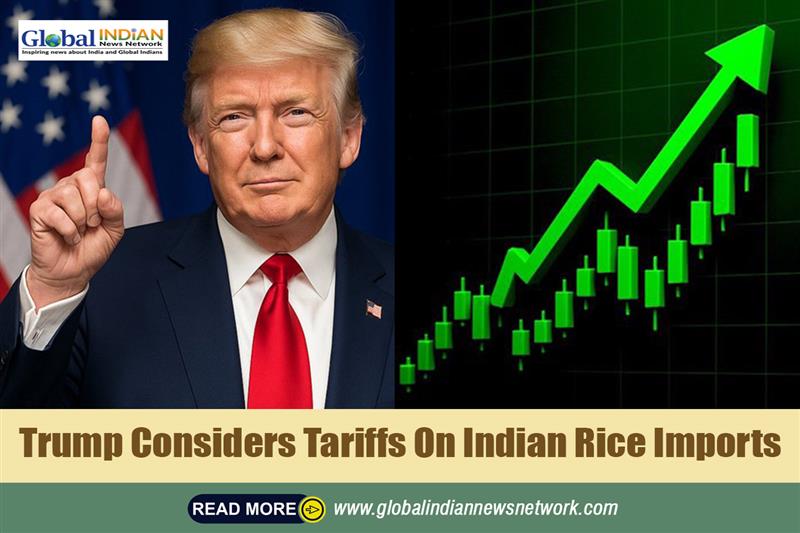
 US President Donald Trump has signaled that new tariffs on certain agricultural imports may be imminent, focusing particularly on rice from India and fertilizer from Canada. The announcement came during a White House event where he introduced a $12 billion farm assistance plan aimed at supporting American farmers, even as trade negotiations with India and Canada show little progress. Trump emphasized that these measures are critical to protecting domestic producers from what he described as unfair foreign competition.
Trump stated that imports from India are putting US farmers at a disadvantage. During the discussion, Louisiana rice producers were highlighted, noting the significant challenges posed by Indian rice flooding the American market. He stressed that Indian companies control major US retail rice brands, but he believes tariffs could quickly resolve the issue. “They shouldn’t be dumping… you can’t do that,” Trump remarked, emphasizing his readiness to act decisively.
The president framed his farm relief initiative as vital for maintaining stability in the agricultural sector, which he called a backbone of the US economy. He tied the support package to tariffs collected from trading partners, saying, “We’re really taking in trillions of dollars… countries took advantage of us like nobody’s ever seen.” The $12 billion in aid is intended to counteract the effects of inherited inflation and depressed commodity prices while bolstering local production.
Trump also hinted at potential tariff action on fertilizer imports from Canada, noting that domestic production could be encouraged through such measures. “A lot of it comes from Canada, and we may impose severe tariffs if needed,” he said, reinforcing the administration’s broader strategy of leveraging trade policies to support US agriculture.
India-US agricultural trade has expanded over the past decade, with India exporting basmati rice, other rice products, spices, and seafood, while the US supplies almonds, cotton, and pulses to India. Despite this growth, disputes over subsidies, market access, and World Trade Organization complaints, particularly concerning rice and sugar, have periodically complicated bilateral relations. The new tariff threats mark the latest chapter in ongoing efforts to balance trade while protecting American farmers.