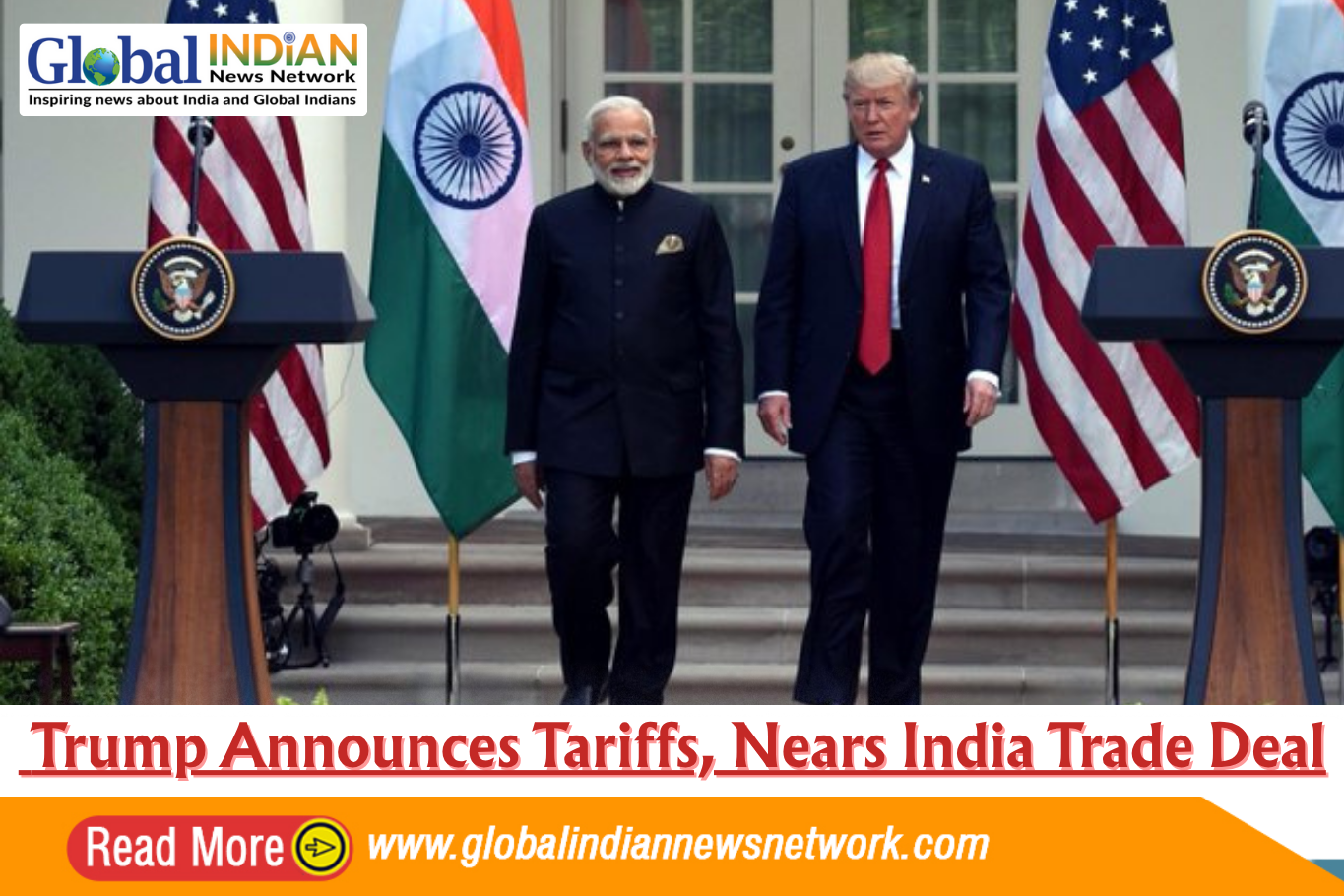
 In a significant shift in US trade policy, President Donald Trump declared on Monday night that the United States is nearing a trade agreement with India while simultaneously announcing the imposition of new tariffs on exports from 14 countries. Speaking during a press interaction at the White House alongside Israeli Prime Minister Benjamin Netanyahu, Trump emphasized that the US had finalized trade agreements with the United Kingdom and China, and that India was close to finalizing one as well.
Trump stated that formal communications had already been sent to several nations that failed to reach consensus with the US, outlining tariff hikes scheduled to take effect from August 1. He asserted that any country unwilling to strike a favorable deal with the US would face new reciprocal tariffs and that these changes marked the completion of his administration’s global trade strategy.
The countries listed include Japan, South Korea, Thailand, Myanmar, Bangladesh, Malaysia, Kazakhstan, South Africa, Indonesia, Laos, Tunisia, Cambodia, Bosnia and Herzegovina, and Serbia. According to Trump’s social media updates on Truth Social, Thailand and Cambodia will each face tariffs of 36%, while Bangladesh and Serbia are set to receive a 35% tariff rate. Myanmar and Laos are subject to the steepest rate, at 40%. Malaysia, Kazakhstan, South Korea, Japan, and Tunisia will all be levied with 25% duties, while South Africa and Bosnia will face 30%. Indonesia will see a 32% tariff.
In letters addressed to Japanese Prime Minister Shigeru Ishiba and South Korean President Lee Jae-myung, Trump warned that any retaliatory tariffs against American exports would prompt the US to double its own tariffs. However, he also noted that the tariff rates could be reduced if these nations agreed to revise their current trade policies.
White House Press Secretary Karoline Leavitt also confirmed that Trump would issue an executive order delaying the July 9 tariff deadline to August 1. This extension follows concerns over the April tariff hikes, which initially led to volatility in the US financial markets. Trump originally set a 90-day window for countries to renegotiate trade terms, emphasizing that the current phase represents the final opportunity for countries to align with US trade expectations.
With India nearing a favorable deal and others facing sharp economic penalties, Trump’s latest move reinforces his “America First” trade philosophy while pressuring global partners to accept revised terms.