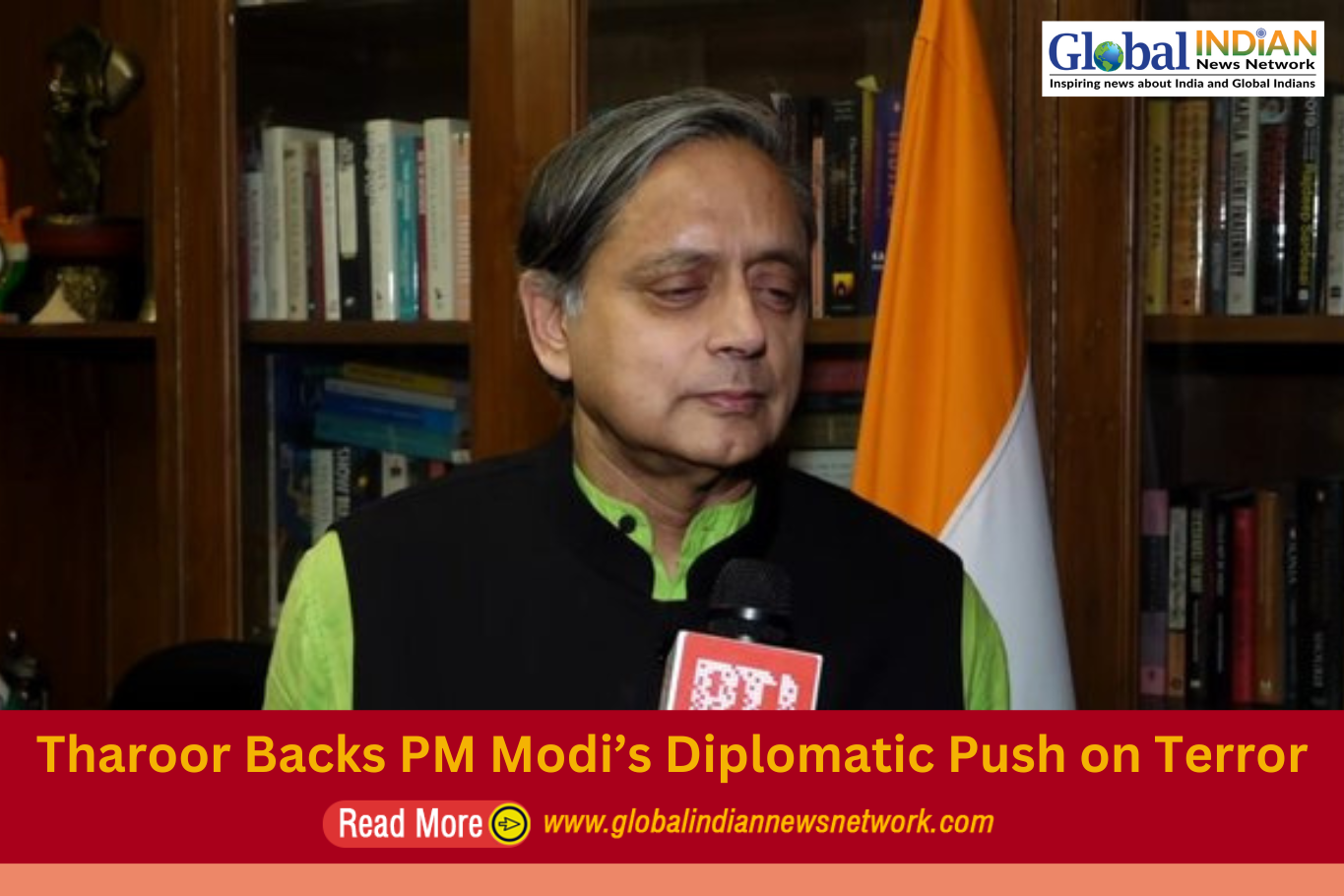
 Congress MP Shashi Tharoor has spoken out in favor of Prime Minister Narendra Modi’s leadership, particularly after the government’s diplomatic push following Operation Sindoor, which came in response to the recent terror attacks in Pahalgam. Writing in The Hindu, Tharoor acknowledged Modi’s enthusiasm, assertive global engagement, and dynamic presence as assets that deserve broader support from within India.
He described the post-Operation Sindoor diplomatic campaign as a demonstration of national will and strategic communication, emphasizing that such outreach efforts helped strengthen India’s stance on international platforms. Tharoor, who led a multi-party delegation abroad to explain India’s position, highlighted how a unified national voice, despite political diversity, sent a powerful message to the world.
He stated that the delegation’s make-up—comprising MPs from multiple parties, regions, and religious backgrounds—reflected a shared national stand against terrorism. Their mission was to present India’s military response as an act of self-defense against continuous cross-border threats, and the feedback from global capitals showed clear support for India’s narrative.
Tharoor also revealed that while a Pakistani delegation was visiting the United States at the same time, American officials were noticeably receptive to India’s message. He said they echoed Indian concerns and urged Islamabad to take action against groups like Lashkar-e-Taiba and Jaish-e-Mohammed.
In his remarks, Tharoor emphasized that India seeks peace and progress, and that terrorism is a hindrance to national development. “We don’t want war; we want to focus on growth. But if attacked, we will respond forcefully,” he said.
Reflecting on the broader implications for foreign policy, Tharoor underlined the importance of India’s “three Ts”: technology, trade, and tradition. He urged that India’s global image should be that of a country offering innovative solutions, rooted in its cultural strengths, and committed to meaningful global contributions.
Despite his occasional disagreements with his party’s leadership, Tharoor reaffirmed his loyalty to the Congress while continuing to support national interests and bipartisan unity on matters of foreign policy and national security.