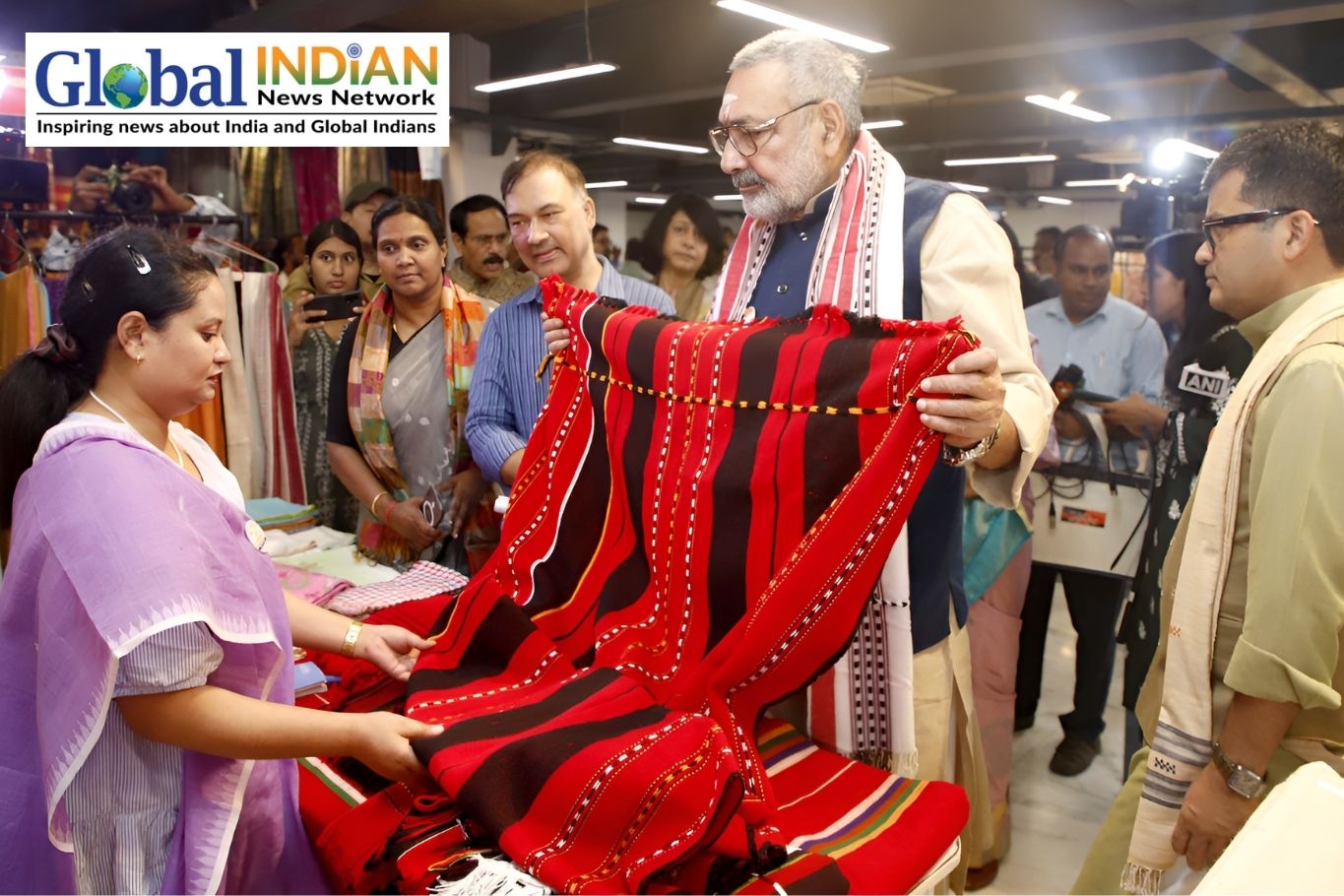
 The outlook for the Indian textile industry is turning increasingly favourable, buoyed by key Free Trade Agreements and a textile-focused Union Budget, senior government officials have said. After navigating a year of global economic headwinds, the sector now stands at the cusp of renewed growth driven by improved market access and policy support.
Neelam Shami Rao, Secretary (Textiles), highlighted that recently concluded FTAs are unlocking substantial opportunities for Indian exporters. By improving tariff competitiveness and integrating India more deeply into global value chains, these agreements are expected to significantly strengthen the country’s export potential.
She noted that the alignment between trade agreements and a distinctly textile-centric Budget has created a strategic window for expansion. With clearer policy direction and targeted government backing, the sector is well-positioned to scale up production, attract fresh investments and expand its footprint in international markets.
The remarks were made during the first post-budget national industry consultation, which convened senior officials, industry leaders, financial institutions, development partners and representatives across the textile value chain. The meeting focused on translating policy announcements into actionable implementation strategies.
Two flagship initiatives announced in the Budget — the Textile Expansion and Employment (TEEM) Scheme and the Tex Eco Initiative — formed the core of the deliberations. These programmes aim to enhance competitiveness, drive modernization, promote sustainability and generate employment across textiles and apparel manufacturing.
Rohit Kansal, Additional Secretary (Textiles), underscored that the Budget signals a clear intent to position textiles as a central driver of inclusive growth and job creation. He described the integrated programme for the sector as a comprehensive framework designed to align investments, policy measures and institutional efforts across the entire value chain.
Kansal emphasized that scaling up manufacturing capacity and strengthening domestic capabilities are critical to capturing emerging global opportunities. He also reaffirmed the Ministry’s commitment to a collaborative approach, ensuring that industry feedback shapes effective implementation.
With expanded export avenues, focused schemes and enhanced policy clarity, the Indian textile industry appears poised for accelerated growth. Officials expressed confidence that sustained coordination between government and industry will convert this favorable outlook into measurable gains in employment, production and global competitiveness.