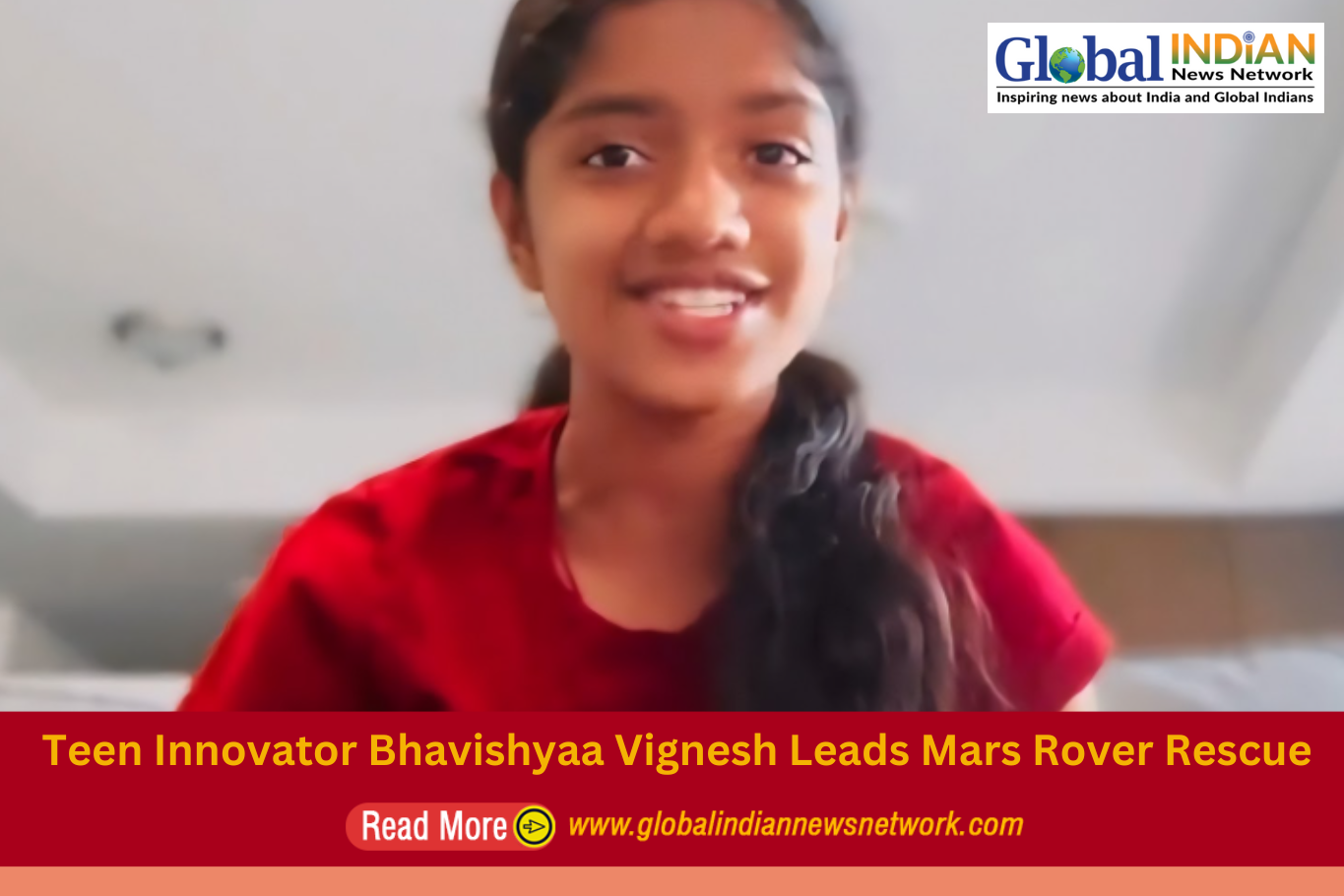
In Pleasanton, California, a young prodigy is reshaping the future of space exploration through artificial intelligence. Bhavishyaa Vignesh, just 14 years old, is developing an advanced AI model aimed at preventing Mars rovers from getting stuck on the Martian surface—a problem that once ended the mission of NASA’s Opportunity rover in 2017.
Currently a student at The Knowledge Society (TKS) in San Francisco, Bhavishyaa is turning heads for her ambitious approach to solving real-world space challenges. Her interests shifted from dreaming of space travel to crafting solutions for space missions after a breakthrough moment: winning the top prize in the Canadian Space Agency’s Space Brain Hack in the grade 6–8 category at age 12.
Her winning concept, a virtual reality headset named “PeaceMaker,” was designed to support astronaut mental health. It included immersive sound, tactile gloves, and familiar Earth imagery. The system used brain wave sensors to analyze emotional states and adapt environments accordingly—earning her praise from Ontario’s Education Minister, who personally recognized her achievement.
Bhavishyaa’s passion for science and innovation started early. At 10, she authored a book titled “The Young Scientist,” and soon after began interning at Skyserve, a remote sensing company. Known in her community as a “KidPreneur,” she’s led tech workshops for more than 200 students and continues to run coding and space camps for girls aged 6 to 13 during school holidays.
Her current focus is on building an AI-powered navigation system to help Mars rovers avoid treacherous terrain. Inspired by real NASA mission failures, her model uses machine learning to predict and react to obstacles on the Martian surface. It’s a response to the critical issue of rover immobility that has plagued multiple missions.
Her journey at TKS allows her to collaborate with mentors from Silicon Valley’s leading tech companies every weekend. She is also working with the Limitless Space Institute, which has partnered with her to produce educational content highlighting the future of space exploration. This recognition speaks to her growing influence in the field.
Bhavishyaa believes her work “could change the way we approach space missions,” and hopes to inspire others—especially young girls—to pursue science. Through clubs, camps, and public outreach, she continues to spread excitement for STEM education and space innovation.
Her project is not just a student initiative; it’s a testament to how one determined young mind is pushing the boundaries of what’s possible—from Earth to Mars.