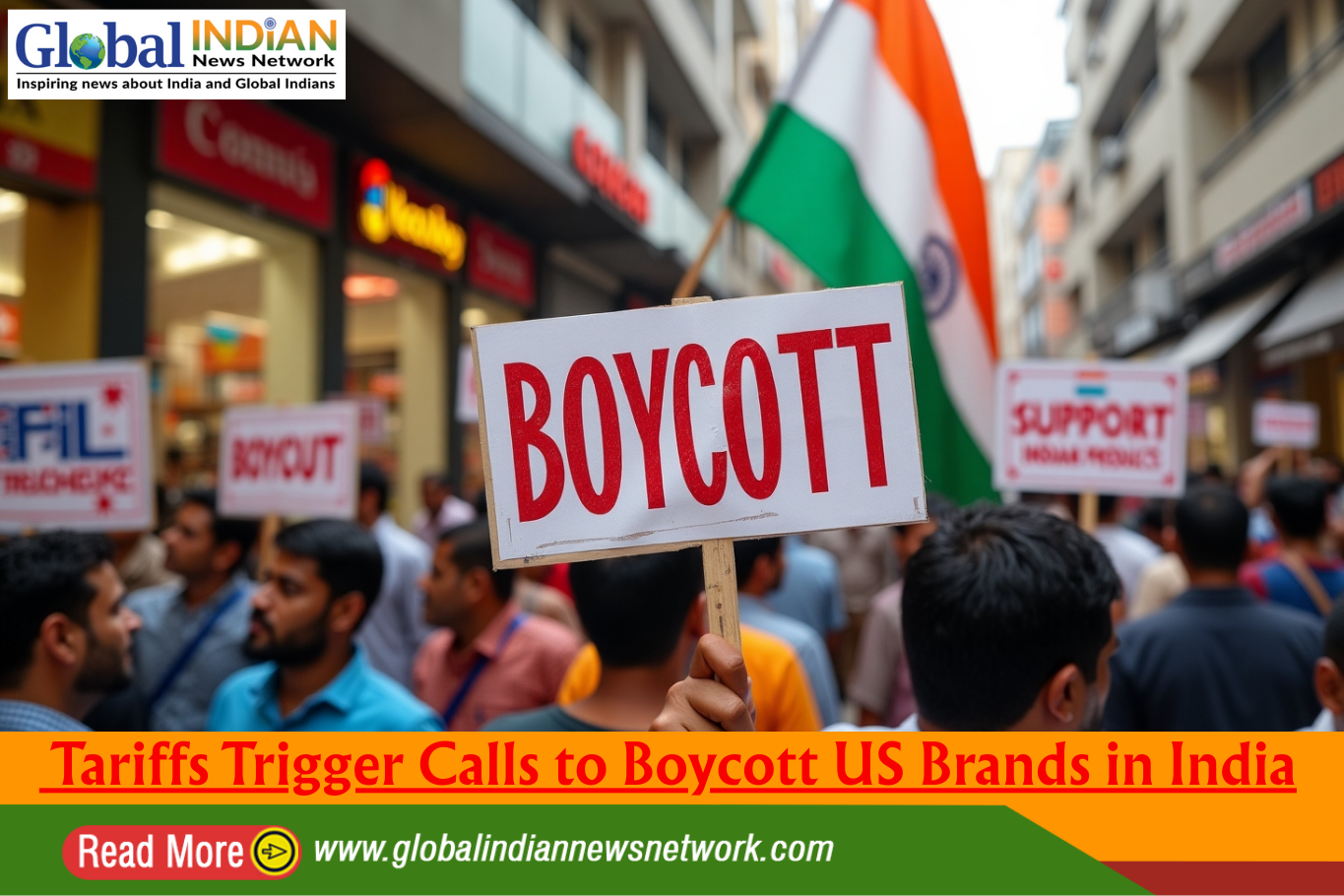
 American corporate giants, from McDonald’s and Coca-Cola to Amazon and Apple, are facing growing calls for a boycott in India as trade tensions with Washington deepen. The push, backed by business leaders and supporters of Prime Minister Narendra Modi, comes in response to President Donald Trump’s decision to impose a 50% tariff on Indian goods — a move that has rattled exporters and strained bilateral relations.
India, now the world’s most populous country, is a major market for American brands that have embedded themselves into the nation’s consumer culture. Meta’s WhatsApp counts India as its largest user base, Domino’s operates more outlets here than anywhere else, and beverages like Pepsi and Coca-Cola dominate store shelves. New Apple store openings draw long lines, and Starbucks cafes see eager crowds during discount promotions.
While sales have not yet shown a measurable impact, the online and offline campaign to “buy Indian” is gaining momentum. On LinkedIn, Manish Chowdhary, co-founder of Wow Skin Science, urged Indians to support local farmers and startups, aiming to make “Made in India” products globally coveted — much like South Korea’s internationally recognized food and beauty exports. Similarly, DriveU CEO Rahm Shastry called for India to develop its own versions of popular global platforms such as Twitter, Google, and WhatsApp.
Prime Minister Modi, speaking in Bengaluru, appealed for greater self-reliance, emphasizing that Indian tech firms already serve global markets but must now prioritize domestic needs. Although he did not name specific companies, his remarks aligned with the nationalist push.
The Swadeshi Jagran Manch, affiliated with Modi’s Bharatiya Janata Party, held small rallies across India on Sunday, encouraging people to choose Indian-made products over foreign alternatives. The group circulated WhatsApp lists suggesting domestic brands for soaps, toothpaste, and soft drinks, and shared graphics online urging boycotts of foreign food chains.
Even as protests brewed, Tesla inaugurated its second showroom in India, with officials from both the Indian Commerce Ministry and the US embassy in attendance. On the ground, public opinion remained mixed. In Lucknow, Rajat Gupta, 37, sipped his 49-rupee ($0.55) McDonald’s coffee, dismissing the boycott calls. “Tariffs are a matter of diplomacy,” he said. “My McPuff and coffee shouldn’t be part of it.”