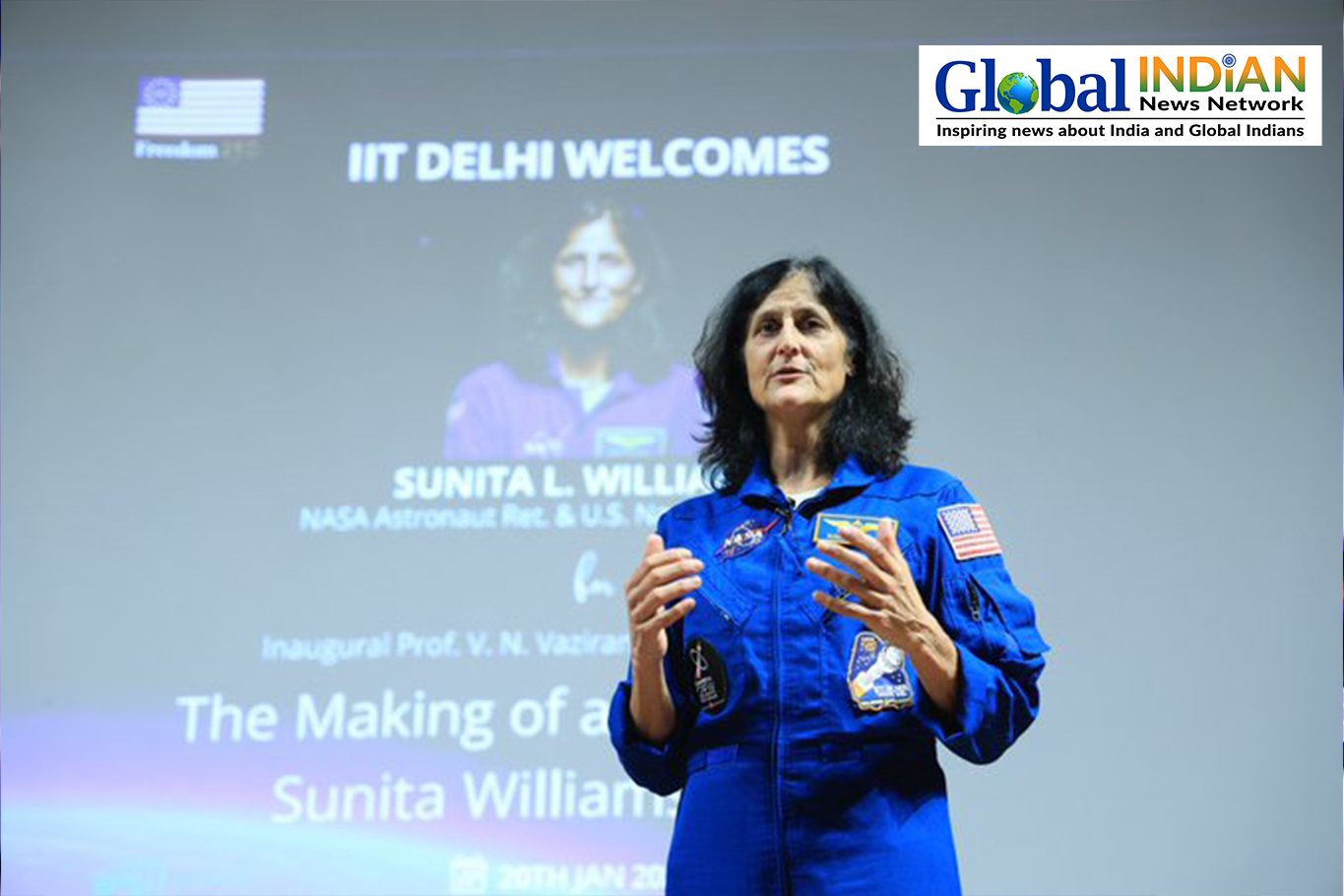
 NASA astronaut Sunita Williams, currently visiting New Delhi, highlighted the growing opportunities in space exploration as commercialisation expands beyond traditional government-led programs. She expressed gratitude to those who prayed for her safe return from her recent mission, acknowledging the support of the Indian public.
Williams emphasized that the space industry now offers careers not only in spacecraft and rockets but also in satellite technology, 3D metal printing, and scientific experiments. “Commercialisation of space opens doors across diverse sectors—from spacecraft to satellites, experiments, and even metal 3D printing,” she said. She noted that the International Space Station (ISS) has established a foundation for these emerging ventures, enabling commercial projects in pharmaceuticals, technology demonstrations, and space equipment development.
Addressing orbital congestion, Williams identified space debris as a major challenge for the last decade. “We have significant debris in orbit, including Starlink satellites. Developing solutions to manage and clean up space is both critical and a promising business opportunity,” she explained. The ISS continues to serve as a crucial platform for testing satellite management and docking technologies.
Williams also commented on renewed interest in lunar missions, describing a modern “space race” framed by international cooperation and sustainability. “Returning to the Moon requires sustainable practices and agreements on collaboration with other nations, much like Antarctica,” she said. She further highlighted environmental concerns, advocating for cleaner propulsion technologies to reduce chemical emissions from rocket engines as humanity prepares to venture beyond low Earth orbit.
During her visit, Williams shared a personal message of gratitude: “I wanted to come to Delhi to thank everyone who prayed for my crew and me. It reminds us that people care for one another, despite the distractions of life, religion, and politics.”
Responding to reports of medical issues aboard the ISS, Williams noted that hygiene and maintenance remain priorities with international partners, while ongoing technological advancements aim to ensure astronauts’ long-term health and safety in orbit.