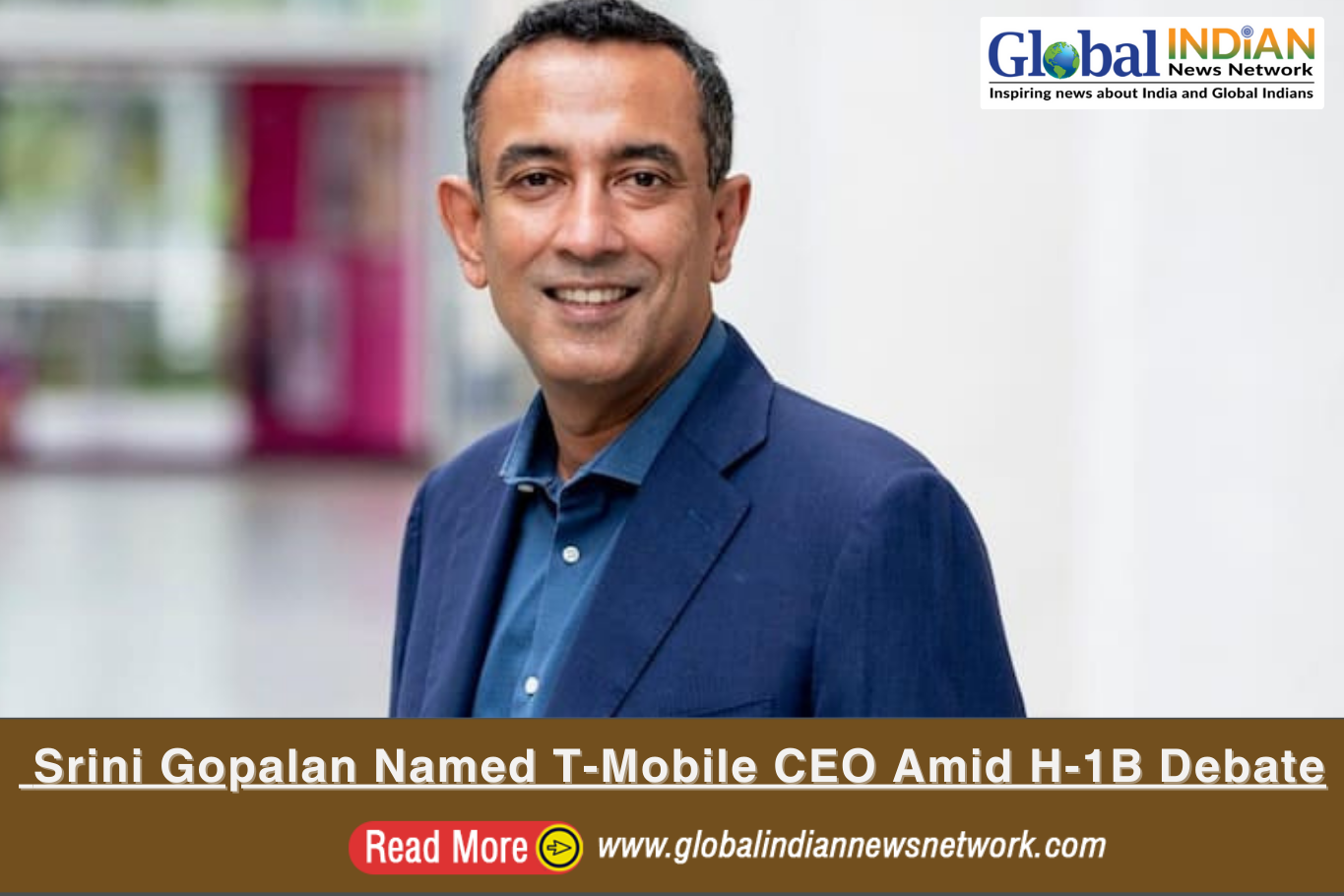
 Indian-American executive Srini Gopalan has been named the new Chief Executive Officer of T-Mobile, taking the helm from November 1, 2025. The announcement comes amid growing concern over recent changes in US H-1B visa policies, including the unprecedented $100,000 fee for new visa applications introduced by President Donald Trump. This policy shift has generated widespread apprehension among Indian professionals working in the United States.
Gopalan, who currently serves as T-Mobile’s Chief Operating Officer, will succeed Mike Sievert, the company’s CEO since 2020. Under Sievert’s leadership, T-Mobile has expanded its 5G network and strengthened its market position, and Gopalan is expected to continue driving strategic growth in the competitive US telecom sector.
The appointment of Gopalan marks a significant milestone for Indian-American representation in the US technology and telecom industries. His elevation to CEO comes at a critical juncture when H-1B visa reforms are reshaping the landscape for highly skilled international professionals in the country. The $100,000 visa fee, announced as part of a presidential proclamation, has added urgency to discussions around talent retention and the impact on India’s workforce in the United States.
Industry observers note that Gopalan’s extensive experience in operations and leadership positions him well to navigate T-Mobile through these complex regulatory challenges, while continuing to expand the company’s network, services, and innovation initiatives.
The transition underscores T-Mobile’s commitment to leveraging diverse leadership talent and maintaining continuity in its strategic vision. As CEO, Gopalan will oversee major business operations, guide technological advancements, and manage stakeholder expectations amid the evolving US immigration and labor policy landscape.
This development not only strengthens T-Mobile’s executive team but also highlights the growing influence of Indian-American professionals in shaping the trajectory of leading US corporations, even during periods of regulatory uncertainty.