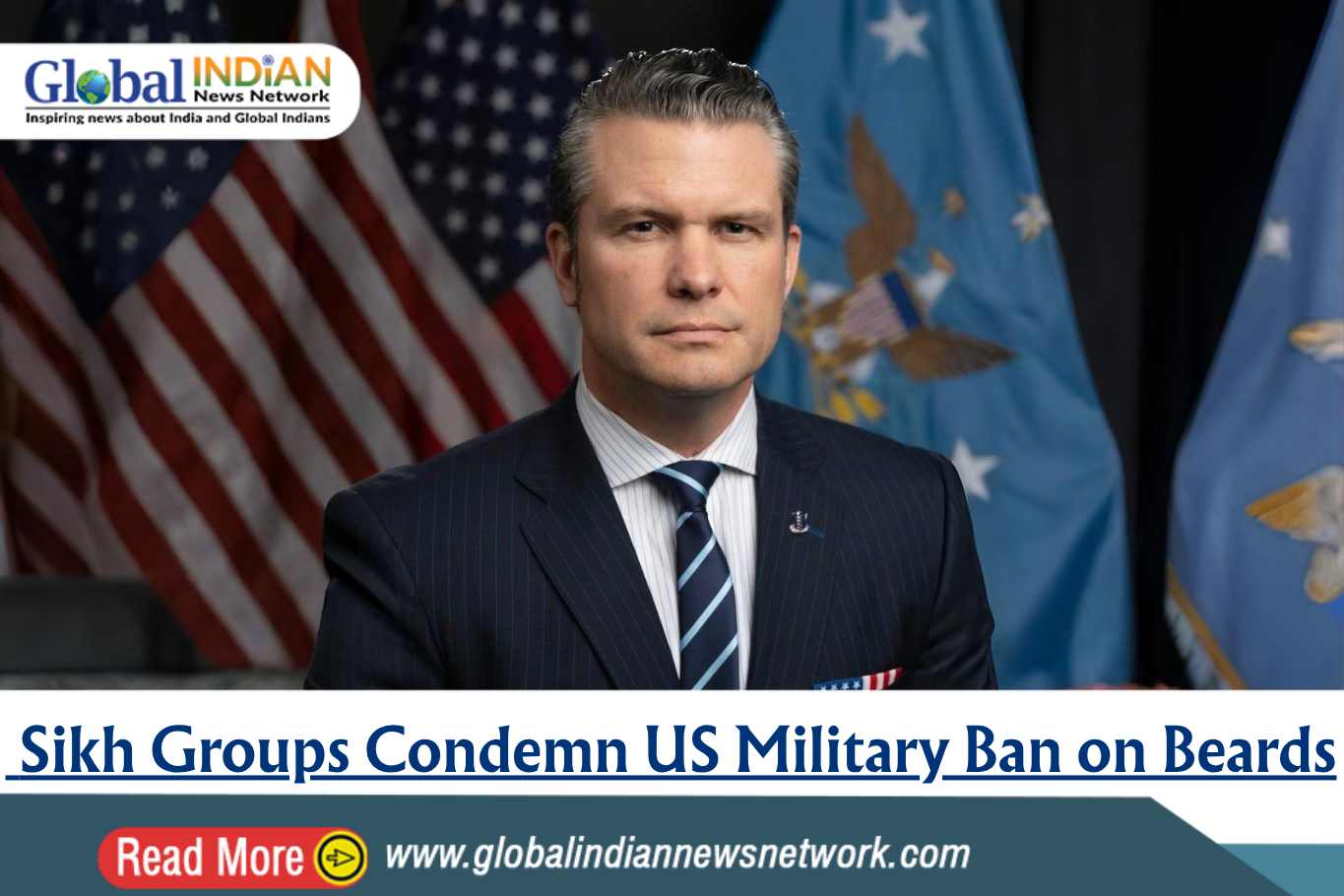
 Sikh organizations across the United States have voiced strong opposition to Defense Secretary Pete Hegseth’s newly announced military grooming standards that prohibit beards, long hair, and personal expressions of faith. The move, they argue, threatens the religious freedoms of Sikh service members who wear beards and turbans as part of their spiritual identity.
The Sikh Coalition, a leading advocacy group representing Sikh soldiers and veterans, said it was “angered and deeply concerned” by the directive. In a statement posted on social media, the organization condemned Hegseth’s comments and urged the Department of Defense to respect the rights of religious minorities serving in uniform.
Hegseth unveiled the new policy during an address to senior military officials at Quantico, Virginia, emphasizing what he called a return to discipline and tradition. “No more beards, long hair, or superficial individuality,” Hegseth declared. “We will cut our hair, shave our beards, and restore the standards that define the warrior ethos.”
The Defense Secretary’s remarks came as part of a broader agenda under the Trump administration aimed at reshaping the military’s culture and leadership. Hegseth has been leading structural reforms that include a 20% reduction in four-star officers and the removal of several top-ranking officials, including former Joint Chiefs Chairman Gen. CQ Brown, Adm. Lisa Franchetti, and Gen. James Slife.
Critics argue that such measures undermine inclusivity and morale, particularly among minority communities. However, Vice President JD Vance defended Hegseth’s decision, saying it would reinstate “very high standards” in the armed forces. Speaking at the White House, Vance recalled his own Marine Corps days, stating, “When I was a young Marine, I didn’t have a beard. Now I’m the Vice President — I get to do what I want. Pete’s trying to raise the bar, and that’s a good thing.”
The controversy has reignited the national debate over religious accommodation in the US military. Sikh advocates maintain that faith and discipline are not mutually exclusive and that service members should not have to choose between serving their country and practicing their religion.