

 In a rare admission, Pakistan Prime Minister Shehbaz Sharif revealed that Indian Armed Forces carried out precise missile strikes on several high-value airbases across Pakistan, taking Islamabad completely by surprise. He confirmed the use of BrahMos missiles during the operation and acknowledged that the Indian offensive began before Pakistan had time to react.
Sharif made the remarks at a diplomatic summit in Azerbaijan, recalling that Pakistan had planned a retaliatory strike against India on the night of May 9, led by Field Marshal Gen. Asim Munir. However, India had already moved first. “By 4:30 AM, before we could execute our plan, India had already struck multiple provinces, including the Rawalpindi airport,” Sharif admitted, marking a public acknowledgment of the scale and swiftness of India’s military action.
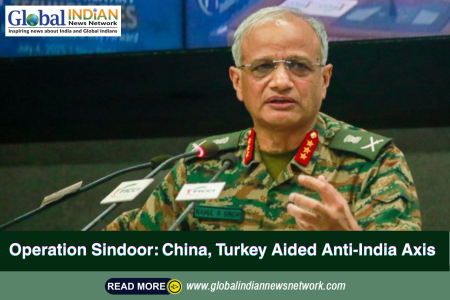
These strikes were part of Operation Sindoor, India’s calculated response to the April 22 terrorist attack in Pahalgam, Jammu & Kashmir, that left 26 tourists dead. On the night of May 6-7, India reportedly targeted nine terror camps in Pakistan and Pakistan-occupied Kashmir (PoK). Despite India’s strikes being limited to terror sites, Pakistan launched a counteroffensive using drones and missiles, aiming at Indian cities and defense installations.
India swiftly neutralized these threats in the air and escalated its response by targeting critical military bases in Pakistan. One of the targeted sites was the Nur Khan airbase in Rawalpindi, a key strategic military installation. Though India has not officially confirmed the use of BrahMos missiles, multiple defense analysts and global reports back the claim. Sharif’s public statement now lends further weight to these assertions.
In the wake of these developments, Prime Minister Sharif has made multiple appeals for renewed dialogue with India. At the Pakistan-Turkiye-Azerbaijan Trilateral Summit, he stressed the need for diplomacy and peaceful solutions to conflicts, with a focus on the Kashmir issue. However, India maintains its firm stance—stating that any conversation with Pakistan will only focus on ending terrorism and the return of Pakistan-occupied Kashmir.
Sharif also criticized India’s suspension of the Indus Water Treaty, calling it a severe blow to Pakistan’s water security. Describing it as a “lifeline,” he stressed the need for immediate diplomatic engagement to prevent further destabilization in the region.
Despite his appeals, the Indian government has remained unyielding, reiterating that dialogue cannot proceed while terrorism continues to be used as a political tool by Islamabad.














7 Comments
I like this post, enjoyed this one thank you for posting. “We are punished by our sins, not for them.” by Elbert Hubbard.
Do you mind if I quote a couple of your posts as long as I provide credit and sources back to your website? My blog is in the very same area of interest as yours and my users would certainly benefit from a lot of the information you present here. Please let me know if this ok with you. Thanks a lot!
Amazing! This blog looks just like my old one! It’s on a entirely different subject but it has pretty much the same layout and design. Great choice of colors!
Whats up this is kinda of off topic but I was wondering if blogs use WYSIWYG editors or if you have to manually code with HTML. I’m starting a blog soon but have no coding knowledge so I wanted to get guidance from someone with experience. Any help would be greatly appreciated!
Valuable info. Lucky me I found your web site by accident, and I am shocked why this accident did not happened earlier! I bookmarked it.
I wanted to thank you for this great read!! I definitely enjoying every little bit of it I have you bookmarked to check out new stuff you post…
This really answered my problem, thank you!