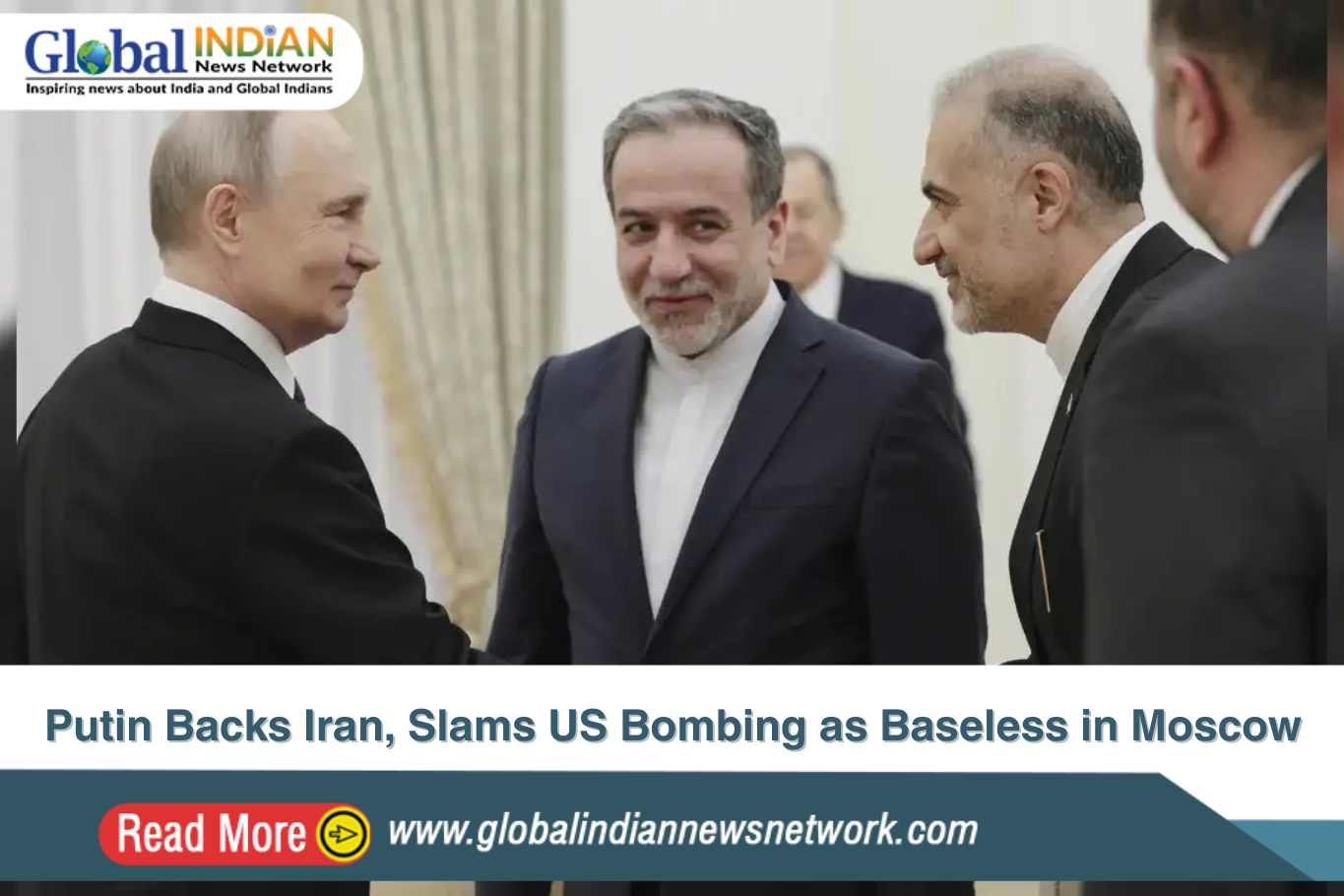
 Russian President Vladimir Putin met with Iranian Foreign Minister Abbas Araqchi in Moscow on Monday, where he issued a scathing criticism of the recent US airstrikes targeting Iran’s nuclear infrastructure. Speaking during a televised discussion, Putin called the strikes “completely unprovoked” and lacking any legitimate rationale.
“The aggression against Iran had no justification. It was neither warranted nor necessary,” Putin asserted firmly, adding that Russia is making every effort to support the Iranian people during these challenging times.
The meeting came amid escalating tensions following the US missile and bombing campaign on Iranian nuclear facilities, a move that has drawn global concern over the potential fallout in the region. The Kremlin’s sharp rebuke of Washington’s actions signals Moscow’s firm alignment with Tehran, further complicating already tense diplomatic dynamics between Russia and the West.
Putin extended a warm welcome to Araqchi, expressing appreciation for his visit to the Russian capital at such a pivotal moment. “I am pleased you are here in Moscow,” the Russian President said. “This meeting gives us the chance to assess the crisis together and find common ground to de-escalate the situation.”
In response, Araqchi defended Iran’s counterattack following the US strikes, labeling it as a necessary act of self-defense under international law. He expressed gratitude for Russia’s diplomatic and moral support during the confrontation. “We consider Russia’s position as standing on the right side of history,” he remarked, highlighting the strengthening Iran-Russia alliance in the face of growing Western pressure.
Both sides reaffirmed their commitment to dialogue and peaceful resolution while condemning unilateral military actions. The conversation reflected a shared concern about the rising threat of broader conflict in the Middle East and underscored Russia’s increasing role as a geopolitical counterweight to the United States.
This meeting comes at a time when global leaders are urging restraint and diplomatic engagement to avoid a potential spiral into larger conflict. As tensions simmer, Moscow and Tehran’s deepening partnership could shape the trajectory of regional stability and redefine alliances in an already volatile international landscape.