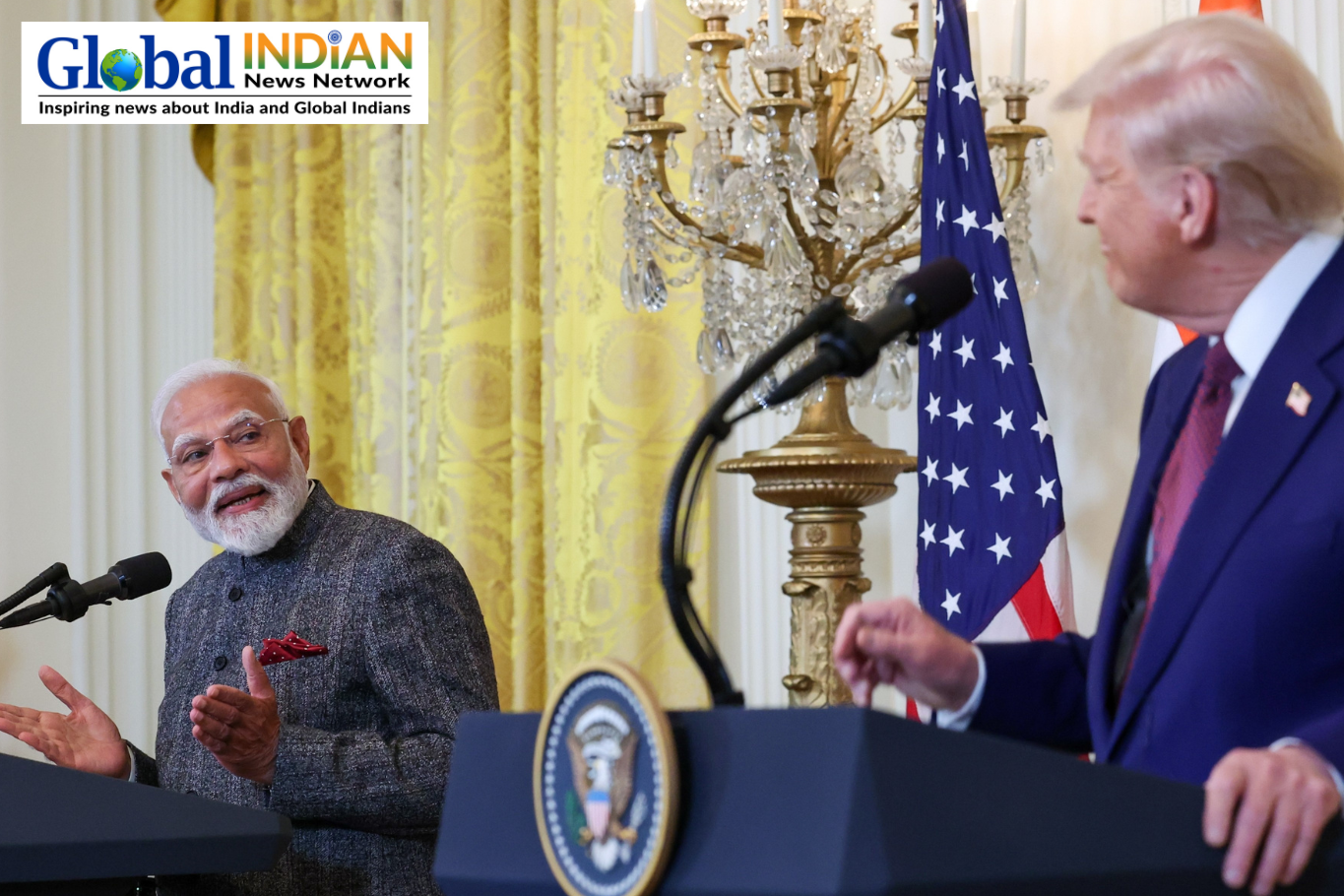
 Prime Minister Narendra Modi and United States President Donald Trump held a telephone conversation on Thursday, using the exchange to assess the progress made under the India–US Comprehensive Global Strategic Partnership. Both leaders noted that cooperation between the two countries has continued to grow steadily across multiple sectors.
According to the official readout, Modi and Trump discussed how to maintain momentum in strengthening bilateral trade ties. Their conversation also covered plans to deepen collaboration in critical and emerging technologies, energy, defense, national security, and other core pillars connected to the India–US COMPACT framework—an initiative designed to accelerate military coordination, boost commercial linkages, and advance high-tech cooperation between the two nations.
Beyond economic and strategic matters, the two heads of state exchanged views on important regional and global developments. They reaffirmed their intention to work closely in navigating shared challenges amid a rapidly changing geopolitical environment. Both leaders agreed to stay in regular contact as efforts to expand the strategic partnership move forward.
The timing of the conversation is notable, coming just days after Russian President Vladimir Putin concluded a high-stakes two-day visit to New Delhi—his first trip to India since the Ukraine conflict began in February 2022. His visit generated significant discussion in Washington, especially after a widely shared photograph showing Modi and Putin riding together drew attention during a US congressional hearing on India–US relations.
During the hearing, Congresswoman Sydney Kamlager-Dove criticized the Trump administration’s approach toward India, arguing that its policies had strained the partnership. She highlighted Trump’s push for higher tariffs and his broader foreign policy posture, suggesting they had alienated key strategic partners. Her remarks were delivered during a House Foreign Affairs Subcommittee session examining the future of the India–US partnership and the broader goal of maintaining a free and open Indo-Pacific.
Tensions remain elevated due to US tariff actions earlier this year, when Washington imposed fifty percent duties on most Indian exports as part of broader trade disagreements tied partly to India’s imports of Russian oil. A recent visit by a US trade delegation on December 10–11 made limited progress, with disagreements over tariffs and market access continuing to hinder negotiations.
Despite these challenges, the call between Modi and Trump suggests that both sides remain committed to stabilizing and advancing one of the world’s most consequential bilateral partnerships.