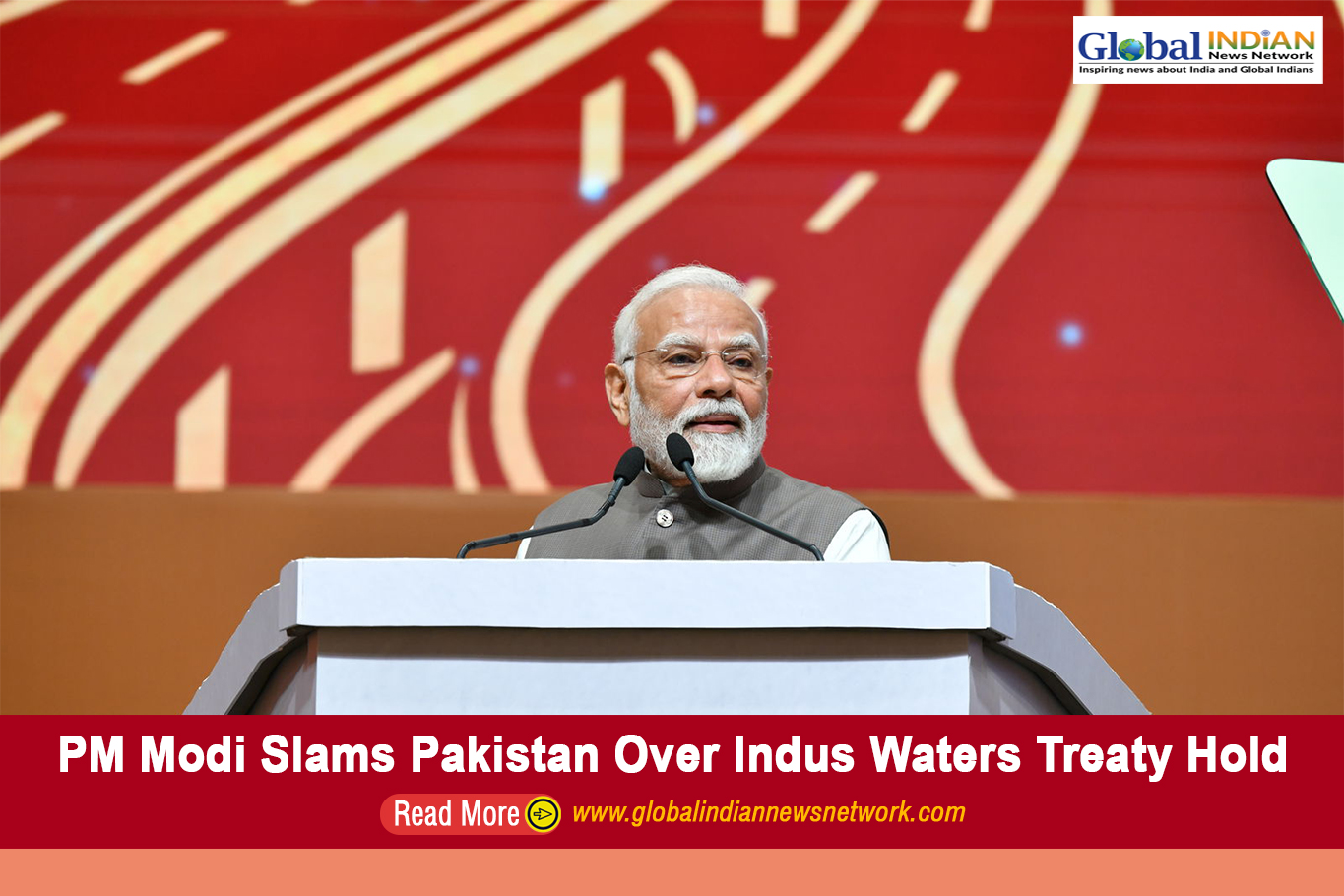
 At an event in Gandhinagar celebrating 20 years of Gujarat’s urban development, PM Modi condemned the Indus Waters Treaty as a “badly negotiated” pact that denied India rightful control over vital water resources. He accused the agreement of imposing harsh technical limitations, particularly on reservoirs in Jammu and Kashmir, effectively paralyzing their operational potential for decades.
Modi stated that the treaty barred desilting of dams and mandated the sealing of sediment-clearing gates, hampering reservoir maintenance. As a result, only around 2-3% of the total storage capacity of these reservoirs could be utilized. “This is how the country was damaged. The younger generation must understand the scale of injustice we endured,” he said.
Referring to recent developments, Modi added that just initiating minimal cleaning operations on these dams has caused concern across the border. “We’ve only opened the small gates to clean sediment, and they are already panicking with floods,” he said, alluding to Pakistan’s reaction.
The backdrop to this strong stance includes the recent Pahalgam terror attack on April 22, after which India decided to put the treaty on hold as a punitive measure. The 1960 agreement, brokered by the World Bank, governs the use of the Indus River and its tributaries between India and Pakistan. However, in light of ongoing cross-border terrorism, India has made it clear that the treaty will stay suspended indefinitely.
Foreign Minister S. Jaishankar reinforced this position, stating that India will not resume treaty discussions until Pakistan completely stops terror activities. He also emphasized that the only dialogue India is open to now is regarding the status of Pakistan-occupied Kashmir, reiterating the firm stand: “Blood and water won’t flow together.”
With the World Bank refusing to intervene, India continues to maintain a strictly bilateral approach in dealing with Pakistan, signaling a strategic shift in both water diplomacy and regional policy.