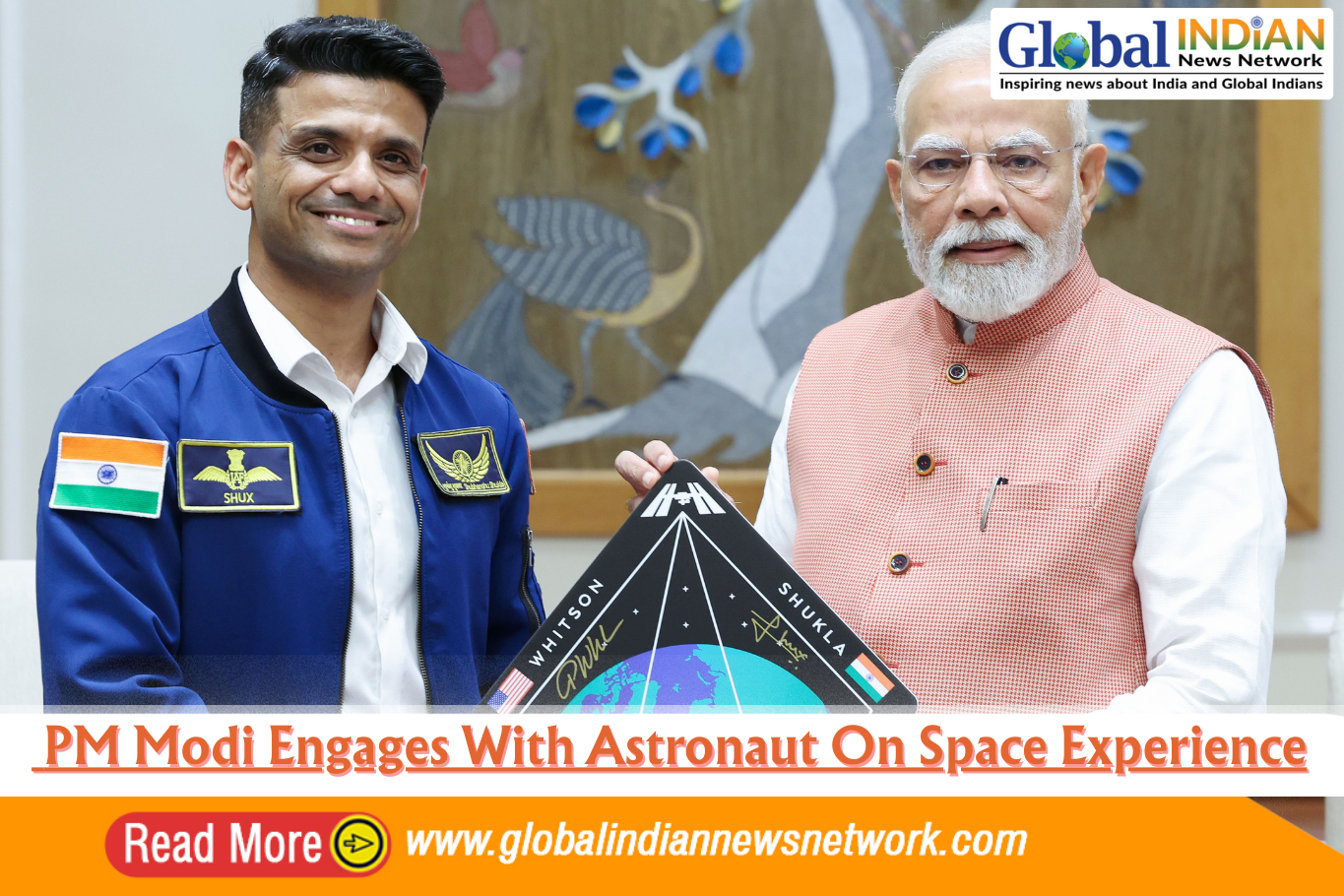
 Prime Minister Narendra Modi recently interacted with astronaut Group Captain Shubhanshu Shukla, who served as the pilot on the Axiom-4 mission to the International Space Station (ISS). Their conversation offered an intriguing glimpse into the human experience of space travel and the adjustments required upon returning to Earth.
The Prime Minister began by voicing his curiosity about the physical strain astronauts face after completing a prolonged journey in space. He asked Shukla what specific changes the body experiences during the return to Earth, noting that he was particularly interested in the challenges of readjustment.
In response, Shukla described how astronauts must remain fixed in their seats during launch because of zero gravity, making seating arrangements rigid for the trip into space. However, once they cross into orbit, astronauts are free to unbuckle their harnesses and float inside the spacecraft. Modi, amused by this detail, jokingly compared it to the cramped cockpit of a fighter jet and suggested that space travel seemed a little more spacious. Shukla acknowledged the comparison, noting that while spacecraft cabins remain compact, they still allow movement.
Shukla went on to explain that the biggest transformation is not merely physical but psychological. “Space travel is as much about mental conditioning as physical readiness,” he remarked. He pointed out that while the body undergoes dramatic shifts when exposed to weightlessness, it eventually adapts to the new environment. Similarly, after landing back on Earth, the body requires time to regain balance and stability in gravity.
The astronaut’s reflections highlighted the resilience of both the mind and body in adjusting to extreme environments. He also emphasized the importance of preparation and mental strength in dealing with the unfamiliar demands of space life.
The discussion concluded with Prime Minister Modi acknowledging Shukla’s perspective and applauding the insights he had shared. Modi expressed pride in India’s expanding role in global space exploration, calling the astronaut’s experiences an important reminder of the country’s advancing capabilities.
This interaction not only offered the public a rare view of life in space but also reinforced India’s growing ambitions in space science and exploration. As more Indian astronauts embark on international missions, conversations like this highlight how space is shaping both science and national pride.