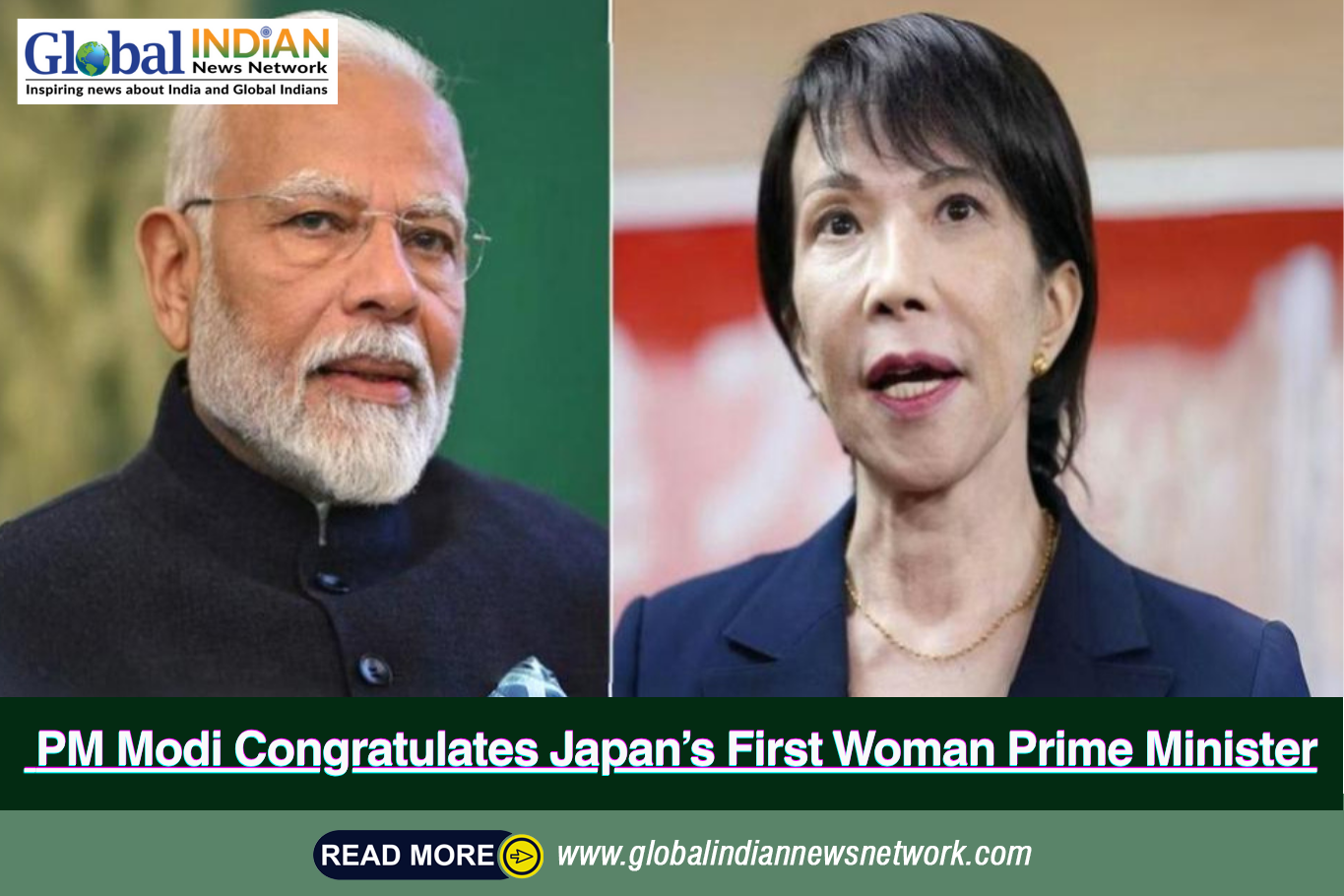
 Prime Minister Narendra Modi on Tuesday extended warm congratulations to Japan’s newly elected Prime Minister, Sanae Takaichi, who has made history as the nation’s first female leader. In his message, Modi emphasized that the evolving partnership between India and Japan continues to play a vital role in ensuring peace, stability, and prosperity across the Indo-Pacific region and beyond.
Taking to X (formerly Twitter), PM Modi wrote, “Heartiest congratulations, Sanae Takaichi, on your election as the Prime Minister of Japan. I look forward to working closely with you to further strengthen the India-Japan Special Strategic and Global Partnership. Our deepening ties are vital for peace, stability, and prosperity across the Indo-Pacific and beyond.”
Following her election, global leaders extended their congratulations to Takaichi. UAE President Mohamed bin Zayed Al Nahyan expressed his best wishes, stating that he looked forward to deepening bilateral relations built upon the UAE-Japan Comprehensive Strategic Partnership. “I extend my congratulations to Sanae Takaichi on becoming Prime Minister of Japan and wish her success in leading the country toward progress and development,” he posted on X.
In her address to members of the ruling Liberal Democratic Party (LDP), Takaichi called for unity and hard work to rebuild Japan. She highlighted her vision of intergenerational cooperation and relentless effort, urging citizens to “work like a horse.” “We can only rebuild Japan if every generation comes together and contributes. I will abandon the idea of work-life balance and dedicate myself fully to the nation’s progress,” she said.
Takaichi further pledged to lead with humility, seeking advice from colleagues and party members to strengthen both the LDP and the nation. Her remarks reflect a determined approach to revitalize Japan’s economy, which has faced stagnation, and to restore public trust in the ruling party after recent scandals and internal divisions.
According to Kyodo News, the 64-year-old leader secured a decisive victory in the parliamentary vote, winning 237 of 465 ballots in the Lower House, defeating Yoshihiko Noda of the Constitutional Democratic Party, who received 149 votes. Takaichi’s win eliminated the need for a runoff, solidifying her leadership position.
A day before her election, she reached a formal political agreement with Osaka Governor Hirofumi Yoshimura, head of the Japan Innovation Party (Nippon Ishin no Kai), signaling her intent to build broader alliances. Among the immediate challenges awaiting her leadership are reviving Japan’s sluggish economy and restoring unity within the ruling party as she takes charge of a nation at a pivotal moment in its history.