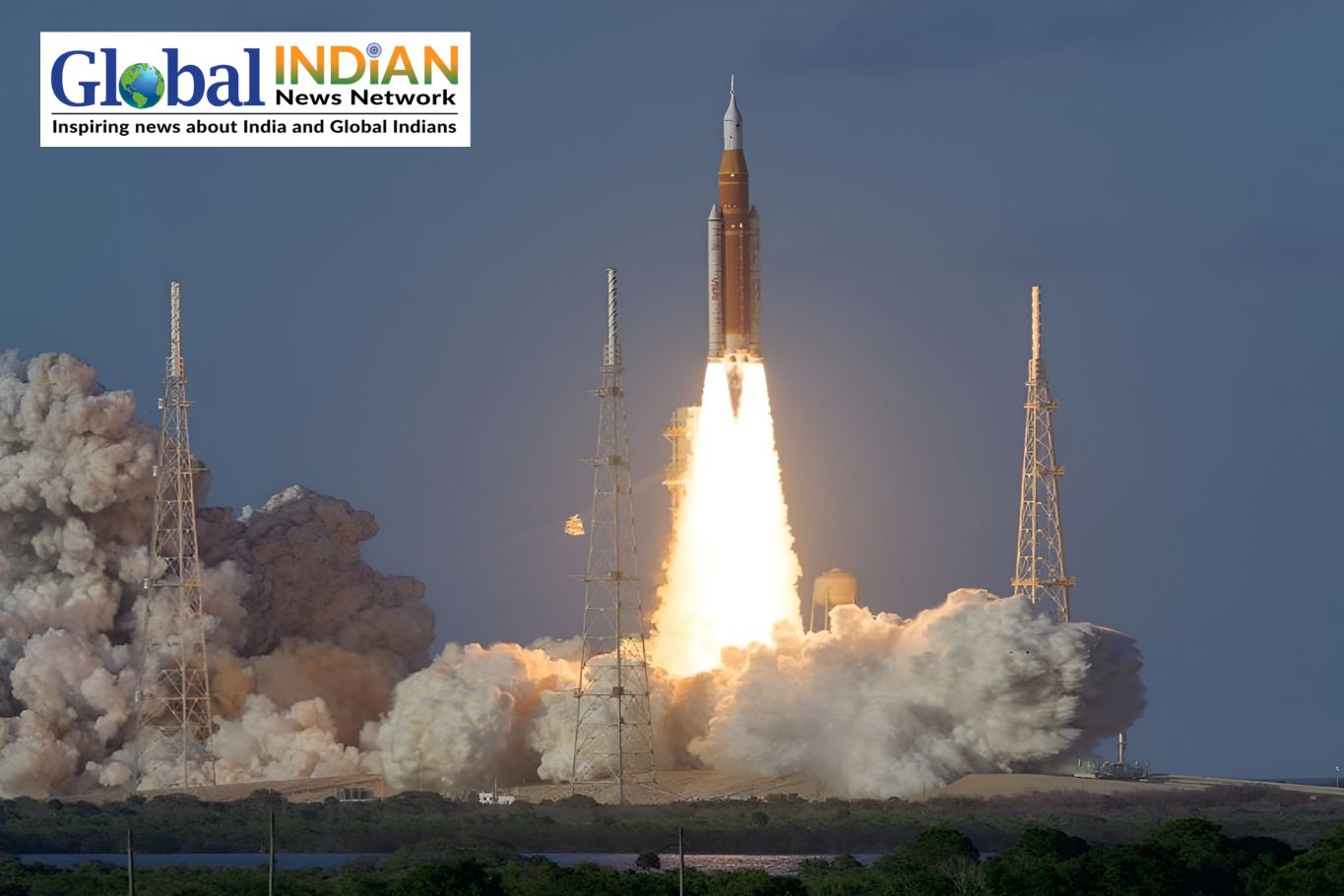
 In a notable shift in crew equipment practices, NASA astronauts aboard the Artemis II mission are carrying personal iPhones into deep space for the first time. The move reflects a broader effort by the US space agency to modernise how astronauts document and share their experiences during missions beyond Earth’s orbit.
The four-member crew, led by Commander Reid Wiseman, along with Pilot Victor Glover, Mission Specialist Christina Koch, and Mission Specialist Jeremy Hansen, launched aboard the Orion spacecraft using the Space Launch System from the Kennedy Space Center. The mission marks a historic return of human spaceflight to the vicinity of the Moon, with a planned 10-day journey looping around the lunar surface and back.
The decision to allow astronauts to carry personal smartphones was announced earlier by NASA Administrator Jared Isaacman as part of efforts to streamline mission documentation and reduce reliance on traditional, bulky equipment. By using familiar, high-performance devices, astronauts can capture high-quality images and videos more conveniently.
During the deep space phase of the mission, the devices will remain in airplane mode to avoid any interference with spacecraft systems. In this configuration, they will primarily function as advanced cameras. Limited connectivity will be available when the crew passes near communication relay points, enabling them to transmit images and messages back to Earth.
The initiative highlights NASA’s evolving approach to integrating modern consumer technology into space missions. It also reflects a growing emphasis on sharing real-time experiences with the public, offering a more personal glimpse into human spaceflight.
Artemis II represents a significant milestone in space exploration, being the first crewed mission to travel to the Moon’s vicinity in decades. The crew is expected to capture unprecedented visuals of the lunar surface, observe celestial phenomena, and inspire a new generation through direct engagement with audiences worldwide.