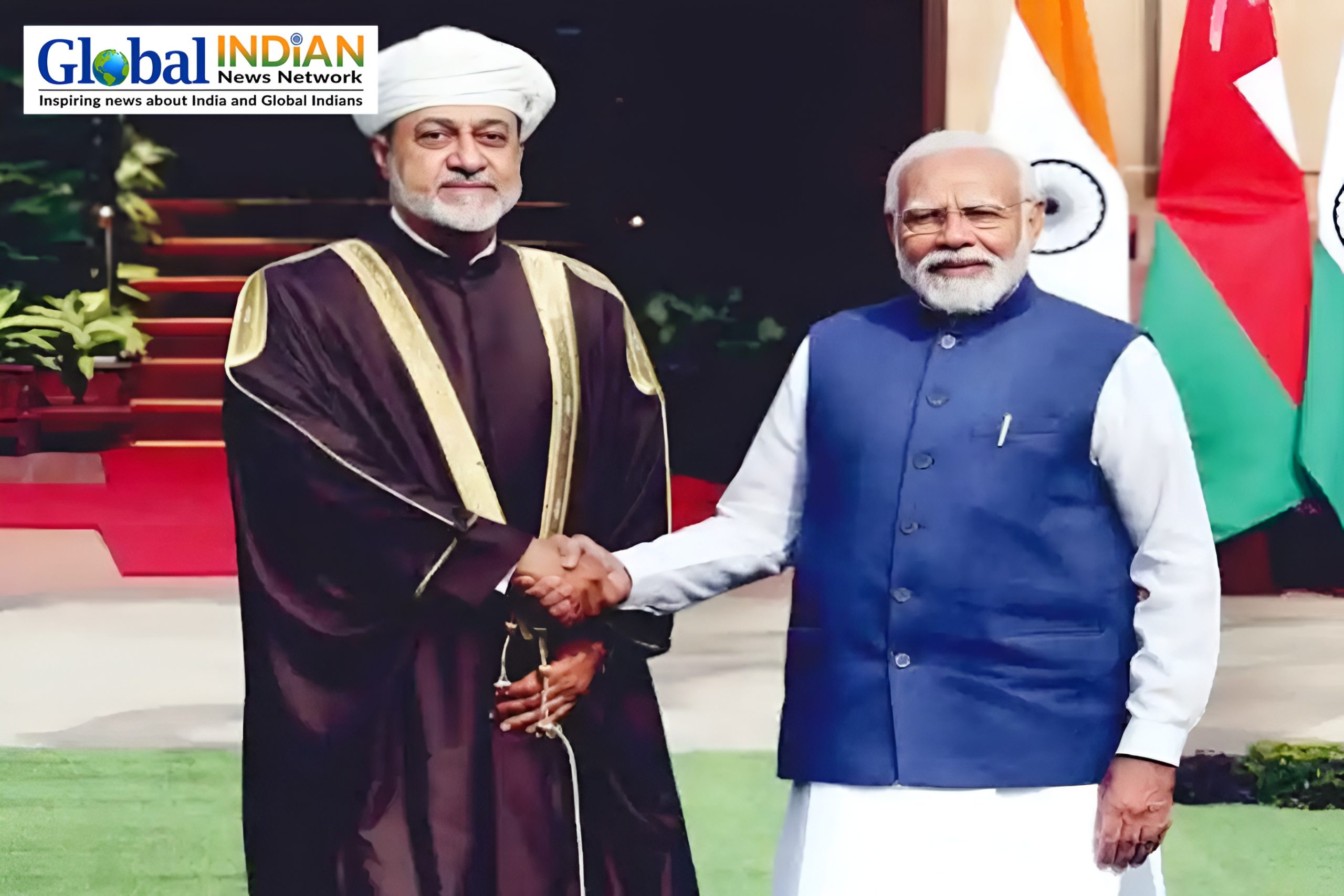
 Prime Minister Narendra Modi is set to travel to Oman next week, a visit that carries strategic weight beyond routine diplomacy. For more than seventy years, Oman has remained one of India’s most reliable partners in West Asia, consistently offering support during sensitive global debates, particularly those involving terrorism. Its steady backing has helped cement its reputation as one of India’s closest and most trusted Muslim-majority allies.
The upcoming trip is also drawing attention in Pakistan. Analysts note that Oman’s growing proximity to New Delhi—across defense, commerce, and energy—has always been monitored closely in Islamabad. The India-Oman relationship is considered one of the Gulf’s strongest and most enduring partnerships, shaped by mutual trust and decades of cooperation.
According to reports, Modi will visit Muscat to commemorate seventy years of diplomatic ties between the two countries. This milestone follows the December 2023 state visit by Oman’s ruler, Sultan Haitham bin Tarik, which reset the pace for deeper engagement. Modi’s arrival is expected to build on that momentum, opening doors for new strategic and economic initiatives.
One of the defining elements of the bilateral relationship has been defense cooperation. Oman was the only Muslim-majority nation to publicly support India during the 1971 conflict with Pakistan. It later became the first Gulf nation to conduct joint exercises with all three branches of the Indian armed forces. Trust deepened further when Oman granted the Indian Navy access to the Duqm port on the Indian Ocean—a strategic gateway that gives India a vital logistical base for maritime operations across a critical global trade route.
Beyond defense, Oman’s Indian-origin community has become an integral part of its social and economic fabric, with many holding influential positions. Muscat has also consistently offered a balanced, friendly stance toward India at the Organisation of Islamic Cooperation (OIC), a rarity in a region where political positions often shift quickly.
Economic relations are now poised for a significant leap. Modi’s visit may accelerate long-standing negotiations on a Comprehensive Economic Partnership Agreement (CEPA), which would formalize and stabilize trade. The commercial relationship is already expanding rapidly: bilateral trade rose from $8.95 billion in 2023–24 to $10.61 billion in 2024–25. Officials expect this upward trajectory to continue as both nations scale investment and energy partnerships.
Together, these developments underline why Modi’s visit is seen not just as symbolic, but as a major step in shaping India’s long-term strategic footprint in West Asia.