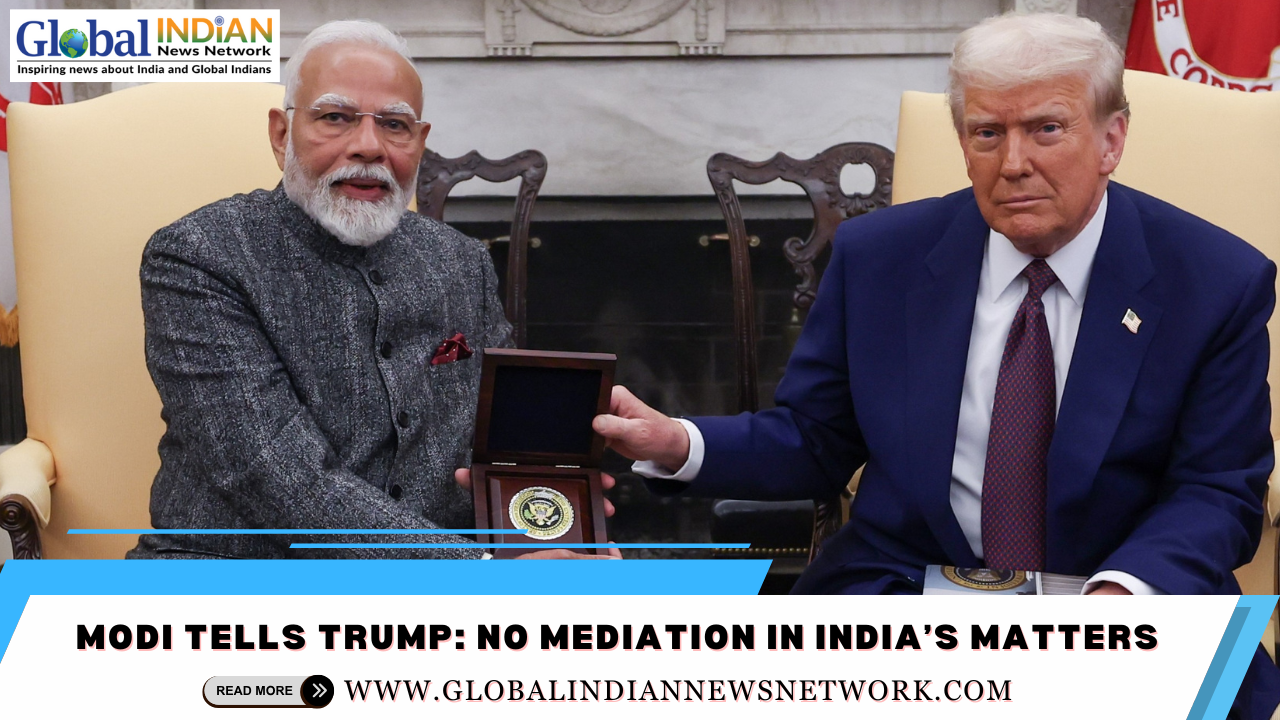
 During the sidelines of the G7 Summit in Canada, Indian Prime Minister Narendra Modi and US President Donald Trump engaged in a 35-minute phone conversation, according to Foreign Secretary Vikram Misri. Although a face-to-face meeting was originally planned, President Trump’s early departure from the summit—prompted by escalating tensions between Iran and Israel—led to the discussion taking place via phone, initiated by the US side.
In their conversation, Prime Minister Modi clearly communicated India’s unwavering position that it neither accepted nor will ever accept third-party involvement in its diplomatic matters, particularly regarding Pakistan. The two leaders also addressed the recent terrorist attack in Pahalgam, Jammu and Kashmir, and India’s evolving counter-terrorism approach. Modi emphasized a key strategic shift: from viewing terrorism as a form of proxy warfare to treating it as a direct act of war. He added that this new stance had full political backing across India.
Contrary to some public speculation, the phone call did not touch upon ongoing trade negotiations or any discussion of mediation by the United States. Modi clarified that the recent ceasefire between India and Pakistan was coordinated bilaterally, with both militaries engaging through standard communication channels at Pakistan’s request.
Modi also briefed President Trump on “Operation Sindoor,” a critical component of India’s recent counter-terrorism efforts. He reiterated that discussions around Operation Sindoor were focused solely on security and did not involve trade or economic talks.
President Trump extended an invitation for Modi to visit the United States during his return from Canada, but the Indian Prime Minister declined due to prior commitments. Nonetheless, both leaders expressed intent to meet soon. As part of ongoing strategic cooperation, Modi invited Trump to attend the upcoming QUAD summit in India. Trump welcomed the invitation and conveyed enthusiasm about visiting.
The phone call, though short, underscored the mutual respect and strategic alignment between the two nations while reinforcing India’s firm stance on sovereignty, security, and diplomatic autonomy.