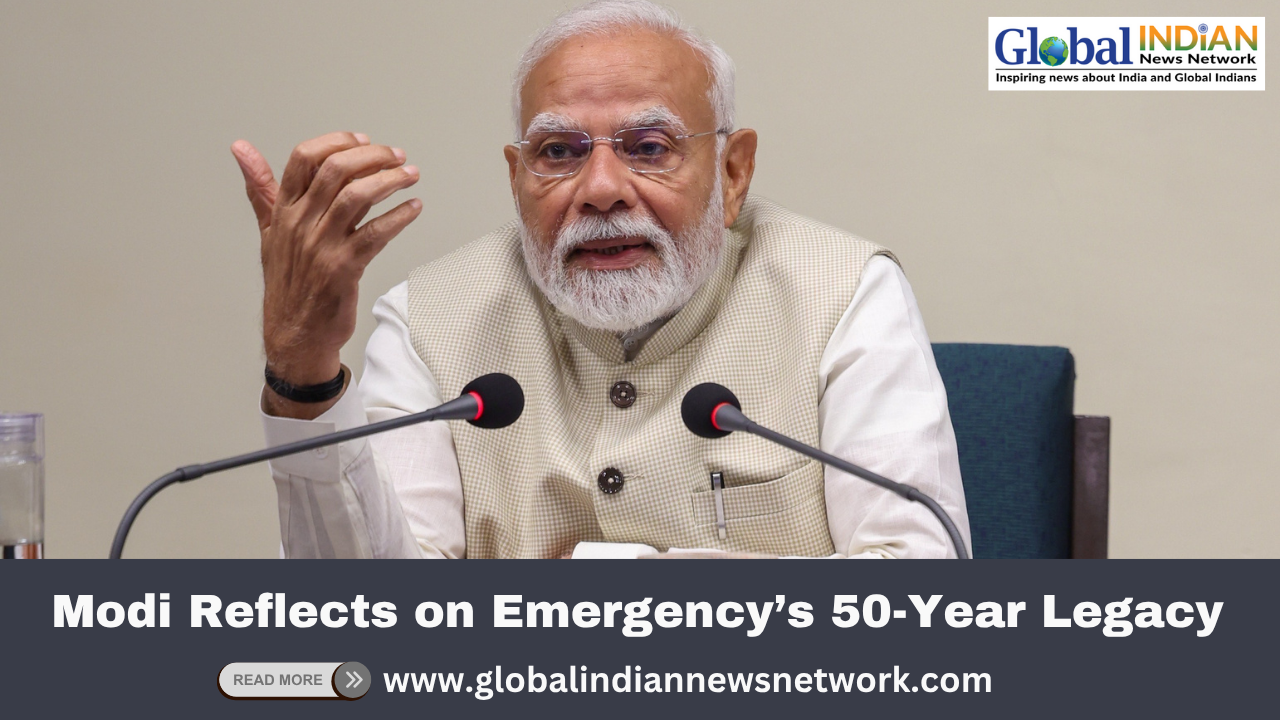
 Marking the 50th anniversary of India’s Emergency, Prime Minister Narendra Modi took to social media on Wednesday to reflect on what he described as one of the most traumatic chapters in the nation’s democratic journey. Sharing a series of posts, PM Modi reaffirmed his administration’s dedication to safeguarding constitutional values and condemned the 1975–77 Emergency period as a brutal assault on India’s foundational freedoms.
To mark the occasion, a new book titled The Emergency Diaries – Years that Forged a Leader is being released by Union Home Minister Amit Shah. Published by Bluekraft Digital Foundation, the book recounts Modi’s experiences as a young RSS pracharak during the Emergency. He noted that the anti-Emergency movement was a defining moment in his life, shaping his understanding of democracy, dissent, and resilience. The book captures how he operated underground, evaded arrest, and participated in the resistance against Indira Gandhi’s regime.
Modi highlighted that the declaration of Emergency saw democratic norms bulldozed, the press muzzled, and countless citizens—including students, activists, and political leaders—imprisoned. He said the Constitution was effectively shelved and declared the imposition as the day democracy itself was “jailed.”
He pointed to the 42nd Amendment as a clear example of constitutional misuse and emphasized the suffering of the poor and marginalized during that time. Modi saluted those who bravely opposed the Emergency, crediting their united effort across ideologies for eventually forcing fresh elections and restoring democracy.
He concluded by asserting his government’s continued resolve to defend the Constitution and uplift the underprivileged in its vision for a Viksit Bharat (Developed India).
Meanwhile, the Congress party lashed out with a counterstatement, branding the past 11 years of Modi’s tenure as an “Undeclared Emergency@11.” Congress leader Jairam Ramesh accused the current government of eroding democratic institutions, suppressing civil liberties, and promoting hate speech. The opposition party cited targeted harassment of dissenters, farmers being labeled extremists, and the dismissal of caste census advocates as signs of deep-rooted authoritarianism.
The anniversary, steeped in historical trauma, has thus reignited fierce political debate over the state of democracy in contemporary India.