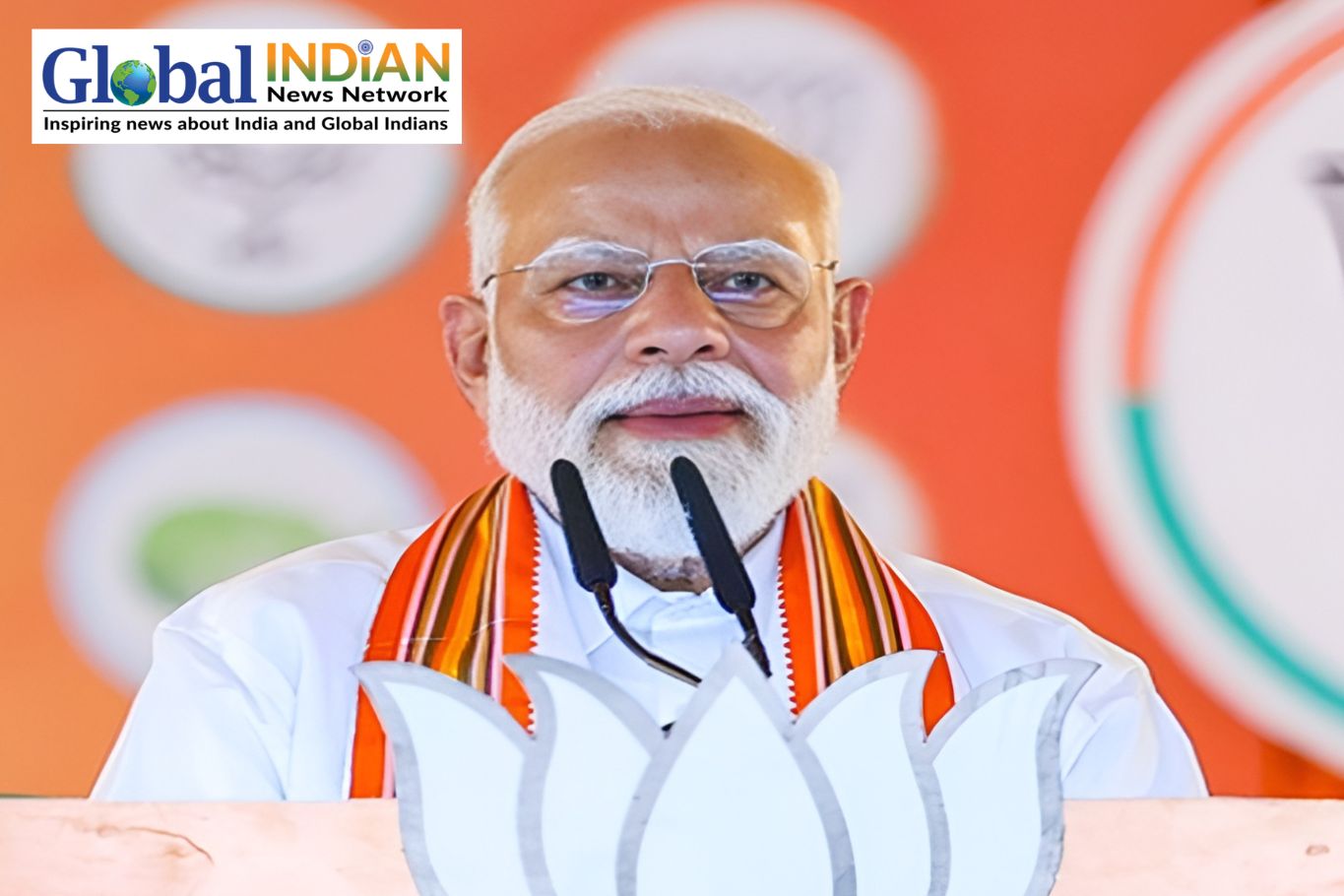
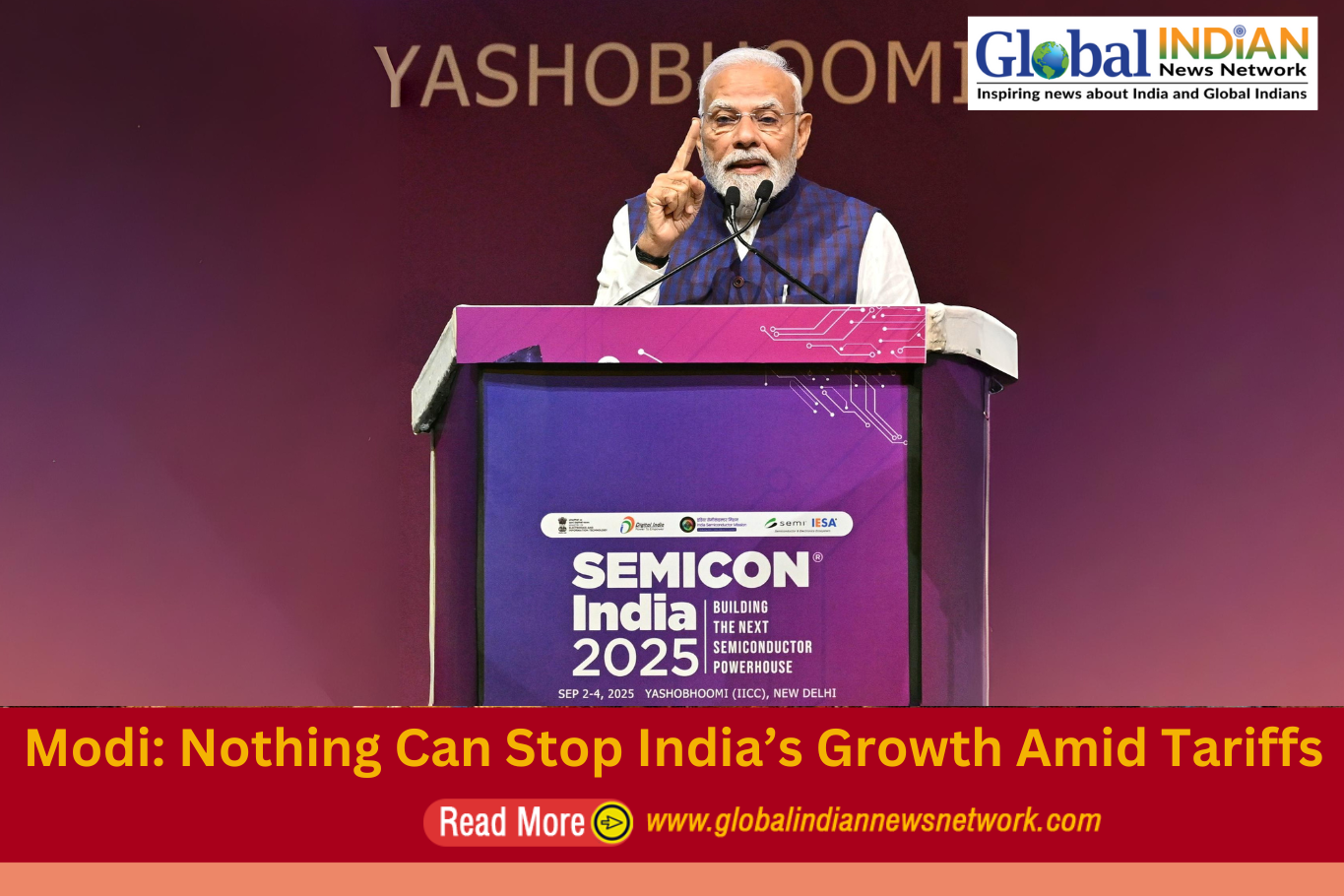
 At the Semicon India 2025 summit in Delhi, Prime Minister Narendra Modi hailed India’s recent economic performance, pointing to the country’s strong GDP figures as evidence of resilience and growth. Referring to the first-quarter data, he stressed that India has once again surpassed all predictions and expectations. “The results show that India cannot be stopped now,” he said, setting an optimistic tone for the event.
Despite global economic turbulence and the United States under Donald Trump imposing tariffs as high as 50% on Indian goods and oil imports, India recorded an impressive growth rate of 7.8%. The Prime Minister dismissed Trump’s earlier remarks about India being a “dead economy,” adding that the momentum was broad-based and visible across all major sectors. He emphasized that this steady progress is bringing renewed confidence to citizens and accelerating India’s path toward becoming the world’s third-largest economy.
Modi began his keynote address with humor, recalling his return from recent visits to Japan and China before turning to India’s ambitions in the semiconductor industry. He underlined India’s growing credibility on the global stage, noting that international investors and governments now trust India as a reliable partner for building the future of technology.
Drawing a striking analogy, he said, “If oil was black gold in the last century, then chips are the digital diamonds of this era. A single chip has the potential to drive global transformation.”
He highlighted India’s semiconductor journey, which began with the launch of the Semicon India initiative in 2021. By 2023, the country had approved its first chip manufacturing facility, with additional projects sanctioned in 2024 and five more cleared in 2025. Altogether, India has attracted investments exceeding $18 billion across 10 semiconductor ventures, a milestone that showcases the world’s confidence in India’s capabilities.
The Prime Minister also pointed to the National Single Window System, which has streamlined approvals from central and state governments, significantly reducing bureaucratic delays for investors.
“India is no longer confined to the backend,” Modi asserted. “We are advancing toward becoming a full-stack semiconductor nation. The day is coming when the smallest chip designed in India will spark the biggest changes worldwide. We may have entered the race late, but there is no stopping us now.”