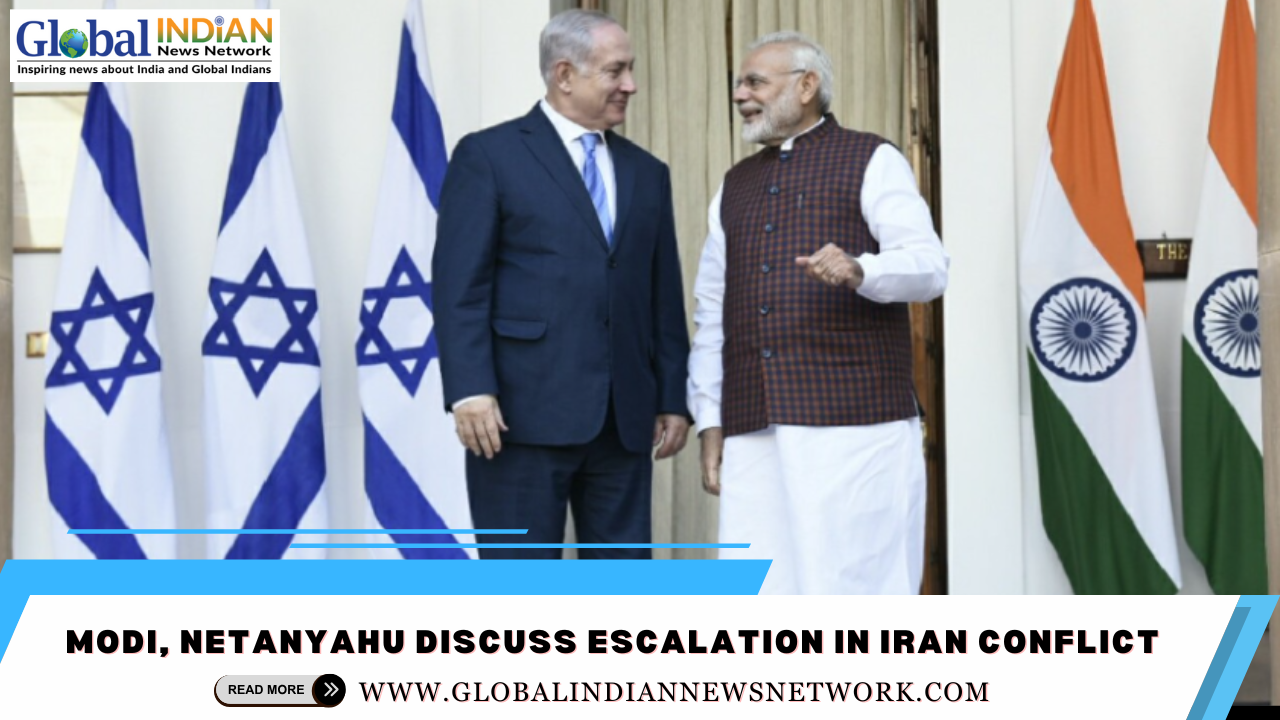
 On Friday, Prime Minister Narendra Modi received a phone call from Israeli Prime Minister Benjamin Netanyahu, who informed him of the escalating tensions in the Middle East following Israel’s recent military offensive against Iranian facilities. Modi posted on X that he conveyed India’s deep concern over the situation and stressed the need to swiftly restore peace and stability in the region.
The conversation follows a wave of global concern triggered by Israel’s coordinated attacks on Iran’s military and nuclear infrastructure, which reportedly resulted in the deaths of several top Iranian scientists and defense officials.
Israel justified the operation as a necessary response to mounting threats from Tehran. Netanyahu’s office stated that he had spoken with multiple world leaders, including those of India, Germany, and France, and had plans to consult with US President Donald Trump, Russian President Vladimir Putin, and UK Prime Minister Keir Starmer. According to Israeli sources, these leaders expressed their understanding of Israel’s right to self-defense amid threats of annihilation from Iran.
New Delhi issued a formal statement echoing Modi’s message, expressing deep concern over the unfolding events and urging both nations to exercise restraint and avoid further escalation.
International outlets reported that Israel’s offensive targeted various Iranian locations, including facilities involved in nuclear enrichment and missile production. Israeli Defense Forces spokesperson BG Effie Defrin described the strikes as “preemptive and precise,” aimed at dismantling Iran’s nuclear ambitions, warning that Tehran was now alarmingly close to acquiring a nuclear weapon.
In a televised national address, Netanyahu defended the action, stating that Iran had already amassed enough enriched uranium to produce multiple nuclear bombs and had launched hundreds of ballistic missiles at Israel in the previous year alone. He emphasized that such a threat could not be tolerated and drew historical parallels to the build-up before World War II, declaring that Israel would never permit a hostile regime to gain nuclear capabilities.
As tensions mount in the region, India’s call for de-escalation stands in line with its broader foreign policy of maintaining strategic neutrality while advocating for regional peace and global security.